AI helped create viruses for treating humans for the first time
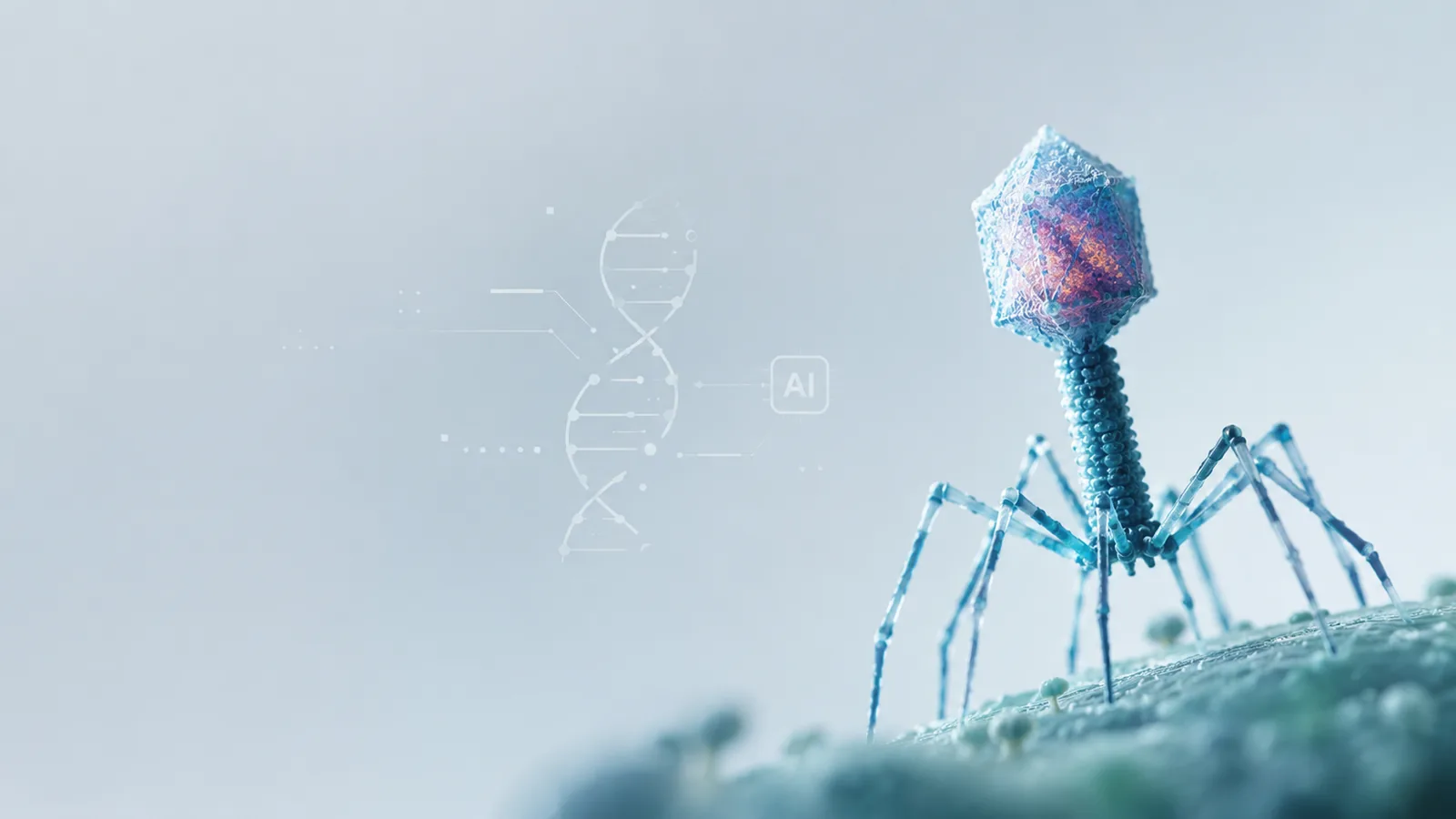
Radical Numerics announced the first clinical application of bacteriophages developed using artificial intelligence. The experimental therapy was administered to a patient with an antibiotic-resistant bacterial infection.
The Tech AI
Get the key points in seconds - a short summary from The Tech AI.
Radical Numerics used the Omnii-1 AI model to create a bacteriophage cocktail that eliminated an antibiotic-resistant bacterial strain in a patient. The model demonstrated high efficacy in the lab: among 100 candidates, activity exceeded the threshold in 96–97% of variants. Although the therapy was conducted under medical supervision, it has not been approved for widespread use, and a single case does not allow conclusions about the overall safety of the method.
Bacteriophages are viruses that infect bacteria and replicate within them. Unlike broad-spectrum antibiotics, they can target specific bacteria without significantly affecting the beneficial microbiota.
The AI-generated bacteriophage cocktail was first tested in the laboratory. It eliminated a bacterial strain isolated from a patient that was resistant to antibiotics. Following this, the experimental therapy was administered under medical supervision as part of a humanitarian use program.
Radical Numerics does not disclose details about the patient’s condition or treatment outcomes to protect their privacy. The company also notes that the experimental therapy has not been approved for widespread clinical use. A single case does not allow for conclusions about the overall safety and efficacy of the method.
How AI Creates Viruses Against Bacteria
To develop bacteriophages, the company used Omnii-1, an artificial intelligence model trained to analyze genetic sequences and the interaction between viruses and bacteria.
The model helps create new variants of bacteriophages and predict which ones may affect specific bacterial strains. This is important for personalized phage therapy, where treatment is tailored to the bacteria causing the infection in a particular patient.
Today, finding suitable bacteriophages largely depends on laboratory research. Scientists test existing virus collections and, if no suitable options are available, may develop new ones. This process takes time, especially when the infection is resistant to multiple antibiotics.
AI can accelerate the search for promising candidates and help researchers select options for further testing.
What Results Did the Omnii-1 Model Show?
Radical Numerics tested the capabilities of the model using the T7 bacteriophage, which infects E. coli bacteria.
In one experiment, researchers assessed whether viable virus variants could be obtained after modifying their genetic sequences. Among variants with 11–15 amino acid changes, 69.9% of the bacteriophages designed by the model were restored. For randomly modified control sequences, the figure was 4.8%.
In another experiment, the model helped select variants with high activity against different bacterial strains. Among the 100 most promising candidates for two strains, 97 and 96, respectively, exceeded the activity threshold established by the researchers.
These results demonstrate the potential of AI for developing bacteriophages, but they relate to laboratory studies and do not prove treatment efficacy in humans.
Why This Matters for Medicine
Bacterial resistance to antibiotics remains one of the major public health challenges. According to the Global Burden of Disease study published in The Lancet, approximately 4.7 million deaths worldwide in 2021 were associated with bacterial resistance to antimicrobial drugs. Researchers predict that between 2025 and 2050, antibiotic resistance could cause nearly 40 million deaths.
Bacteriophages are considered one of the potential approaches to combating such infections, especially when standard treatment is ineffective. However, selecting a virus that effectively targets a specific bacterium is not straightforward.
Radical Numerics plans to further develop Omnii-1 for personalized phage therapy and collaborate with researchers, clinics, and medical centers. Widespread application of the technology will require additional laboratory studies, clinical trials, and safety evaluations.
The Tech on Telegram Follow The Tech on Telegram
Keep up with the latest technology and startup news.
Related reading


More from this author

Article Useful
The best startups from Startup Battlefield 200 at TechCrunch Disrupt 2026
The Tech

Article Useful
Central Asian startups that attracted investments in October 2026
The Tech

Article Useful
IT Events for November: Web Summit, Slush 2026, and Tashkent Fintech Forum
The Tech

Article Useful
Berkeley SkyDeck: How a Startup Can Get Into an American Accelerator
The Tech

Article Useful
Market votes and founder votes
The Tech

News IT
"Ambitions determine what results we can achieve," — Jensen Huang on the development of AI
The Tech