HR specialists from KPMG, Kolesa Group, Getz Pharma, and Mad Devs shared what they look for when hiring.
AI is increasingly becoming part of workflows, and employers are already paying attention not only to candidates' professional experience but also to how effectively they can use AI. We asked HR specialists and an IT recruiter from Central Asia which AI skills truly give an advantage in hiring, and which ones have little value without a solid professional foundation.

Danil Spirin, city — Almaty, Head of Talent Acquisition at KPMG Caucasus & Central Asia, LinkedIn
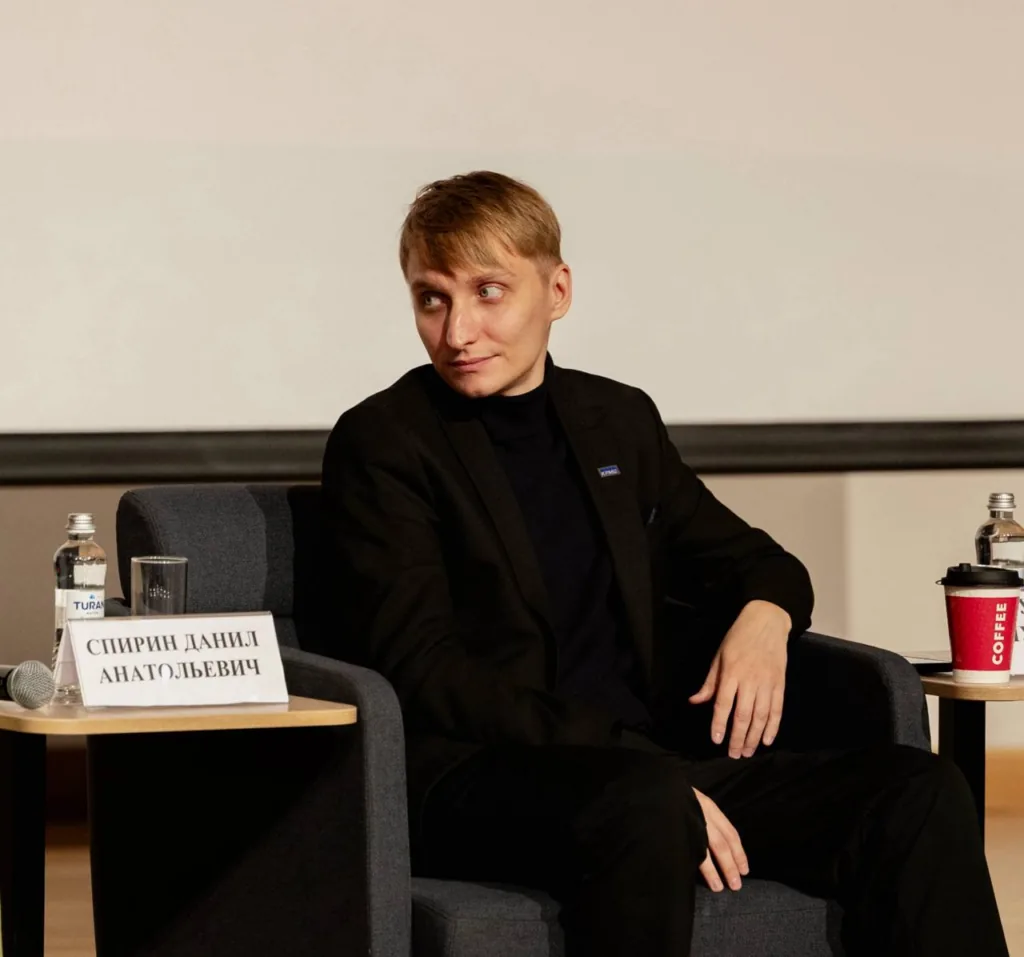
Experience still plays a significant role in the recruitment process for most positions. However, while a couple of years ago candidates were embarrassed to admit that they had completed a test assignment using AI, today a candidate lacking this skill may lose out to another candidate who possesses it.
This is no longer just a nice-to-have skill but a full-fledged competency that even large companies are now including in job descriptions. A person who knows where to find any information will be significantly stronger than someone who relies solely on their own knowledge. AI stores more data than a human could master in trillions of years, and it processes that data in seconds. I am confident that in a couple of years, this trend will gain even more momentum, and candidates skilled in working with complex AI queries will be at the top of the pay scale.
Irina Gubina, city — Almaty, HR Director at Kolesa Group, LinkedIn

If we are talking about what is more important today in hiring—experience or AI skills—I would still prioritize experience and soft skills. Experience demonstrates how a candidate thinks, solves non-standard problems, behaves in difficult situations, and what real results stand behind their resume. In this context, I view AI tools more as a productivity multiplier rather than a replacement for professional expertise. It is from this logic that we form our hiring requirements.
That said, it would be incorrect to say that AI skills do not influence hiring decisions at all. Their weight depends heavily on the specific role. For example, at Kolesa Group, the use of AI tools for a product manager role is already established in the grading system as part of the role requirements. Therefore, during interviews, we separately assess how well a candidate can work with such tools and, most importantly, how they apply them in practice. For us, an abstract statement like “I use ChatGPT” is not enough; what matters are real-world work scenarios and the results the candidate achieves using AI.
This demand will only grow for technical and product roles. AI literacy is gradually evolving from an additional advantage into a basic component of professional competence, and we are already incorporating this into our grading system and competency profiles for the next few years.
However, for positions where communication, niche expertise, or management experience play a key role, the weight of AI skills remains secondary for now.
To summarize: for us, experience and soft skills remain the primary criteria in hiring, but AI skills are already becoming part of the systematic requirements for certain roles. As an HR Director, I see that this trend will only intensify: the ability to work effectively with AI will gradually become as much a part of professional literacy as the ability to use basic digital tools is today.
Gavkhar Saidova, city — Tashkent, HR Manager at Getz Pharma, LinkedIn

It all depends on the industry. In more conservative sectors, such as pharma, construction, and so on, AI is not yet widely used and is not always truly necessary.
Regarding other industries, from a hiring perspective, an employee who uses AI as a supplement to their core hard skills is, in my opinion, an excellent candidate. However, there are candidates whose primary skill is working with AI, but who lack sufficient expertise in a specific field. This is less appealing.
This is because, with experience, knowledge, and an understanding of their work and industry, a person can use AI much more effectively: they can formulate prompts correctly, critically evaluate and verify the information obtained, and understand where AI might make mistakes.
I would say that critical thinking and professional experience are currently no less important than the ability to work with AI.
Margarita Mysina, city — Bishkek, IT Recruiter at Mad Devs, LinkedIn

Currently, the ability to be an engineer is important: combining technical skills and adapting all the power of AI to them.
AI skills are important in hiring if the person understands how everything works “under the hood” without AI. Otherwise, such a “specialist” is worthless.
The ability to work with AI, whether it be writing prompts or analyzing data provided by AI, is useful. Mindless vibe coding is useless.
The Tech on Telegram Follow The Tech on Telegram
Keep up with the latest technology and startup news.
Related reading




More from this author

Article Useful
How to protect your accounts from hacking: 8 settings you should check today
The Tech

Article Useful
500 Global: How the Accelerator Works and Who Can Receive Investments
The Tech

Article Interviews
Game Development in Central Asia: Arkady Moldavski on Developing Reverb and the Growth of the Industry
The Tech

Article Useful
Google, Tesla, BlackRock, and the IMF: Where to Apply for an Internship in Fall 2026
The Tech

News IT
Tesla unveiled the flying electric car Roadster
The Tech

News IT
Intero Biosystems startup won the Startup Battlefield at TechCrunch Disrupt 2026
The Tech