General partner of the venture fund Accel on the risks of strict AI regulation
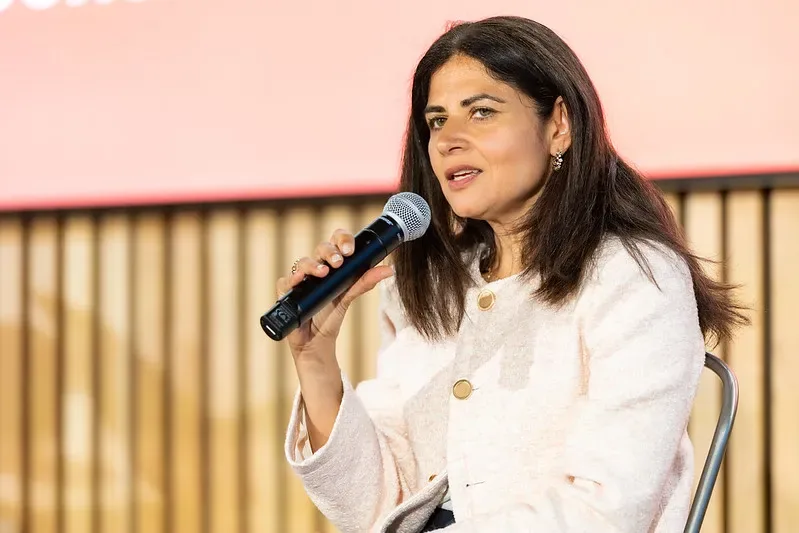
Sonali De Rycker, general partner at the venture capital firm Accel and one of Europe’s most influential venture capitalists, is confident in the continent’s prospects in the field of artificial intelligence. However, she also warns against excessive regulation, which could slow down this process.
Author - Mansur Ismagulov
The Tech AI
Get the key points in seconds - a short summary from The Tech AI.
Europe has the resources to make a breakthrough in AI, but the complex Artificial Intelligence Act and fragmented national regulations create bureaucratic barriers, falling behind the dynamics of the US. Despite this, technology hubs are developing in London, Paris, Munich, and Zurich, while funds like Accel are investing in successful startups Synthesia and Speak, valued at $1 billion. The region's success depends on balancing regulation with freedom for innovation.
Europe plays a crucial role in the global race to develop artificial intelligence, possessing everything needed for a technological breakthrough — talented entrepreneurs, strong universities, sufficient funding, and ambitious ideas. However, a key obstacle to large-scale growth is the complex regulatory framework, especially the new Artificial Intelligence Act.
This law introduces strict rules for technologies used in areas such as medicine and finance. The goal of regulation is to ensure the safety and ethics of AI, but excessive restrictions can make it difficult for startups to operate, limit early experiments, and deter investors. Unlike the US, where companies actively test new technologies, invest in promising projects, and rapidly implement innovations, the European market faces additional bureaucratic barriers.
The EU must develop its own strategy for independent technological growth. One of the key steps toward this is creating unified business rules across Europe. Currently, different countries have different laws and licensing requirements, which slows down the development of young companies and complicates their entry into international markets.
Despite these challenges, strong technology hubs are already emerging in Europe — London, Paris, Munich, and Zurich. These cities attract talented professionals, and leading venture capital firms, such as Accel, invest in promising startups. Among successful projects are Synthesia, a video generation platform used in corporate training, and Speak, a language learning app that recently reached a valuation of $1 billion. These examples show how artificial intelligence can not only improve existing technologies but also create entirely new business models.
The current situation in Europe is both a challenge and a unique opportunity. If the region opts for overly strict regulation, it risks slowing the development of innovations and losing its position in the global technological race. However, if a balance can be found between control and freedom for experimentation, Europe will be able to compete with global leaders not only in the field of AI but across the entire technology industry.
Detailed interview here.
The Tech on Telegram Follow The Tech on Telegram
Keep up with the latest technology and startup news.
Related reading







More from this author

News
zypl.ai begins operations in Japan and focuses on next-generation risk models
Mansur Ismagulov

News
Elon Musk's net worth has exceeded $700 billion for the first time
Mansur Ismagulov

Article Interviews
"Central Asian countries should build a joint ecosystem," — Bekhzod Ismoilov on the development of AI in the region
Mansur Ismagulov

Article Interviews
Bloom's Taxonomy and Engineering Levels: A Practical Growth Model
Mansur Ismagulov

Article Useful
How the IT industry in Azerbaijan developed in 2025: key events
Mansur Ismagulov

News
Tajikistan has become a new member of the regional innovation alliance Central Asian Innovation Hubs.
Mansur Ismagulov