Game Development in Central Asia: An Interview with Malika Igibayeva on the Growth of the Industry

The founder and CEO of SHŪ studio discussed the development of the gaming industry in Kazakhstan and Central Asia, the journey from 3D animation to business gamification, creating her own studio and educational projects, and how technology and AI are changing game creation.
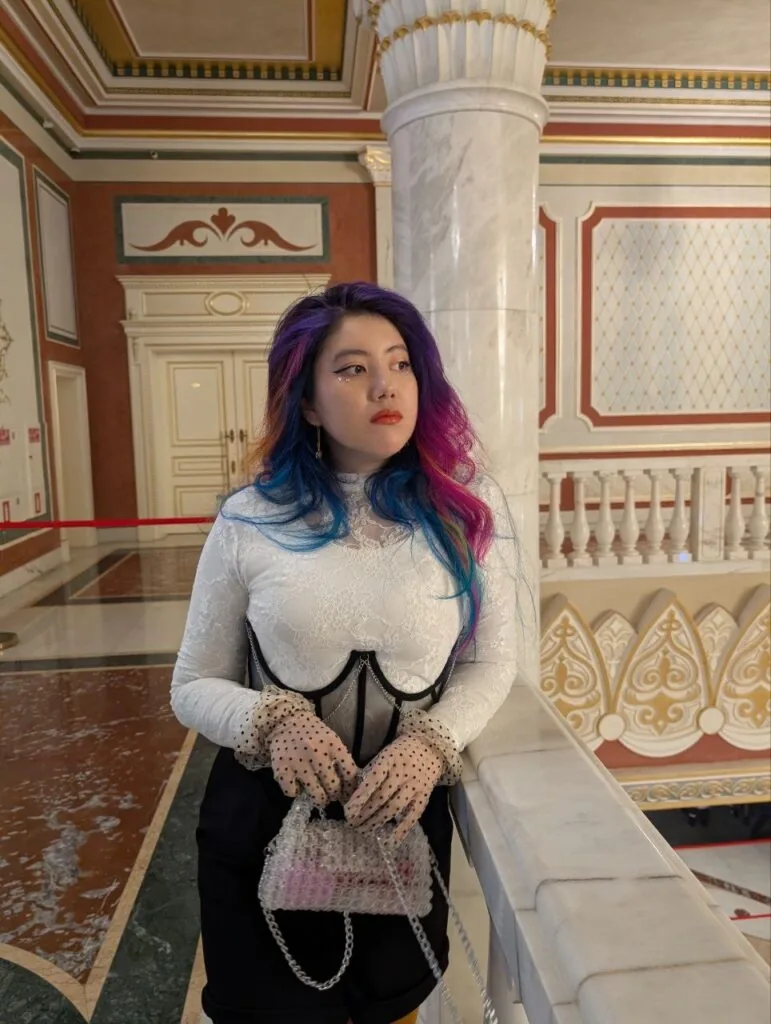
Malika Igibaeva, city — Astana, CEO & Founder of SHŪ, coordinator of the GCA committee, Instagram, LinkedIn
About Me
I am the founder and CEO of SHŪ, a company specializing in business gamification. My LLC grew out of the game development sector.
Additionally, I am the coordinator of the GCA committee, which supports six main areas: games, esports, animation, digital art, cosplay, and comics. All these areas are interconnected: cosplay stems from games and animation, while games and animation are created in similar ways. It is a unified field.
I also work with startups related to gamification or the popularization of art. I am called a bridge between art and technology, and I strive to connect business and the creative side, as I am an artist myself, a member of the Union of Young Artists of Kazakhstan.
Career Path
I started my journey when this profession did not exist in the educational system, and the most creative and technical profession was architecture. In my time, there were only three grants for architecture, and exams were held at only one university. I was lucky: I received the first grant with the highest score, which largely determined my fate, although a mistake in the National Testing Center (ENT) could have changed it initially. Thanks to this chain of events, I began moving toward 3D modeling.
I was one of the first to learn how to work well in 3ds Max and handle rendering. Later, while working in the architectural sector, I realized it was not for me: the buildings I wanted to build would not be constructed here, and everything was too regulated. Then I looked for a field where I could express myself and stumbled upon anime courses, where I was part of the first cohort. There, they taught the pipeline, including animation and remodelling in Autodesk Maya, and everything related to it.
Thus began my path in animation, where I studied 3D animation and then stayed on to teach architectural visualization. After that, I moved into game development.

About Projects
I was the first to propose starting game development and launched the first course on creating them. Gradually, I delved deeper into this field, while simultaneously working on various projects—both in 2D and 3D, including many different games. At that time, the industry was unclear and unexplored; there were no people to turn to. The most surprising thing was that those already in the field immediately talked about money: they were interested in how much a game would bring in. At first, I found this soulless; I thought games mattered, not money. Over time, I realized this was a mistake: for a game to generate revenue, you need to understand whether people will pay for it and how. Many beginners do not think about this, and it is the most difficult situation.
Currently, I work in the field of gamification—creating games for business, such as mini-games in apps with bonuses or promotions. I like this field because it allows for immediate income, unlike game development, where revenue appears only after the game's success. Previously, I taught for five years at AlmaU, where students made diploma projects involving games. When I opened my studio, I invited them to work: we create games and simultaneously earn money through gamification. Making your own games without parallel work is difficult, so in the studio, this is combined with commercial projects.
Achievements
My main achievement is the gamification studio that we founded and continue to develop. Through it, it is interesting to observe how game development is gradually becoming closer to business, even in a fairly conservative society. Games are beginning to be perceived more gently, especially with the rise of the millennial generation.
Another important achievement is the creation of a gaming zone at Digital Bridge. This is a major business event with the participation of large companies, where integrating games was not easy. Last year, we created a large zone there with VR games: more than 20 demo projects and about five panel sessions on games, animation, and creative industries.
This was a big victory: we brought creativity to a venue where business usually dominates and showed investors and companies that games can be a full-fledged business and generate income.
After Digital Bridge, we plan to work at the Digital Qazaqstan forum. We bring indie teams there and show that different projects can be realized through games. For example, standard indie games that teams create themselves, and social games, such as "Arsana" from KazNU (KBTU)—a speech therapy game, an interesting project.
The development of gamification and VR games is also important. For example, there was a VR project on safety for KTZ (Kazakhstan Temir Zholy): in the game, you could "get injured" and thus better remember the rules.
Game diversity in different niches, fields, and spaces helps break myths that games are only for children or ruin the mind, which is a significant step forward. Even in Almaty, social games were held, for example, about architectural monuments that were going to be demolished, where the player could make decisions affecting the outcome.

Skills and Profession
There are many roles in the gaming industry. If you create music, you can become a sound designer; if you draw, you can engage in concept art. If you cannot draw but have spatial thinking, 3D modeling is suitable. With an engineering mindset, you can work as a programmer and deal with the game engine.
The industry is open to people with different skills. The main thing is not to have too conservative thinking and to have an interest in games, because this is a creative field. I had students without developed imagination, but they liked playing—they went into 3D modeling, where you need to carefully implement an already conceived concept. There were also reverse examples: a person worked poorly with programs but was excellent at coming up with stories—he became a narrative designer. All these roles work together.
Large companies also need accountants, product managers, analysts, and other specialists. The larger the game, the more calculations and analytics are required for its development. At the start, if you are making your own game, it is desirable to be able to do many things—come up with ideas, draw, or at least work with 3D.
Many believe that with the advent of AI, creating games has become easier. In practice, AI can help but not replace developers. It can generate ideas, concepts, models, or code, but the result often requires refinement: models may have incorrect topology, take up a lot of memory, or break. Therefore, a specialist who understands the structure of code and production is needed.
AI can speed up individual stages of development: creating concepts, sculpting characters, translating concept art into 3D, generating textures, or helping with optimization. It is also useful in creating sound and music—for example, for unusual effects, monster voices, or atmospheric noises.
However, at the production stage, especially when creating trailers and promotional materials, AI currently performs worse: it distorts animations, textures, and visual details. Therefore, CGI production is often faster and more reliable, allowing for control over the result.
AI is especially helpful for small indie teams in the early stages—when creating prototypes, concepts, and testing ideas. In programming, AI coding also speeds up work, but it cannot completely replace developers.
In the end, AI remains a tool that helps speed up individual processes—creating concepts, mockups, and prototypes. But for the final quality of the game, human involvement remains key.
How the Industry is Developing in Central Asia
Central Asia has made significant progress in the development of creative industries, including games. Many festivals and events have appeared that were previously held mainly in Kazakhstan but are now also taking place in neighboring countries. Previously, it was believed that all key processes occurred only in Kazakhstan, but this is no longer the case: neighbors are actively developing, sometimes even faster than us. For example, GameFest was planned in Uzbekistan, to which we were invited. At last year's events, large international companies such as Netflix, Unreal Engine, and DreamWorks attended, demonstrating growing interest in the region.
Similar examples exist in Kazakhstan: representatives of the Atari venture fund were present at Digital Bridge. This shows the potential of the region—international companies are looking for promising projects and teams.
Previously, the problem was a lack of specialists, but the situation has changed now: many educational programs have appeared, schools are training personnel, and developers are gaining experience abroad. The basic level of specialists has been formed, although there are still few large companies, and opportunities for deep experience are not so great.
The main challenge today is the lack of support and infrastructure: there are few programs, competitions, publishers, and tools for project development; a clear taxation system, grants, and specialized initiatives are needed.
The situation is gradually changing now: new programs, venture funds, and publishers are appearing, and large companies are showing interest in game development and supporting developers both in Kazakhstan and in neighboring countries. Sometimes the industry is compared to animation, where it is easier in some aspects because it is closer to cinema and has a more understandable structure. But there are difficulties there too.
Plans
Currently, we are actively cooperating with Astana Hub, which provides us with serious support. There is hope that in the future we will be able to present our projects at other major forums and show what games and developments are being created in Kazakhstan. This is an important opportunity for the entire industry.
Publishers, venture companies, and game development support projects are also beginning to appear. Accelerators and incubators are launching, and in Kazakhstan, a large accelerator for game projects is planned, where attention is paid not only to development but also to promotion and sales.
I think that in the next three years, new names and projects from Kazakhstan will appear on the market. There are already positive signals—for example, the state recently allocated funding for game development. The result may have been debatable, but the fact of investment itself indicates that the industry sees potential.
The attitude toward games is gradually changing. Even the older generation is beginning to take them more seriously, and the prospects of game development are discussed more often. At the same time, related areas are developing—animation, digital art, and other creative industries.
Therefore, if you want to support domestic game development, start with something simple—show interest in the games being created here. Many projects are free: you can simply try them, share your impressions, or tell your friends about them. Games and animation exist thanks to the audience, and the more interest there is, the faster the industry will develop.
Advice for Beginners
Today, there are many schools and programs where you can master different areas of game development—from 2D and 3D modeling to concept art. If such opportunities were previously mostly available only abroad, now you can study in Kazakhstan. Moreover, education is open to people of any age—from schoolchildren to working professionals.
Internships also play an important role, providing practical experience working on real projects. For example, we cooperate with the Astana Hub game development center and are developing the Global Game Jam initiative. At such events, participants create a game prototype in a few days, test ideas, exchange experience, and get acquainted with the level of other teams.
Jams also help establish professional contacts: studios observe participants and can notice promising specialists. Regular participation in such events, activity in the community, and own projects often lead to internships or first positions in the industry.
Another way to start a career is working as a game tester. Companies regularly look for such specialists, and this is a good chance to get to know the development process from the inside and gain first experience.
The Tech on Telegram Follow The Tech on Telegram
Keep up with the latest technology and startup news.
Related reading






More from this author

Article Useful
How to protect your accounts from hacking: 8 settings you should check today
The Tech

Article Useful
500 Global: How the Accelerator Works and Who Can Receive Investments
The Tech

Article Interviews
Game Development in Central Asia: Arkady Moldavski on Developing Reverb and the Growth of the Industry
The Tech

Article Useful
Google, Tesla, BlackRock, and the IMF: Where to Apply for an Internship in Fall 2026
The Tech

News IT
Tesla unveiled the flying electric car Roadster
The Tech

News IT
Intero Biosystems startup won the Startup Battlefield at TechCrunch Disrupt 2026
The Tech