What you need to know about soft skills in IT. Important skills for career development and how to develop them
For a successful career in a good company, it is no longer enough to have only hard skills—professional skills and competencies. Employers are increasingly paying attention to soft skills—these are communication, management, and self-regulation skills. Top managers of IT companies in Kazakhstan and Kyrgyzstan spoke about the importance of "soft" skills for building a successful career in the field of information technology.
Author - Аймира Куаныш

The Tech AI
Get the key points in seconds - a short summary from The Tech AI.
Ksenia Toropova (Kolesa Group), Arman Suleimenov (Pinemelon.com), Aida Derbishalieva (Namba), and Marina Gagarina (DAR) emphasize the importance of soft skills in IT. These skills are essential for teamwork, compromise, and career growth. Experts recommend developing empathy, communication, and critical thinking through practice, books, and courses.
Ksenia Toropova, 29 years old, city — Almaty, HR Director at Kolesa Group, LinkedIn

Why soft skills are important for those working in IT
IT is always teamwork, involving daily contact with many people from different departments and companies. Therefore, we value not only people's technical knowledge but also their personal qualities. Soft skills help in negotiating, understanding others, and communicating with them effectively.
How to communicate with colleagues and reach compromises
We "develop" the soft skills of our team members during individual meetings. Every employee has an individual development plan. At Kolesa Group, there is a grading system—a set of specific hard and soft skills used to build a system for motivating and growing employees. If a developer writes excellent code and is technically proficient but cannot reach an agreement with a tester or a product manager, they will not receive a higher grade. For example, if a developer at the Middle 3 level wants to grow into a Senior role, their "soft skills" must be at a high level: they must share information with the team and mentor newcomers. This is done so that the person grows and develops together with the company.
Results will be better, and projects more successful, if the specialist is proud and happy to work in a team with people who are close to them in spirit.
Which soft skills are necessary and how to develop them
Each company chooses the soft skills that are important to them. At Kolesa Group, there are ten values: teamwork, development, entrepreneurship, deadline-orientedness, honesty, objectivity, courage, responsibility, mindfulness, and engagement. These values are formed by us, not imposed from above.
More and more companies are paying attention to the personal qualities of employees
More and more companies are paying attention to the personal qualities of employees. Because great people want to work with great people, do cool projects, and spend time together outside of work. We see a trend: no matter how strong a specialist is technically, if they cannot find common ground with the team and put themselves above others, they will not be accepted. Conversely, if you have some technical gaps but fit well with the team in terms of "soft skills," the team will do everything to help and bring you up to the required level.
Recommendations for developing soft skills
— podcast Biweekly
— "Coaching: Fundamentals and Practices of Coaching and Leadership," John Whitmore
— "The Kaizen Method: Step by Step to Achieving Your Goal," Robert Maurer
— "No Rules Rules: Netflix and the Culture of Reinvention," Reed Hastings
— "Work Rules!: Insights from Inside Google That Will Transform How You Live and Lead," Laszlo Bock.
I am glad that soft skills are given so much attention. These are some of the key skills that should be developed. The future lies with them.
Arman Suleimenov, 34 years old, city — Denver, Managing Director at Pinemelon.com, @armansu

Why soft skills are important for those working in IT
IT is a team sport. This means that, in addition to individual skills, the ability to work in a team, motivate colleagues, find common ground with them, lead developers, defend ideas you genuinely believe in, and understand the general emotional climate of the team is important.
Business wins the most when everyone rows in the same direction, not like "the swan, the pike, and the crayfish." Then, results have a multiplicative effect of compound interest. To look and move in the same direction, you need to define two or three priorities for the quarter and focus on them. Without soft skills, this is impossible.
How to communicate with colleagues and reach compromises
It is difficult to find universal rules for all situations. But there are several general principles.
If there are colleagues who believe in a certain idea and passionately defend it, and you do not share their belief, but the cost of error is low—let them be. If they turn out to be right, everyone wins, and you establish yourself as a manager who knows how to encourage team ideas. If the idea does not work, the team will gain invaluable experience.
IT is a team sport
You need to know the difference between "one-way doors" and "two-way doors." The first type refers to decisions that cannot be reversed. Here, the consequences can be significant, so it is worth thinking everything through carefully. The second type refers to decisions that are easy to reverse. The consequences and risks are small, so if there is no obvious solution, do not waste time thinking it through thoroughly. It is better to make a quick decision, do something, and then change course as you receive new information.
Not all decisions should be made based on consensus. Often, compromise is the lowest common denominator that offends no one but does not yield the desired result. One approach to resolving disputes between two people is an agreement that "today I yield, tomorrow you yield." Another approach is that if the cost of the issue or error is low, always let the colleague win. A third approach is to yield to the solution backed by more passion.
Which soft skills are necessary and how to develop them
— working within the team
— critical thinking
— ability to solve problems from first principles
— effective communication: written and verbal
— responsibility, reputation, reliability
— high ethics
— effective time and energy management
— leadership skills
— ability to learn quickly.
The best way to develop soft skills is through daily application of these skills in practice. Here are some classic books on the topic:
— "Arbitrary Scale: Systems Engineering Management at Amazon, Netflix, and Google," Will Larson
— "How to Win Friends and Influence People," Dale Carnegie
— "Atomic Habits," James Clear
— "No Rules Rules: Netflix and the Culture of Reinvention," Reed Hastings
— "Radical Candor: Be a Kick-Ass Boss Without Losing Your Humanity," Kim Scott
— "Write, Cut: How to Create Strong Texts," Maxim Ilyahov, Lyudmila Sarycheva
— course on Coursera "Learning How to Learn: Powerful mental tools to help you master tough subjects".
Recommendations for developing soft skills
Listen to the following podcasts on the way to and from work: The Knowledge Project, Shane Parrish, WorkLife with Adam Grant, Naval Podcast.
Communicate with people, ask questions, be curious, read books, apply lessons in practice, and seek feedback from colleagues.
Aida Derbishalieva, 32 years old, city — Bishkek, HR Director at Namba, LinkedIn

Why soft skills are important for those working in IT
Soft skills guide and regulate work. Thanks to "hard" skills, you can do something correctly, while "soft" skills help do the right thing, on time, and to the benefit of yourself and others.
In the world of development, there is a paradox: people spend most of their time on technical tasks, but career growth happens to those who have well-developed not hard skills, but soft skills.
Today, the skill of communication has become a basic "soft skill"
A person can be a true professional and an expert in their field, but behave disrespectfully towards colleagues—their suitability in a modern company is questionable. "Soft skills" demonstrate a person's work ethic, their ability to collaborate with others, bring value to the organization, and become an organic part of its corporate culture.
How to communicate with colleagues and reach compromises
Today, the skill of communication has become a basic "soft skill". If you can argue your ideas effectively, gently exit conflicts, and build long-term partnerships, then you are doing well in this area.
If you understand that you are often not heard or understood, and negotiations are pure stress, and you are generally an "introvert," you should think about it.
Which soft skills are necessary
There are more than 60 soft skills. Therefore, I will list the abilities that are particularly in demand today. Personal effectiveness and the ability to get along with others depend on soft skills. They include working with information, time management, and critical thinking.
Recommendations for developing soft skills
— engage in self-analysis. Think about your shortcomings. Ask friends and relatives about your strong and weak character traits
— find role models. Analyze friends and acquaintances who already have the soft skills you need. Ask them for mentorship or advice
— focus on the goal. There is no need to tackle the development of skills in general; identify the key one and work on improving it.
Constantly reflect, analyze progress and regression. The development of soft skills contributes not only to career advancement but also improves relationships with family and friends.
Marina Gagarina, 40 years old, city — Almaty, Talent Acquisition Manager at DAR

Why soft skills are important for those working in IT
Some soft skills are instilled in us at birth, but there remains a part that needs to be developed throughout life to achieve personal and team goals. This includes the desire for development, openness, communication skills, self-discipline, analytical skills, creativity, responsibility, critical thinking, empathy, teamwork, and passion for the work—the skills that allow entry into the IT field.
Today, teams of professionals need motivation and inspiration
To turn ideas into successful projects, business needs a strong team. And the improvement of employees' "soft skills" positively affects the development of the individual, the team, and the company as a whole. When the team progresses, the company's ability to be flexible and create greater value for clients also grows.
How to communicate with colleagues and reach compromises
Empathy is important for compromises in work situations. One of the key communication skills is the ability to share personal stories that lead to sympathy and trust. This allows colleagues to argue, laugh, discuss ideas, and solve tasks in an open and trusting environment. As a result, team efficiency and effectiveness increase, and consequently, so does the business.
Recommendations for developing soft skills
— organization. Especially when you need to switch between multiple projects and tasks, which is inevitable in the IT field. Multitasking is only possible with organization
— an analytical approach allows diagnosing technical problems and eliminating them. For example, why a line of code does not yield the desired result or why a server stopped working. Analytics helps identify problems before they arise
— responsibility. To develop this, you need to stop justifying yourself, blaming, complaining, and whining; take responsibility for your thoughts, feelings, words, and actions; and realize your readiness to work to earn someone's trust
— critical thinking. This is the ability to think in an organized and systematic way to understand the connections between ideas and facts. It allows professionals to make rational decisions.
In the world, there is more focus not on the intellectual and rational side of a person, but on their emotional baggage, the ability to manage relationships, and their empathy in communication. The times when employers or managers allowed themselves to give orders from the office are gone. Today, teams of professionals need motivation and inspiration.
The Tech on Telegram Follow The Tech on Telegram
Keep up with the latest technology and startup news.
Related reading







More from this author

Article Interviews
The community of women founders from Central Asia: Sisters — Female Founders Initiative
Аймира Куаныш

Article Interviews
Building AI products: the engineering behind software quality, AI evaluation, and reliable technology
Аймира Куаныш

Article
When artificial intelligence becomes a real coach
Аймира Куаныш
Article Interviews
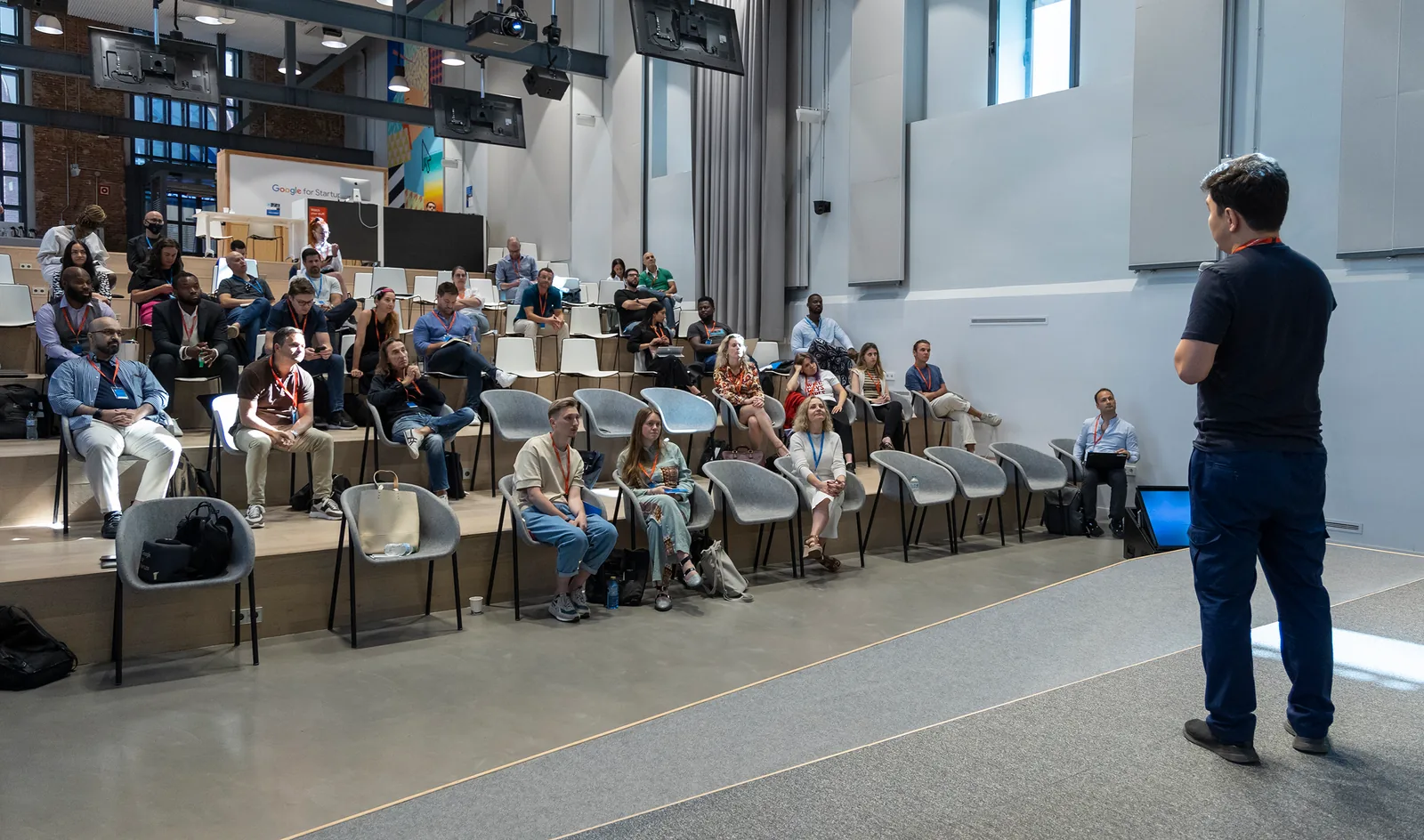
Employee exchange program, attracting international investments, and the opening of Google Campus in Almaty: results of the trip to the Google For Startups Summit
Аймира Куаныш

News
Cyber Shield-2 is being launched in Kazakhstan
Аймира Куаныш

News
The Digital Notary service has become available in three regions
Аймира Куаныш