CryptoCity: How Kazakhstan is Building the Future Economy on Blockchain
Author - Mansur Ismagulov
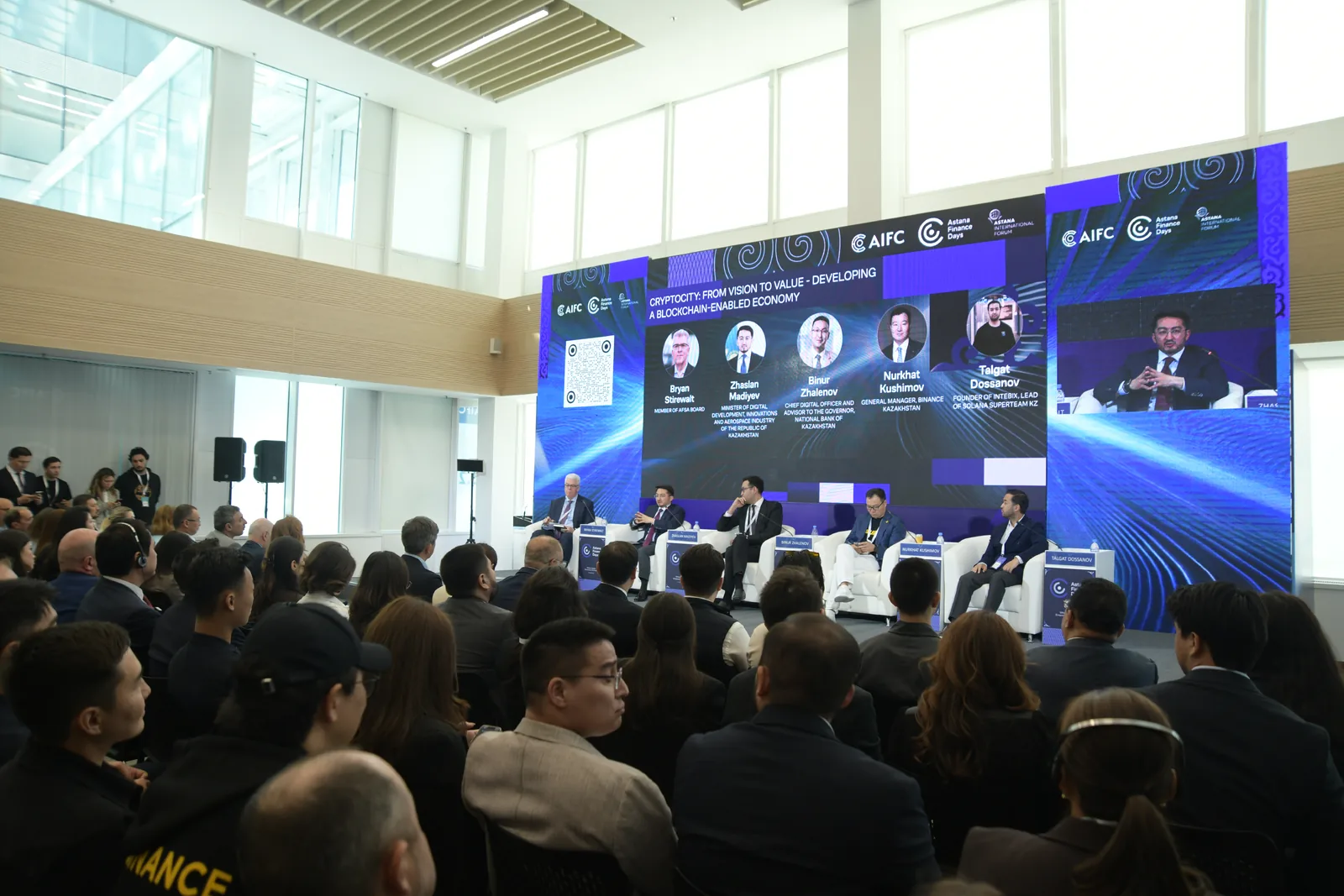
On September 4-5, Astana Finance Days 2025 took place at the International Financial Center “Astana” (IFC “Astana”). Within the framework of the event, a session titled “CryptoCity: From Vision to Value” was held, where experts discussed how to build a blockchain-based economy, create a friendly regulatory environment, and attract global players.
Zhaslan Madiev, Minister of Digital Development, Innovations and Aerospace Industry of the Republic of Kazakhstan
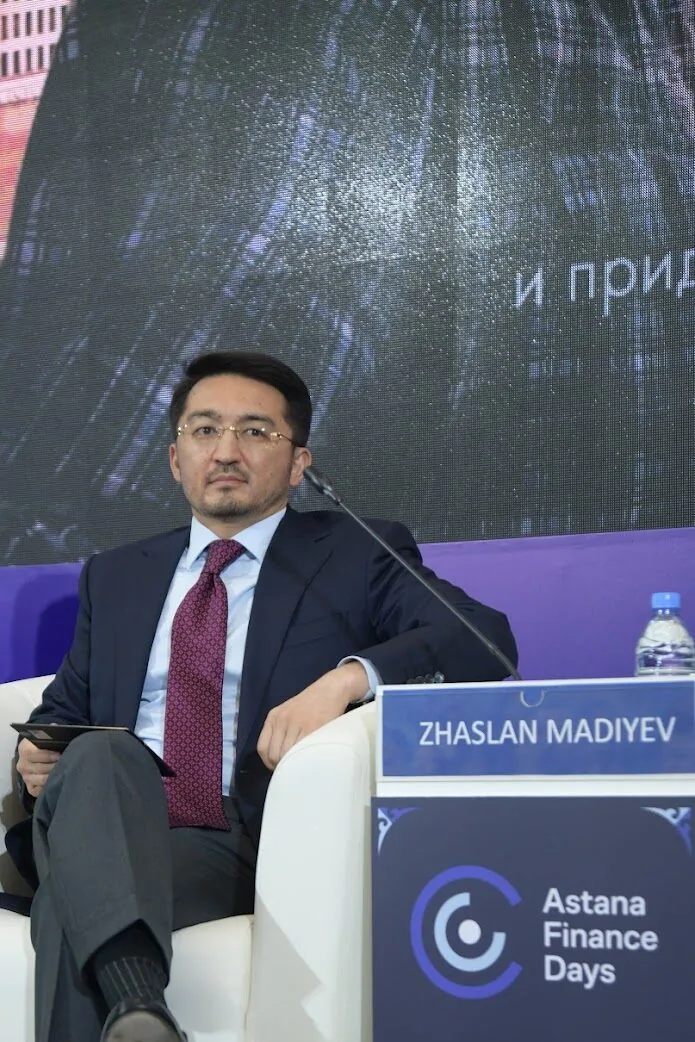
We have already created the necessary infrastructure, and today almost the entire value chain in Kazakhstan is sufficiently regulated. Of course, we continue to develop new regulations to enhance transparency. According to statistics, only 5-10% of transactions occur in the “white” zone, while the majority still remain in the gray area. Sometimes misunderstandings arise between crypto users and law enforcement agencies.
It is important to remember: the market should not be overly regulated. Rules should be structured so that using cryptocurrencies is convenient and transparent, not the other way around. Today, we have already created an attractive model, and large international players are entering the country. However, it is crucial that the state does not overload the market with excessive restrictions but instead helps make it more open.
We have several projects under the CryptoCity concept. This is not a specific city, but rather zones or territories with more liberal regulation and a crypto-friendly environment. This is a national idea: the state and the National Bank must create conditions under which cryptocurrency can be easily used for services, transfers, and existing technologies.
More friendly rules are needed for crypto ATMs, crypto cards, and services. At the moment, cryptocurrency is mainly perceived as a trading tool, but we expect the emergence of solutions in the field of payments and services. In the future, cryptocurrency will become the “currency for AI”: platforms and intelligent agents will be able to interact with each other and automatically make payments in digital currencies.
At the same time, energy efficiency cannot be forgotten. Crypto and blockchain must develop using “green” energy. Everything that is beneficial for cryptocurrency is also beneficial for Bitcoin. And Bitcoin is not only a store of value but also an asset that central banks should take into account.
Financial literacy is no less important: people must understand the processes of digital transformation and the risks of new products. The foundation here is trust: in rules, digital assets, and payment infrastructure.
We must make the most of the regulatory “sandboxes” of the National Bank and IFC “Astana”. The market should launch more projects, test them in these sandboxes to ensure their safety and reliability.
Furthermore, educational initiatives are extremely important: universities and major centers must actively engage in this process.
Binur Zhalenov, Head of Digital Transformation of the National Bank of the Republic of Kazakhstan
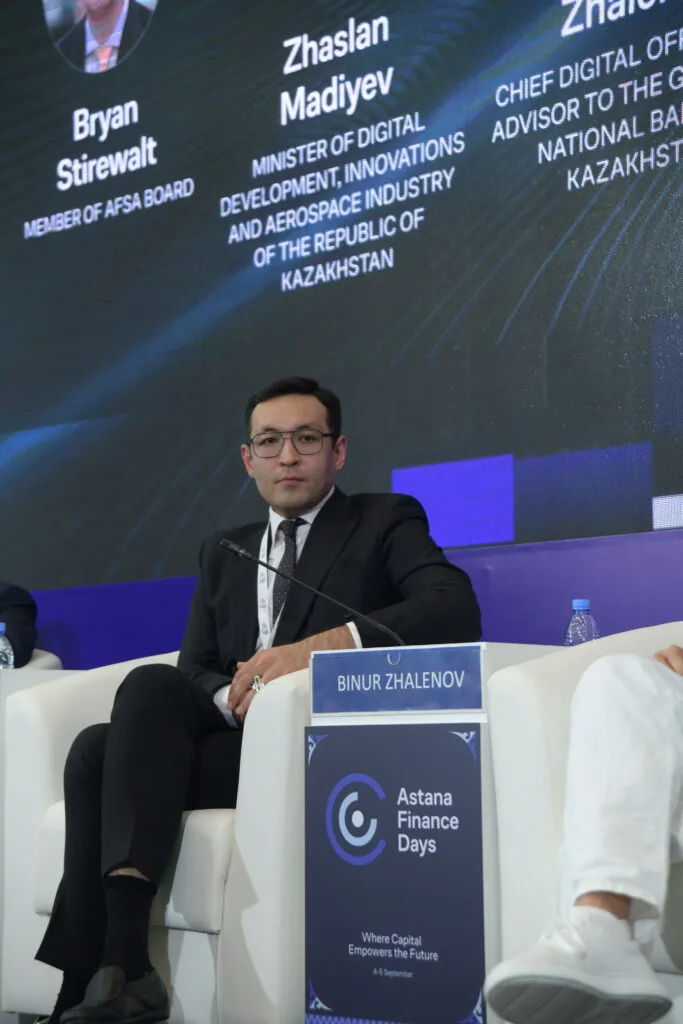
Last year, we approved a digital transformation strategy, which includes many areas, but for today’s discussion, two things are particularly important:
- Creation of a National Digital Financial Infrastructure — including national payment systems, national payment schemes, biometric solutions for identification, fraud prevention systems, and much more.
- Launch of the region’s first CBDC, which is already being used for government services and social payments. CBDC allows for the implementation of “programmable money,” increasing transparency and reducing corruption risks.
We are implementing a fast payment system — seven banks are already connected to it, and all will join by the end of the year. It is important that new solutions are compatible with cryptocurrency. At the President’s directive, a package of amendments for liberalizing the crypto market has been prepared: lifting the ban, licensing OTC and exchanges, expanding limits, and access to fiat channels.
A regulatory framework for tokenized assets is being formed. We are convinced that issuing a tenge-backed stablecoin is critically important for monetary sovereignty, but it requires a full-fledged ecosystem: market makers, liquidity, and integration into the financial sector.
Eight projects have already been approved in the regulatory “sandbox,” including Binance, with another 15 under review. We are also discussing the creation of state cryptocurrency reserves as a source of liquidity for the future stablecoin.
Our goal is the compatibility of traditional finance and DeFi. It is important to move towards liberalization, but with an emphasis on control and compliance, so as not to lose market trust. Synergy is needed: traditional players have infrastructure, trust, and security experience, while DeFi offers cross-border capabilities, programmability, and 24/7 settlements.
For this, dialogue is necessary. Red Web plays a key role here.
Nurkhat Kushimov, General Manager of Binance Kazakhstan
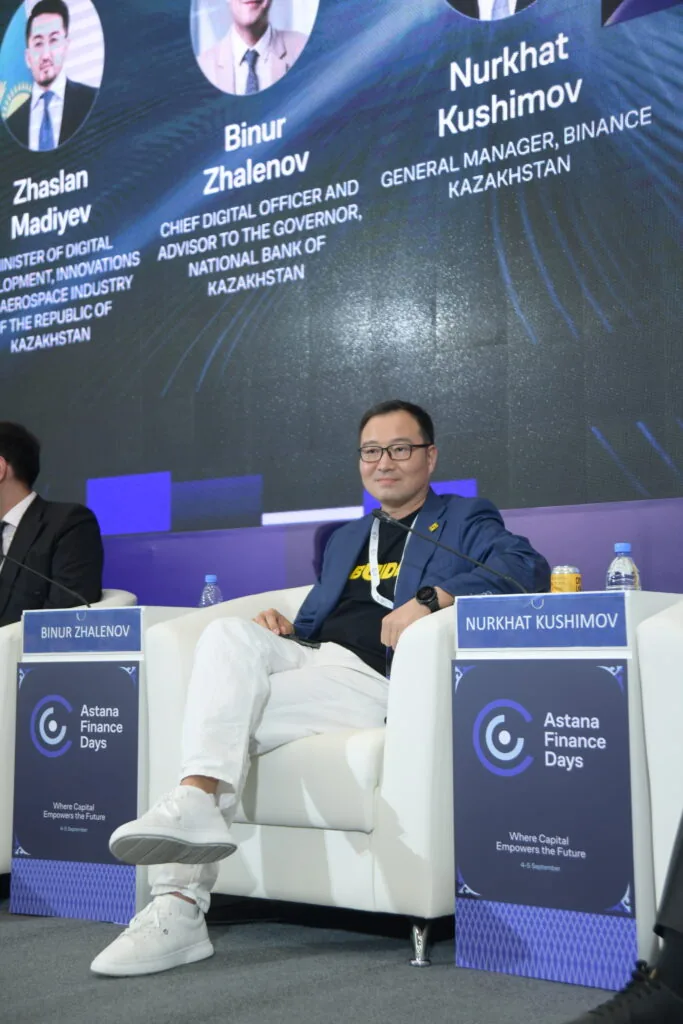
For me, CryptoCity is not a place, but an ecosystem. Similar to the concept of a “smart city,” but in digital finance. This is not just an investment sphere, but a whole infrastructure: technology development, education, payment solutions, and importantly — not over-regulating. The sandbox at IFC “Astana” is a good example of a flexible approach.
And I want to return to Darwin’s quote: “It is not the strongest that survive, but those most responsive to change.” We need to act quickly because there is global competition among jurisdictions. In traditional finance, it is difficult for Kazakhstan to compete with world centers, but in crypto and digital assets, we have a chance to occupy our niche.
By creating a hub, we attract projects, liquidity, and talent. And this triggers a “snowball” effect.
Also, financial literacy and education are extremely important. I would highlight two levels:
The first level is education within the crypto industry itself.
The second level is through traditional financial institutions, which already have people’s trust.
Today, the most important thing is to build transparent rules together with the government and regulators. The industry is currently at an early stage, and a lack of clarity hinders its development. A clear and transparent legislative base is priority #1.
Talgat Dosanov, Founder of Intebix and Head of Solana Superteam KZ
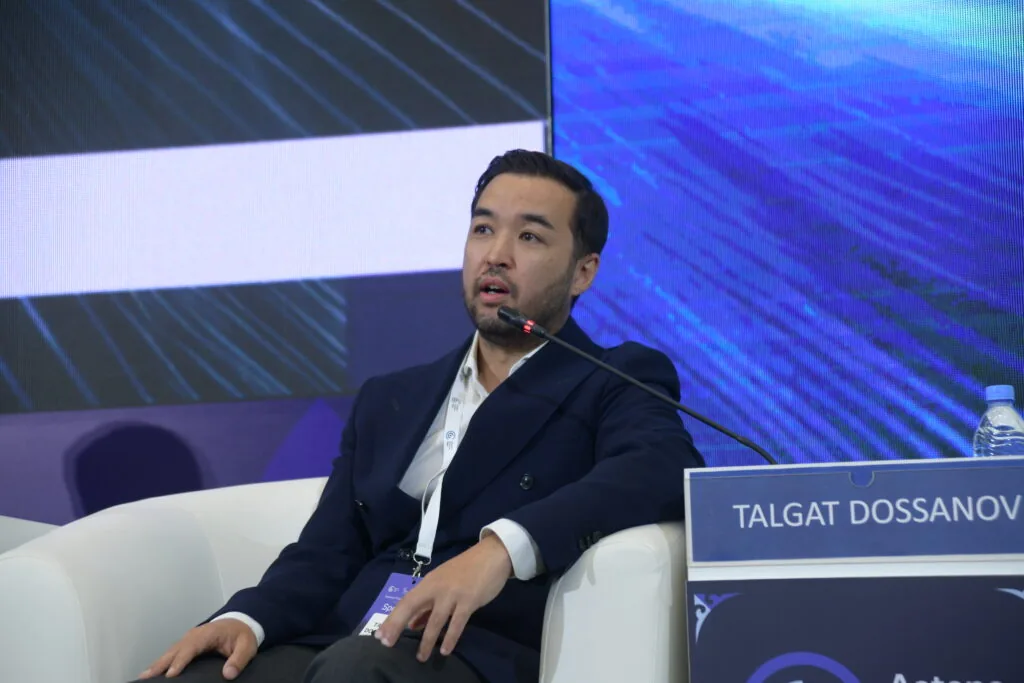
We see a unique opportunity for Kazakhstan to become not only a user but also a creator of digital assets.
After the forum with Solana and the Ministry of Digital Development, the company opens its first SuperTeam in Central Asia and the CIS.
We have already started free Web3 training jointly with the Ministry of Digital Development and Astana Hub. 650 people are learning, 140 have completed the first module and received certificates. We are also launching the national Solana Day hackathon with a prize fund of $20,000, covering 20 cities. Winners will be able to participate in global hackathons with prizes up to $250,000 and receive job offers.
Intebix, as one of the first licensed exchanges in IFC “Astana,” has already launched crypto-fiat rails with AFSA and the National Bank. We are also developing a tenge-backed stablecoin jointly with Solana and the Eurasian Bank.
But the most important thing is the development of human capital and clear rules for international companies. Thanks to forums like Digital Bridge and Solana Day, Kazakhstan is becoming increasingly attractive to global players.
In the long-term and medium-term perspective, the key is the development of human capital. In the short-term perspective, it is the creation of a clear payment infrastructure.
The Tech on Telegram Follow The Tech on Telegram
Keep up with the latest technology and startup news.
Related reading







More from this author

News
zypl.ai begins operations in Japan and focuses on next-generation risk models
Mansur Ismagulov

News
Elon Musk's net worth has exceeded $700 billion for the first time
Mansur Ismagulov

Article Interviews
"Central Asian countries should build a joint ecosystem," — Bekhzod Ismoilov on the development of AI in the region
Mansur Ismagulov

Article Interviews
Bloom's Taxonomy and Engineering Levels: A Practical Growth Model
Mansur Ismagulov

Article Useful
How the IT industry in Azerbaijan developed in 2025: key events
Mansur Ismagulov

News
Tajikistan has become a new member of the regional innovation alliance Central Asian Innovation Hubs.
Mansur Ismagulov