What is hindering the venture market in Kazakhstan: 4 insights from investors
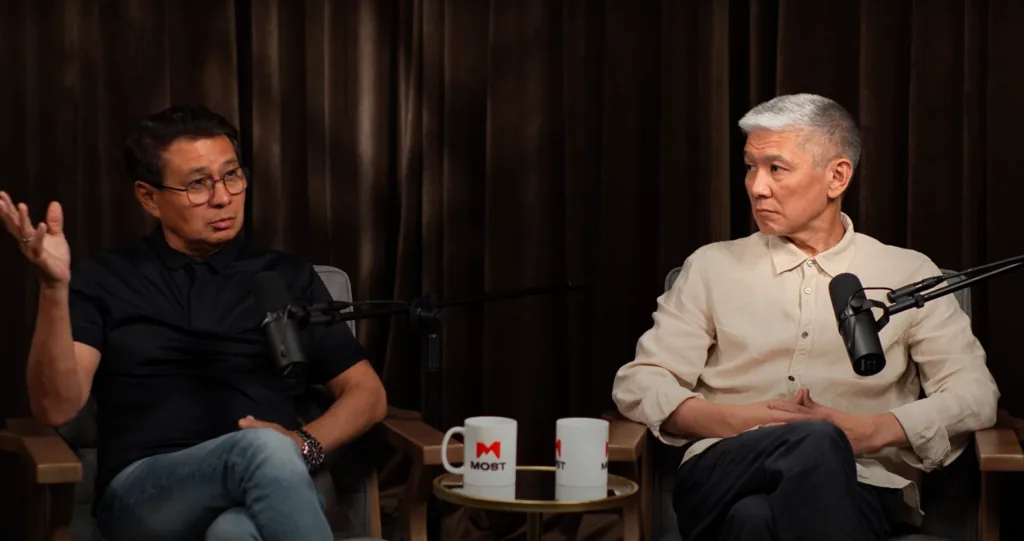
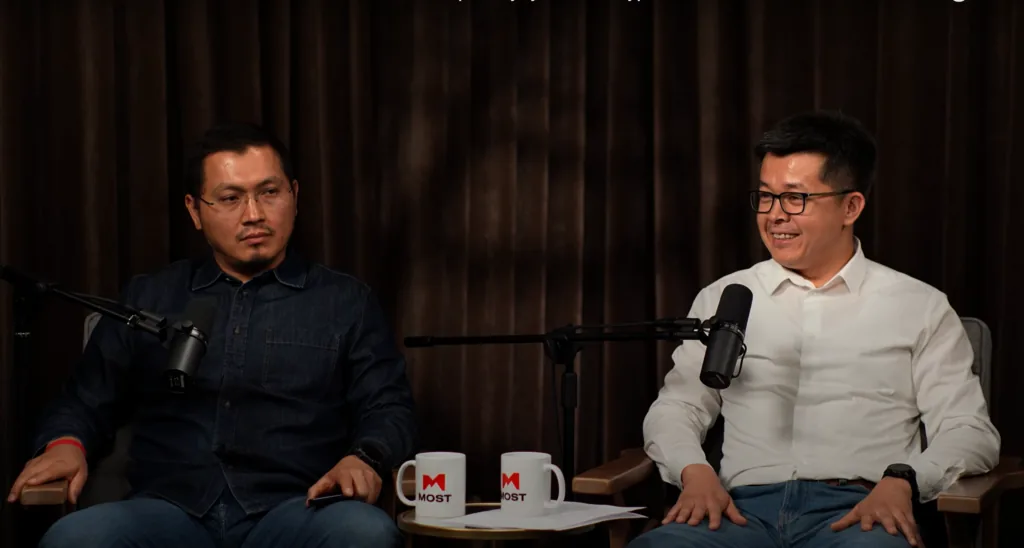
In the latest episode of the MOST Startup Media podcast, four leading investors—Murat Abdrahamanov, Marat Tolybay, Askar Bilisbekov, and Alim Khamitov—openly discussed what is really happening within the industry: what barriers are slowing progress, what opportunities remain untapped, and what is missing for Kazakh startups to grow globally rather than just locally.
Author - Mansur Ismagulov

The Tech AI
Get the key points in seconds - a short summary from The Tech AI.
In Kazakhstan, startup activity is growing, but the market is hindered by structural issues: a lack of country-level PR, private investors' distrust of the venture model, and weak interaction between corporations and startups. Experts note that startups are not fully leveraging the potential of investors as partners, while large companies are missing opportunities for growth through collaboration with new technology firms.
The Kazakh venture market is experiencing an interesting moment: on one hand, there is growing startup activity, deals, interest in AI and scaling; on the other, unresolved structural problems that have hindered the market from developing systematically for years.
We have gathered four key insights from each investor to help better understand where the Kazakh startup ecosystem stands today.
No brand means no market: Kazakhstan needs country-level PR
Despite the growth in the number of deals, new funds, and international collaborations, Kazakhstan still does not associate with technological development or innovation in the global information space.
This is particularly acute at international forums and in dialogues with foreign partners — when Kazakhstan is recognized either by cultural symbols or not at all. This creates an additional barrier: if the country does not announce itself, startups and investors have to break through the wall of distrust and ignorance on their own.
Murat Abdrakhmanov, founder of MA7 Ventures
The first thing international partners encounter is that they simply do not know about Kazakhstan. When they hear Kazakhstan, at best, they remember Golovkin or Dimash. Nothing about technology. About venture, maybe they have heard something about Kaspi. And that's it. We lack country-level PR.
Investing is still scary
Venture is still perceived as something risky, unpredictable, and sometimes even suspicious. Many private investors have already had negative experiences: investments in projects without proper due diligence, emotional decisions, fraud, or simply a lack of understanding of the mechanics of the venture market. All this forms a persistent distrust and discourages further attempts.
Askar Bilisbekov, Managing Partner at ByB Capital
There is no investment culture. People do not understand what investing is. A person gives money "from the heart," the project disappears — and that's it. For them, it looks more like fraud or a casino. But venture is not about betting at all.
Investors are ready to help, but startups do not ask
Alim Khamitov, CEO of MOST Ventures
Startups underutilize us — in a good sense. An investor is someone you should approach not only when everything is going well but also when there are difficult moments. Simply engage, guide, talk. It can be an emotional story or a business one.
In reality, a modern venture investor is not just a check but a full-fledged partner who can strengthen a project at various stages: from strategy and positioning to entering new markets and attracting subsequent rounds. Investors often see risks before they manifest and can help avoid critical mistakes.
Startups as fuel for corporate growth
One of the most underestimated tools for the development of large companies in Kazakhstan is partnership with startups. In global practice, such forms of cooperation as corporate accelerators, strategic investments, and M&A deals have become the main way to update products, technologies, and business models.
In Kazakhstan, however, most corporations still perceive startups as an "external story" unrelated to their internal processes.
Marat Tolybay, Managing Partner at Activat VC
Corporations should perceive startups as partners, not as something alien. They have three roles: to be an anchor client, an investor, and, ideally, a buyer. Unfortunately, in the country, this is done by literally two or three banks and that's it. This is a huge missed potential.
Watch the full episode on YouTube and find out:
— how startups miss opportunities due to distrust
— what smart money is in practice
— and what needs to be done so that Kazakhstan finally sounds like a technological country on the global stage.
The Tech on Telegram Follow The Tech on Telegram
Keep up with the latest technology and startup news.
Related reading







More from this author

News
zypl.ai begins operations in Japan and focuses on next-generation risk models
Mansur Ismagulov

News
Elon Musk's net worth has exceeded $700 billion for the first time
Mansur Ismagulov

Article Interviews
"Central Asian countries should build a joint ecosystem," — Bekhzod Ismoilov on the development of AI in the region
Mansur Ismagulov

Article Interviews
Bloom's Taxonomy and Engineering Levels: A Practical Growth Model
Mansur Ismagulov

Article Useful
How the IT industry in Azerbaijan developed in 2025: key events
Mansur Ismagulov

News
Tajikistan has become a new member of the regional innovation alliance Central Asian Innovation Hubs.
Mansur Ismagulov