What would happen if investors and founders swapped places for one day
In his new column, our author Azizbek Kurbonov proposes a thought experiment: what if investors woke up as founders, and founders as investors? Beneath the irony and lightness of the plot lies a deeper conversation—about the arrogance of the market, the weight of rejections, and how a little lived experience of others' lives makes the industry more humane.
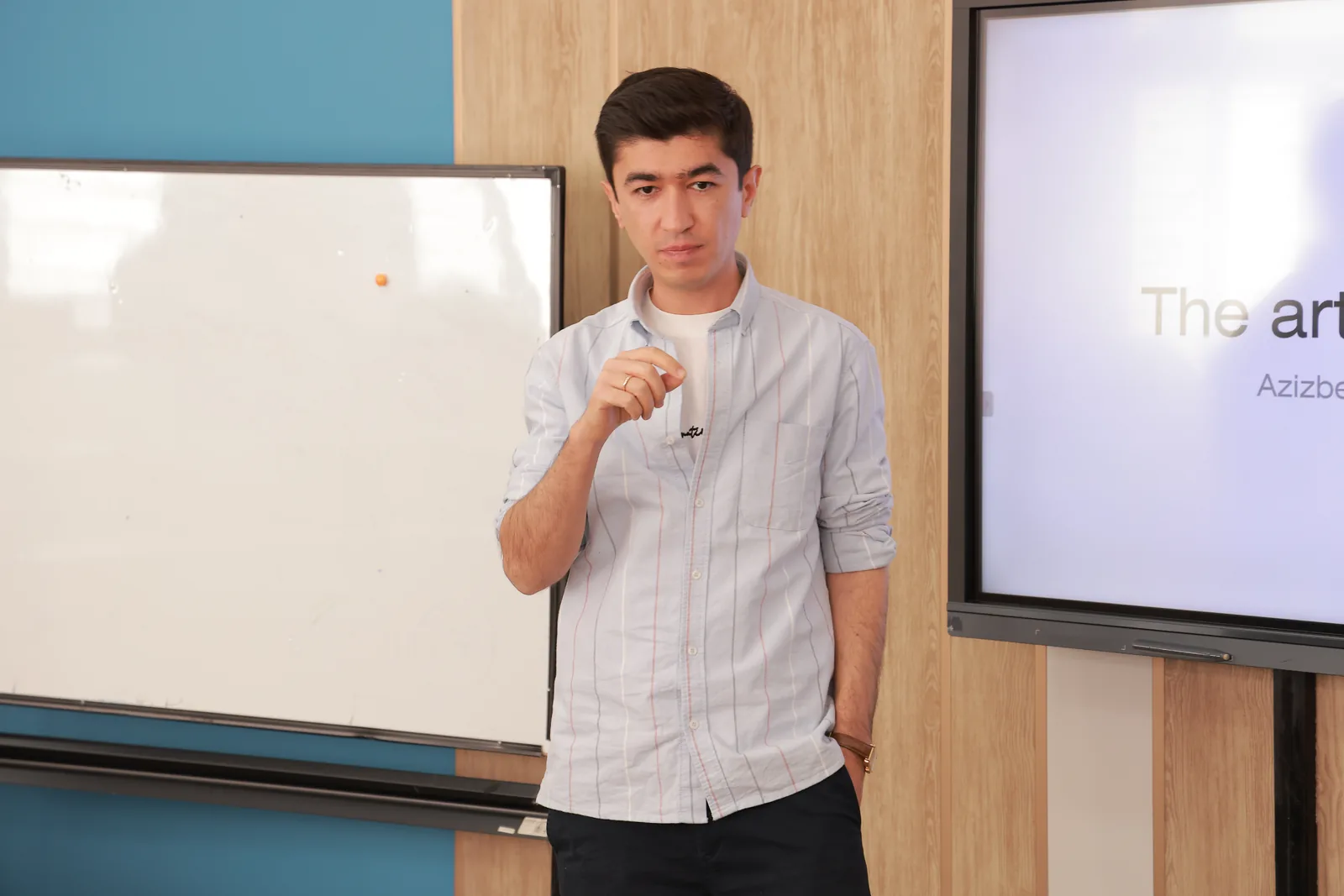
Azizbek Kurbonov, city — Tashkent, IT entrepreneur, Instagram
The Inverted Venture World
Welcome to the parallel venture world.
January 1, 2026. Not everyone woke up, but those who did saw something interesting. Everything had turned upside down. Investors became startup founders, and founders, in turn, woke up as investors.
The investors were shocked, as they would now have to work 18 hours a day. They had to find product-market fit, conduct customer development, and, of course, pitch their own projects. To those investors whom they had once rejected, ignored, forgotten, or dismissed.
After a deep breath, they calmed down. After all, in principle, theoretically, they knew everything, had seen it all, experienced it themselves, helped others, and reached the top. They had a network and a master’s degree; they wouldn’t be lost.
After a long pre-New Year’s night, the startup founders also woke up. After breakfast, realizing what had happened, a founder shouted: he was now an investor! An investor with a thick wallet, “deciding” the fate of projects, speaking to a narrow audience, writing articles about trends, a “podcaster,” philanthropist, and millionaire.
On the morning of January 1, 2026, there were no more changes. Everything remained in its place.
The players of the venture market got to work. The new “founders” started stand-up meetings with their teams; for some, the server went down; someone from the team decided to leave for employment; the landlord was looking for a director. Some co-founders started a second project but forgot to inform their partners. The email inbox was empty, and there were still no responses from investors.
The new “investors” strutted into the office. They had a burning desire to invest, attend another conference, and give a speech. But, for some reason, the office was empty. The investor sat down at the computer, opened the messenger and email: over 100 messages. With enthusiasm, he opened the first email: “I have an idea, a marketplace, but not just another one; we’ve slightly improved the design, and we have an AI chatbot. We’re raising $300,000. The team is currently employed; the MVP will be ready in four months” …. Hmm… okay… The calendar reminded him of a meeting with a potential LP in an hour at a restaurant in the city center. Yeehaw. It’s going to be hot and interesting.
The new “founder” had talked many times about customer development in his past life.
He had taught founders to “go into the field,” “talk to users,” and “not fall in love with the solution.”
Now, the field was real.
The first call with a client lasted 12 minutes and ended with the phrase: “We’ve already tried this. We don’t need it.”
The second client asked for custom modifications “literally in a couple of days.”
The third said the price was too high.
The fourth said it was too low, meaning the product wasn’t serious.
The new “founder” caught himself changing his pitch for the third time that day, his strategy for the fourth time, and his belief in the initial hypothesis for the fifth time.
Theoretically, everything was beautiful. In practice, it was painful, noisy, and personal.
Meanwhile, the new “investors” were sitting at a table in a restaurant.
The LP asked questions:
— “What is your track record?”
— “How do you select deals?”
— “Why exactly will you be able to return capital with a multiplier?”
The new investor smiled, talked about strategy, ecosystem, value add, and long-term vision.
But somewhere inside, a strange feeling arose.
For the first time, he understood that the phrase “we need to think about it” is not just a convenient formulation, but a responsibility.
That behind every rejection lies someone’s months of life.
And behind every “yes” lies a risk that will have to be explained not on LinkedIn, but to the people who entrusted you with their money.
The day was coming to an end.
The new “founders” sat in offices with empty inboxes and burning deadlines.
The new “investors” — with overflowing inboxes and burning expectations.
And here’s what was strange:
both camps were equally tired.
That night, on January 1, 2026, no one celebrated.
Some reread their old posts about “easy money in venture.”
Others — their comments under pitches: “Weak team,” “Too early,” “No market.”
And in the morning…
Everyone woke up in their own places.
Investors became investors again.
Founders became founders.
The world returned to normal.
But something had still changed.
Investors began to say “it’s simple” less often.
Founders began to think that investors “don’t understand anything” less often.
And the venture market became a little less arrogant.
A little more human.
And, perhaps, a little more honest.
Because sometimes, to understand each other,
you need to live in someone else’s shoes for a while.
The most interesting thing is that I myself have been in both roles. This is very grounding: you begin to understand both camps, and this usually returns as mutual respect.
The Tech on Telegram Follow The Tech on Telegram
Keep up with the latest technology and startup news.
Related reading




More from this author

Article Useful
How to protect your accounts from hacking: 8 settings you should check today
The Tech

Article Useful
500 Global: How the Accelerator Works and Who Can Receive Investments
The Tech

Article Interviews
Game Development in Central Asia: Arkady Moldavski on Developing Reverb and the Growth of the Industry
The Tech

Article Useful
Google, Tesla, BlackRock, and the IMF: Where to Apply for an Internship in Fall 2026
The Tech

News IT
Tesla unveiled the flying electric car Roadster
The Tech

News IT
Intero Biosystems startup won the Startup Battlefield at TechCrunch Disrupt 2026
The Tech