Angel investing in Kazakhstan. Risks and even bigger risks
Author - Mansur Ismagulov

The Tech AI
Get the key points in seconds - a short summary from The Tech AI.
Anuar Lenzat, Investor Relations Manager at Activat VC from Almaty, points out that angel investing in Kazakhstan lags behind the growth of the venture market. Unlike in the US, where more than 70% of deals are made before funds, Kazakh angels often enter later at high valuations. The average portfolio of local investors consists of only 2–5 projects, making investments a risky lottery without a diversification strategy.
Anuar Lensat, city — Almaty, investor relations manager Activat VC, Hokage RSBootcamp
Business angel investing in Kazakhstan is growing: clubs are emerging, syndicate deals are being made, and private capital is flowing into startups. However, despite this, it is not developing as quickly as the professional venture capital market and the level of startups are growing. Much can be said about the role of business angels, but I would like to focus on one thing: they are a source of fuel at the initial stage.
Here is a brief comparison with a mature ecosystem. There is a huge gap between our ecosystem and, for example, the US ecosystem. And it’s not just about market volumes, but also about the logic and maturity of investment approaches.
1. Kazakhstan: angels enter together with funds — already at high valuations.
The classic scenario on our market looks like this: a fund enters a startup, followed by angels. This is logical, given that our ecosystem is young, and this approach is acceptable due to the fear of making mistakes and lack of investment experience.
But by this point, the project’s valuation has already increased. Funds compensate for this through broad diversification — entering 30–40 startups at once, knowing that only a few will succeed. This is a strategy based on statistics. One will return the money, another will generate profits, and unfortunately, the rest will remain in history.
Angels entering in the same rounds are forced to pay the same price but do not have the same scale or volume of deals. To achieve the same returns, they too need to invest in dozens of projects. However, most lack both capital and access to such a large number of quality deals. As a result, risks remain, while the upside is minimal. Of course, luck might play a role…
2. USA: angels enter before funds; there is even a term called Angel stage — when angels enter the earliest stages of startups and win.
In the US, angels operate differently. They enter startups before funds appear — when valuations are lower. This is how they protect their investments: they get a larger share for less money. In this way, they compensate for the number of projects in their portfolio with higher ownership stakes. But this does not eliminate the need for portfolio diversification.
According to data from the Angel Capital Association (ACA), more than 70% of angel deals in the US are made before the involvement of the first venture funds. This is a key point. Angels become the first investors, closer to founders, gain better relationships and access to subsequent rounds.
This approach allows American angels with a portfolio of 5–10 startups to have much greater chances of significant returns. Even with a portfolio of 5–10 projects, one can break even if at least one delivers a major exit.
On average, Kazakhstani angels invest “a little bit” — in two to three, at most five projects, according to Activat Invest club data. Of course, there are exceptions — two or three experienced private investors with substantial capital who truly build venture portfolios and enter at early stages. But we are not talking about them now. We are talking about those who are just entering the market, taking their first steps, and forming the foundation of the future angel culture in the country. Venture statistics work over the long term: five projects is simply a bad lottery. Here, you either need to seriously immerse yourself in the market and build a full-fledged portfolio, or take another path — become an LP (limited partner) in venture funds, where diversification is already built into the DNA.
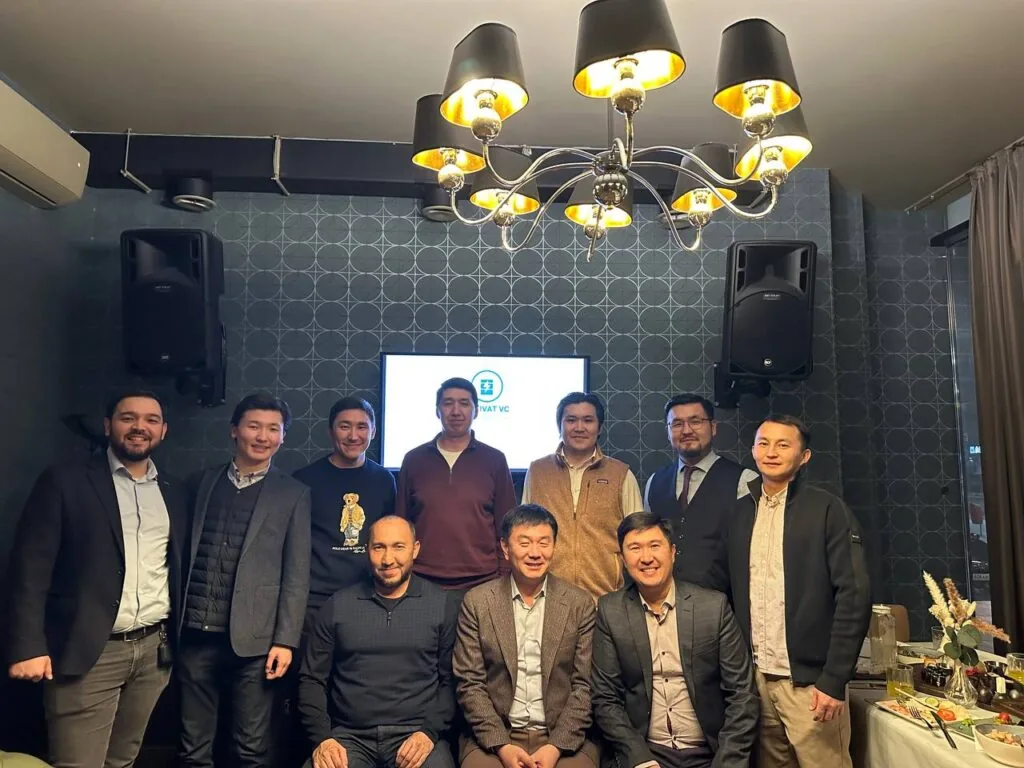
It is important to understand: if you start playing in venture capital, you must play by the rules. Otherwise, it is not investing, but a lottery.
In our angel club, we are consciously working toward bringing startups to the market at the earliest stages, when funds have not yet entered, valuations are minimal, and growth potential is maximal. We are currently developing a mechanism where we will show our investors the opportunity to invest before us in startups that are under our monitoring and, in our opinion, have good chances of success.
Each investor will have the right to choose which of these startups to enter. This is not “dumping” projects, but real pipeline management. We did not invest in these startups not because they are bad, but because they are not yet ready for our investments. They need to grow. And here, angel investments will be useful. There is a high probability that we will invest in them later as a company. This is beneficial for the first angels. We want to give angels the opportunity to act like their counterparts in the US, Europe, and Israel.
Conclusion
Being a business angel means being a strategist. It is not about “entering on emotion.” It is about systematics, experience, and calculation. Entering startups at high valuations without a portfolio and strategy is a path to nowhere. To make money, you either need to enter before funds or trust your capital to experienced fund teams. Everything else is a risky experiment.
Kazakhstani angels need to move from trial and error to a strategy and model that actually works.
The Tech on Telegram Follow The Tech on Telegram
Keep up with the latest technology and startup news.
Related reading







More from this author

News
zypl.ai begins operations in Japan and focuses on next-generation risk models
Mansur Ismagulov

News
Elon Musk's net worth has exceeded $700 billion for the first time
Mansur Ismagulov

Article Interviews
"Central Asian countries should build a joint ecosystem," — Bekhzod Ismoilov on the development of AI in the region
Mansur Ismagulov

Article Interviews
Bloom's Taxonomy and Engineering Levels: A Practical Growth Model
Mansur Ismagulov

Article Useful
How the IT industry in Azerbaijan developed in 2025: key events
Mansur Ismagulov

News
Tajikistan has become a new member of the regional innovation alliance Central Asian Innovation Hubs.
Mansur Ismagulov