Biomimicry in Digital Marketing: How Natural Ecosystems Inspire Digital Strategies
Alexander Titov, expert in cross-cultural digital strategies and strategic partnerships
Author - Mansur Ismagulov

The Tech AI
Get the key points in seconds - a short summary from The Tech AI.
Alexander Titov developed a methodology for building digital ecosystems based on biomimicry. In the manual "Digital Ecosystem: Creating Self-Sustaining Partner Networks in the Digital Environment," the application of natural system principles is proposed for creating sustainable digital strategies. The approach includes the use of data, adaptability, diversity of channels, and symbiosis of partners.
Alexander Titov, an expert in cross-cultural digital strategies and strategic partnerships, has developed an innovative methodology for building digital ecosystems. In his guide “Digital Ecosystem: Creating Self-Sustaining Partner Networks in the Digital Environment,” Titov offers a new perspective on digital marketing based on the principles of natural systems. One of the key ideas of his approach is the application of biomimicry in developing digital strategies, which allows for the creation of more sustainable and adaptive marketing solutions.
Nature is the greatest innovator in history. Billions of years of evolution have created systems of remarkable complexity and efficiency. It is no surprise that scientists and engineers have long drawn inspiration from natural mechanisms. This approach is called “biomimicry,” derived from the Greek words bios — life, and mimesis — imitation.
Classic examples of biomimicry are well known: Velcro, inspired by burrs, or high-speed trains whose shape mimics the beak of a kingfisher. However, applying this concept to business and marketing is a relatively new idea.
Digital marketing, with its dynamism and complexity, is surprisingly similar to natural ecosystems. Here too, the laws of competition and cooperation, adaptation and evolution apply. Therefore, applying the principles of biomimicry to digital strategies is not only possible but potentially revolutionary.
Viewing digital marketing through the lens of natural systems opens up new horizons. It allows for the creation of strategies that are not only effective here and now but also capable of adapting to a constantly changing environment. In this article, we will explore how the principles of natural ecosystems can transform the approach to digital marketing, making it more sustainable, flexible, and innovative.
So, how exactly can natural ecosystems inspire our digital strategies? Let’s look at the key principles we can borrow from nature.

Resource circularity is the most obvious lesson. In nature, there is no waste: everything is recycled and reused. In the digital world, this can mean efficient data usage. Every customer interaction, every click, is a resource that can and should be used to improve strategy.
Adaptability is another critical principle. Species unable to adapt to environmental changes go extinct. Similarly, in the digital realm, companies that fail to keep up with trends quickly lose their position.
Diversity and complementarity are the foundation of ecosystem resilience. In marketing, this can manifest in creating diverse partnerships, using various communication channels, and developing multifaceted campaigns. The more diverse your strategy, the more resilient it is to external influences.
Finally, feedback and self-regulation. Natural systems constantly adjust themselves based on incoming signals. In digital, this means continuous data analysis and flexible strategy adjustment. Not once a quarter, but constantly, in real-time.
Applying these principles can fundamentally change the approach to digital marketing. But what does this look like in practice? Let’s consider specific examples.
Symbiosis in nature is not just coexistence, but a mutually beneficial partnership. Similarly, in the digital world, successful ecosystems are built on the win-win principle.
Take the example of Spotify and Uber. What do a streaming service and a taxi company have in common? Yet, their partnership allowed passengers to control music during rides, creating a unique user experience. This is not just added value — it is a new ecosystem where each participant strengthens the other’s position.
Or look at the collaboration between Nike and Apple. Integrating fitness apps with “smart” sneakers created an entire ecosystem for runners.
The key to creating such symbiotic relationships is finding non-obvious connections. Just as mycorrhiza connects fungi and trees in a forest, in digital, you need to look for unexpected synergies. A bank and a streaming service? Why not, if it creates unique value for the customer.
Now let’s look at how the principles of adaptation and evolution from the natural world can be applied to digital marketing strategies.
Evolution in nature is not a planned process but continuous adaptation to changing conditions. In digital marketing, we can and should act more purposefully, but the principle of constant adaptation remains key.
Netflix is a great example of “digital evolution.” Starting with DVD rentals by mail, the company foresaw the future of streaming and completely transformed its business model. But the evolution did not stop there: Netflix continues to adapt, creating its own content and experimenting with interactive formats.
Adaptation in digital often requires the courage to abandon what worked yesterday. Kodak failed to do this and lost its leadership. Instagram, on the other hand, successfully evolved from a simple photo filter to a multifunctional social network competing with industry giants.
Adaptation and evolution in digital require a special mindset — flexible, open to change, and ready to learn from mistakes. Cultivate these qualities in your team, and your digital strategies will not just follow trends but create them.
Now let’s look at how natural principles of resource optimization can be applied in digital marketing.
Take data — the “oil” of the digital economy. Smart companies create closed loops where every customer interaction enriches the overall picture. Amazon is a master of this approach. Every click, every purchase, every review becomes part of a complex recommendation system, constantly improving the user experience.
Optimization also applies to computing power. Cloud technologies allow scaling resources on demand, much like plants regulate water consumption. Spotify, for example, uses a microservices architecture that allows efficient load distribution and rapid implementation of new features.
It is important to understand: optimization is not synonymous with minimization. The goal is maximum return from every resource. Sometimes this means increasing investments, but with a focus on long-term efficiency.
Next, let’s look at how diversity can become the key to the resilience of your digital strategy.
Biodiversity is the key to the resilience of natural ecosystems. This same principle can be successfully applied in digital strategies.
Take communication channels. Do not put all your eggs in one basket. Social media algorithms change, new platforms appear. Companies relying on a single channel risk losing much if it changes. An example is brands that built their strategy solely on organic reach on Facebook and suffered from algorithm changes.
Diversity also applies to content formats. Text, video, podcasts, interactive content — the wider the spectrum, the more touchpoints with the audience. Red Bull masterfully uses this approach, creating content ranging from extreme videos to popular science articles.
Diversifying partnerships is also critical. Coca-Cola, for example, collaborates not only with fast-food chains but also with clothing manufacturers, streaming services, and even NASA. This expands the audience and creates protection against market fluctuations.
Diversity within the team is also important. Different backgrounds, skills, and perspectives enrich the creative process. Google and Apple are known for their approach to forming interdisciplinary teams.
Diversity is a powerful tool in the digital marketer’s arsenal. But this is only part of the puzzle. Now let’s take a step forward and dive into the world of cyclical processes.
In nature, everything is cyclical: from the water cycle to the changing seasons. This principle can be effectively applied in digital marketing, creating sustainable ecosystems of value exchange.
Take loyalty programs. The traditional model “buy — get points — spend points” is linear. What if we make it cyclical? An example is Starbucks Rewards. Customers not only accumulate stars but also receive personalized offers, participate in challenges, which stimulates new purchases and interactions. This creates a continuous cycle of engagement and value.
Content marketing can also be cyclical. Netflix does not just release shows — it analyzes views, comments, creates spin-offs, and documentaries about the making of popular series. This forms a continuous content cycle that engages the audience at different levels.
A cyclical approach is also applicable to innovation. Instead of the traditional model “research — development — launch,” companies like Spotify use a continuous cycle of testing and iterations. New features are launched in beta mode, feedback is collected, changes are made — and the cycle repeats.
A key element of the cyclical approach is feedback. Just as ecosystems self-regulate in nature, in digital it is important to create mechanisms that allow the strategy to self-correct based on data and user feedback.
We have delved into the theory, studied principles inspired by nature. But how to turn these ideas into real, working strategies? It’s time to roll up our sleeves and move from concepts to specific actions. Let’s break down how to implement biomimicry in your marketing arsenal, turning natural principles into digital advantages.
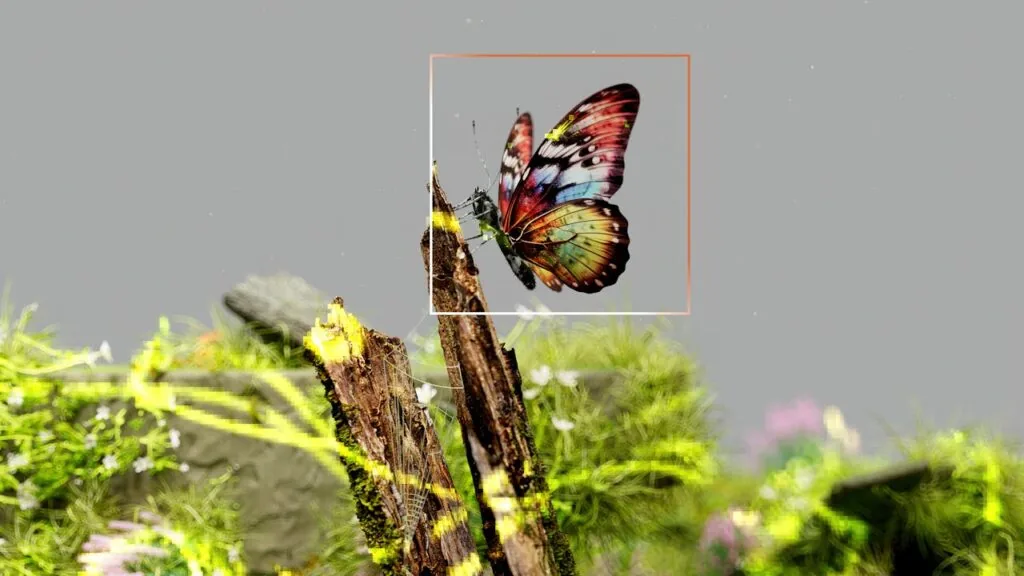
1. Start with an audit. Analyze your current digital ecosystem. Where are your strengths? Where are your weaknesses? Use tools like SWOT analysis, but through the lens of natural systems. For example, evaluate the “biodiversity” of your communication channels or the “cyclicity” of customer interactions.
2. Identify the key “species” in your ecosystem — these could be products, channels, or audiences. How do they interact? Where are new symbiotic connections possible?
3. Map resource flows. In nature, nothing goes to waste. Similarly, in digital: data, content, user experience — everything should work towards a common goal. Use data visualization tools to create a map of your digital ecosystem.
4. Implement adaptation mechanisms. This could be an A/B testing system, regular strategy reviews, or AI-driven analytics to identify new trends. The key is to create processes that allow your strategy to evolve in real-time.
5. Create feedback loops. Use tools like NPS or sentiment analysis, but do not limit yourself to them. Look for ways to turn every customer interaction into a source of insights for improvement.
6. Experiment with “mutations.” Allocate resources to test radically new ideas. Just as genetic mutations sometimes lead to evolutionary breakthroughs, bold experiments in digital can open up new opportunities.
The key takeaway: nature is an unparalleled innovator, and we are only beginning to unlock the potential of its lessons for the digital sphere. From cyclical processes to adaptive systems — principles honed by millions of years of evolution can transform our approach to marketing.
Biomimicry in digital is not just a new tool in a marketer’s arsenal. It is a new way of looking at how we create value in the digital world. And perhaps, it is the key to building a more sustainable and harmonious future for business and society as a whole.
Your next step? Start small. Choose one aspect of your strategy and try to rethink it through the lens of natural systems. The results may surprise you — and inspire you to do more.
Author: Alexander Titov
The Tech on Telegram Follow The Tech on Telegram
Keep up with the latest technology and startup news.
Related reading





More from this author

News
zypl.ai begins operations in Japan and focuses on next-generation risk models
Mansur Ismagulov

News
Elon Musk's net worth has exceeded $700 billion for the first time
Mansur Ismagulov

Article Interviews
"Central Asian countries should build a joint ecosystem," — Bekhzod Ismoilov on the development of AI in the region
Mansur Ismagulov

Article Interviews
Bloom's Taxonomy and Engineering Levels: A Practical Growth Model
Mansur Ismagulov

Article Useful
How the IT industry in Azerbaijan developed in 2025: key events
Mansur Ismagulov

News
Tajikistan has become a new member of the regional innovation alliance Central Asian Innovation Hubs
Mansur Ismagulov