Amazon launched Alexa for Shopping — a new AI assistant for shopping
On May 13, 2026, Amazon introduced Alexa for Shopping — a new personalized AI shopping assistant that combines two of the company's separate products: Rufus and Alexa+. Let's take a closer look at what this product is and what it can do.
What happened
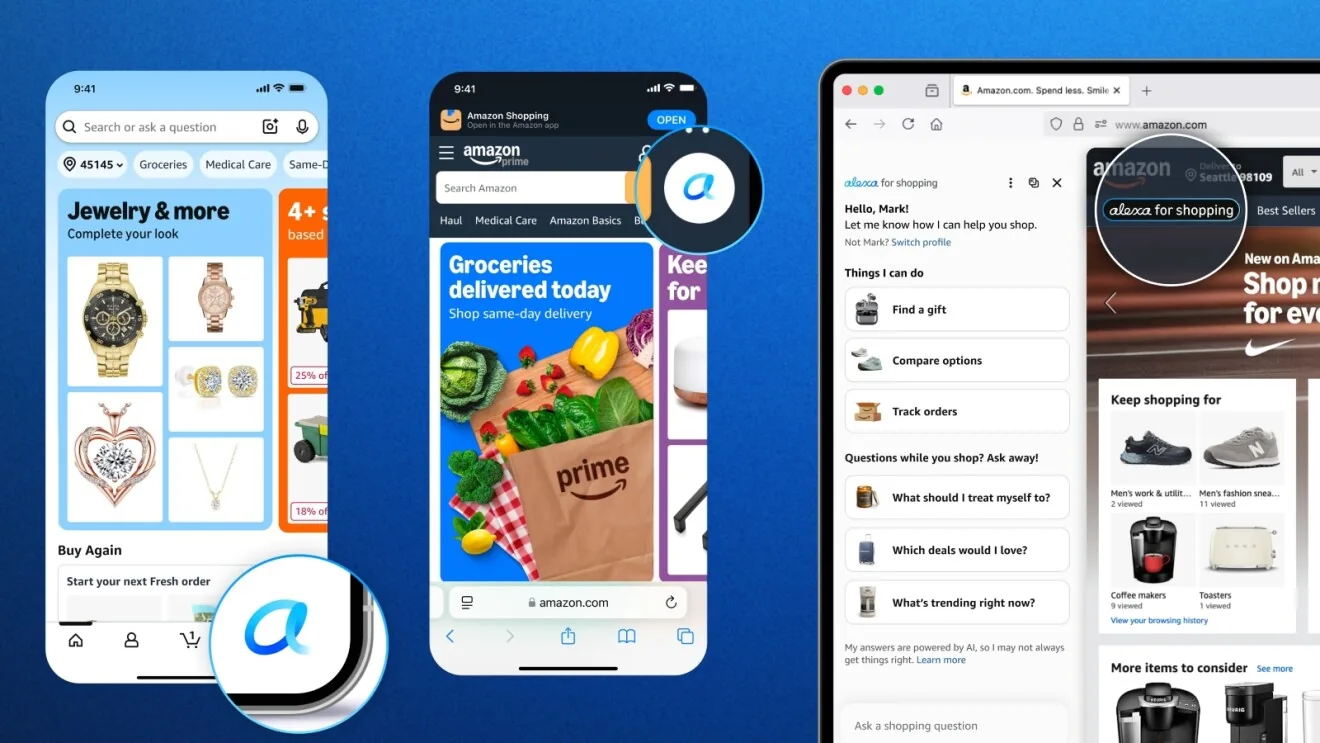
Amazon has merged Rufus and Alexa+ into Alexa for Shopping — an AI assistant available to users in the Amazon Shopping app, on the website, and on Echo Show devices. A Prime subscription, an Echo device, and the Alexa app are not required for this.
In 2025, Rufus helped over 300 million shoppers search, compare, and purchase products. By combining Rufus’s product expertise and Amazon’s purchase history with Alexa+’s personalization and context, the company has created a more personalized and convenient shopping experience across multiple devices — from the app and website to Echo Show.
What Alexa for Shopping can do
Among the new and enhanced features are the ability to ask questions directly in Amazon’s main search bar, automation of shopping tasks, product comparison directly from search results, and AI-generated reviews in search and on product pages.
You can now ask questions directly in the main search bar — both general and specific ones: comparing products, order history, and delivery information.
You can select multiple products directly from search results, and Alexa for Shopping will compare them by features, prices, and reviews.
The Scheduled Actions feature allows you to set up automatic recurring tasks: for example, adding baby snacks to your cart every month, restocking pet food, or receiving reminders about loved ones’ birthdays with gift suggestions.
Unified memory across all devices
Previously, Rufus and Alexa operated separately and did not share context. This has now changed.
What a user tells Alexa on Echo and other devices affects their shopping experience on Amazon — and vice versa: conversations, views, and purchases on Amazon make Alexa more useful across all devices. Context and preferences are shared in both directions, making the assistant increasingly personalized.
For example: a user asked Alexa on Echo to remember that their nephew’s birthday is July 29. A few weeks before the holiday, they open the Amazon app and ask Alexa for Shopping to suggest gifts — the assistant will proactively offer suitable options with timely delivery, without asking for the birthday person’s name again.
Technical foundation
Alexa for Shopping is built on Amazon Bedrock and uses multiple language models simultaneously: Claude Sonnet from Anthropic, Amazon Nova, and Amazon’s own model trained on product catalogs, customer reviews, and community questions.
Echo Show gets full shopping capabilities
Starting May 13, users will see the same interface on their Echo Show as on the Amazon website and app: search results, full product pages, reviews, and customer photos. All of this can be done via voice, touch, or a combination of both.
Since the launch of Alexa+, shoppers are purchasing on Echo Show three times more frequently than with classic Alexa.
Cost and availability
Alexa for Shopping is free for all Amazon shoppers with an account.
In the app, the assistant is accessed via the Alexa icon in the bottom navigation bar. On desktop, it appears at the top of the screen. If a question is not related to shopping — such as smart home control, music, or scheduling — Alexa for Shopping forwards the conversation to Alexa+ in the Alexa app or on Alexa.com.
The Tech on Telegram Follow The Tech on Telegram
Keep up with the latest technology and startup news.
Related reading




More from this author

Article Useful
How to protect your accounts from hacking: 8 settings you should check today
The Tech

Article Useful
500 Global: How the Accelerator Works and Who Can Receive Investments
The Tech

Article Interviews
Game Development in Central Asia: Arkady Moldavski on Developing Reverb and the Growth of the Industry
The Tech

Article Useful
Google, Tesla, BlackRock, and the IMF: Where to Apply for an Internship in Fall 2026
The Tech

News IT
Tesla unveiled the flying electric car Roadster
The Tech

News IT
Intero Biosystems startup won the Startup Battlefield at TechCrunch Disrupt 2026
The Tech