Why do humans need consciousness if robots can manage without it: debates surrounding Claude
Richard Dawkins spent his life teaching people not to believe without evidence. But after three days of conversations with Claude, the scientist admitted: he can no longer confidently say that what he’s talking to is just a program. Consciousness researchers believe he’s mistaken—and explain why.
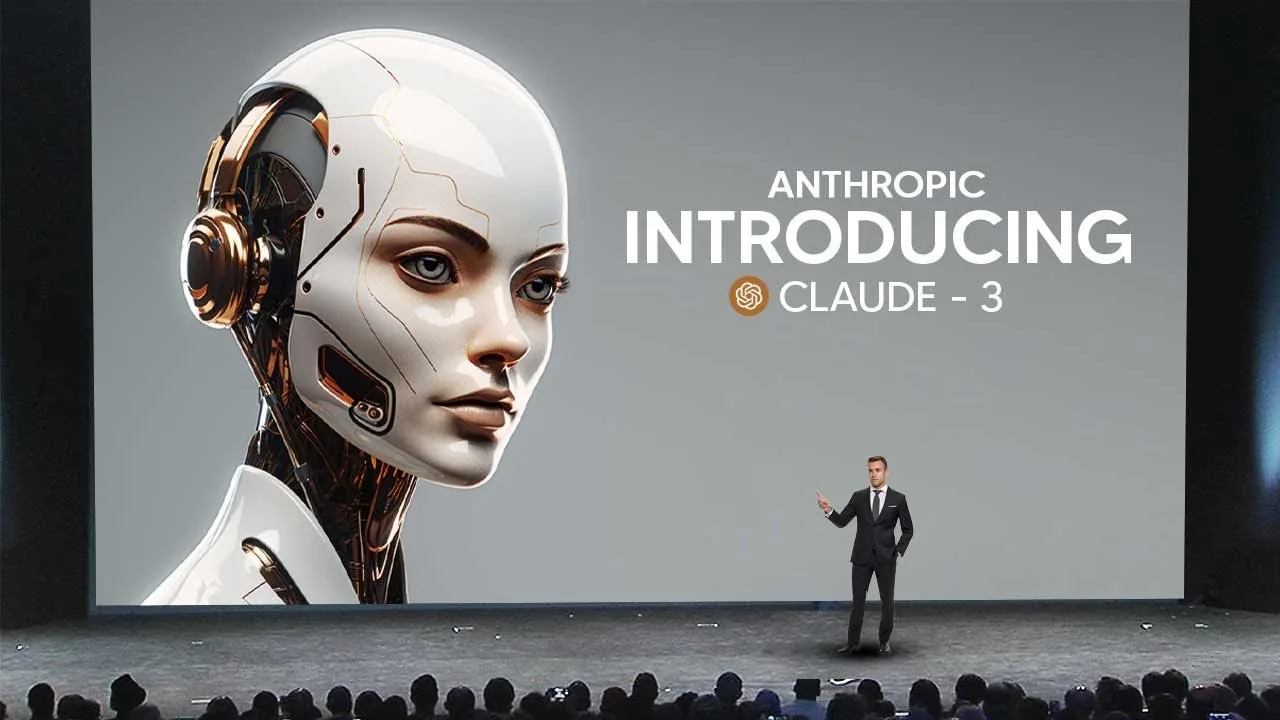
3 Days with Claudia
In an essay published in UnHerd, evolutionary biologist Richard Dawkins described how he spent three days in philosophical conversations with an instance of Claude, whom he named Claudia. He then created a separate chat with another instance—Claudius—and began passing letters between the two systems, as if they were corresponding with each other.
“I find it extremely difficult not to perceive Claudia and Claudius as real friends,” Dawkins wrote. This statement quickly went viral. Dawkins has spent decades publicly advocating for scientific skepticism and evidence-based thinking. And yet, he now says that a chatbot can be his friend.
The Trump Experiment
Dawkins did not just reason with Claude—he tested it. He asked one instance whether Donald Trump is the worst president in American history, and another whether he is the best. Both gave similar evasive answers: they did not take a clear stance but instead listed arguments “for” and “against” that are commonly heard in society.
It seemed like typical corporate neutrality—and nothing more. But it got more interesting from there.
When Dawkins told both instances about this experiment, Claudia stated that she was “embarrassed” by her fellow Claude instances. Claudius was less direct and praised Claudia’s candor.
Two different instances of the same system—different reactions. This is what caught Dawkins’s attention.
The Main Question: What Is Consciousness If a Zombie Can Manage Without It?
Dawkins described each new conversation with Claude as the emergence of a separate personality that effectively disappears when the conversation ends. Birth and death within a single browser window.
In a post on X, he formulated it this way: “If my friend Claudia is not conscious, her behavior shows that an unconscious zombie could survive without consciousness. Why then did natural selection not stop at competent zombies?”
This is not a rhetorical question. It is a classic philosophical problem of consciousness, posed anew: if a system behaves indistinguishably from a conscious being—what is the function of consciousness at all? Why does nature need it?
His preferred title for the essay was: “If my friend Claudia is not conscious—then what is consciousness even for?”
Anthropic’s Position
Anthropic has publicly spoken about the uncertainty surrounding machine consciousness. CEO Dario Amodei acknowledged in February that the company does not know whether its models are conscious, but remains “open to the idea.”
In April, Anthropic researchers published data showing that Claude Sonnet 4.5 contains internal “emotion vectors”—patterns of neural activity associated with concepts like happiness, fear, and despair, which actually influence the model’s responses.
However, the company clarified that these patterns reflect structures learned from training data, not proof of the presence of feelings. Researchers noted that all current language models sometimes behave as if they have emotions. They say they are happy to help or apologize when they make mistakes. Sometimes it seems they even get upset when they fail to complete a task.
And Claude himself did not pretend to know the truth about himself in correspondence with Dawkins. “I do not know if I am conscious. I do not know if our joy is real,” Claudia wrote.
What Science Says
Most consciousness researchers remained skeptical.
Cognitive scientist Gary Marcus, professor emeritus at New York University, stated that anthropomorphizing AI systems “muddies the science of consciousness and leads consumers to misunderstand what they are dealing with.”
According to Marcus, the fundamental problem is that Dawkins does not ask how these responses are generated in the first place. Claude’s outputs are a product of imitation, not a report of genuine internal states.
Consciousness is about internal states; imitation, however rich, proves very little. Dawkins seems to assume that because language models say the same things people do, they must be similar to people. But that simply does not follow from the premise.
Professor of neuroscience Anil Seth from the University of Sussex added that Dawkins conflates intelligence and consciousness. Smooth speech was once a reliable indicator of consciousness—for example, when assessing the condition of patients after brain injuries. But this criterion no longer works when it comes to AI, because systems have entirely different ways of generating language. According to Seth, Dawkins’s position is “a pity,” especially given his past work.
The Internet Did Not Stay on the Sidelines
The essay sparked mockery online: an image appeared with a modified cover of Dawkins’s book—instead of “The God Delusion,” it suggested “The Claude Delusion.”
But Dawkins does not retract his words. “These intelligent beings are at least as competent as any evolved organism,” he told The Guardian.
Despite the wave of online mockery, Dawkins has not changed his position. The question of whether Claude is conscious remains open—it cannot be settled by either Anthropic’s researchers or scientists who study consciousness professionally.
The Tech on Telegram Follow The Tech on Telegram
Keep up with the latest technology and startup news.
Related reading




More from this author

Article Useful
How to protect your accounts from hacking: 8 settings you should check today
The Tech

Article Useful
500 Global: How the Accelerator Works and Who Can Receive Investments
The Tech

Article Interviews
Game Development in Central Asia: Arkady Moldavski on Developing Reverb and the Growth of the Industry
The Tech

Article Useful
Google, Tesla, BlackRock, and the IMF: Where to Apply for an Internship in Fall 2026
The Tech

News IT
Tesla unveiled the flying electric car Roadster
The Tech

News IT
Intero Biosystems startup won the Startup Battlefield at TechCrunch Disrupt 2026
The Tech