Women in Tech: The Gender Aspect in AI
The Tech AI
Get the key points in seconds - a short summary from The Tech AI.
At the Digital Almaty session, experts discussed how AI reinforces gender stereotypes and discrimination. Research shows that biases are entrenched in professions, voice assistants, and hiring algorithms. To create inclusive technologies, it is necessary to increase the proportion of women in the industry and eliminate systemic barriers.
Artificial intelligence is becoming an integral part of life, but it also reflects and amplifies existing gender stereotypes. At the Digital Almaty session, experts discussed how AI impacts inequality and what can be done to create more inclusive technologies.
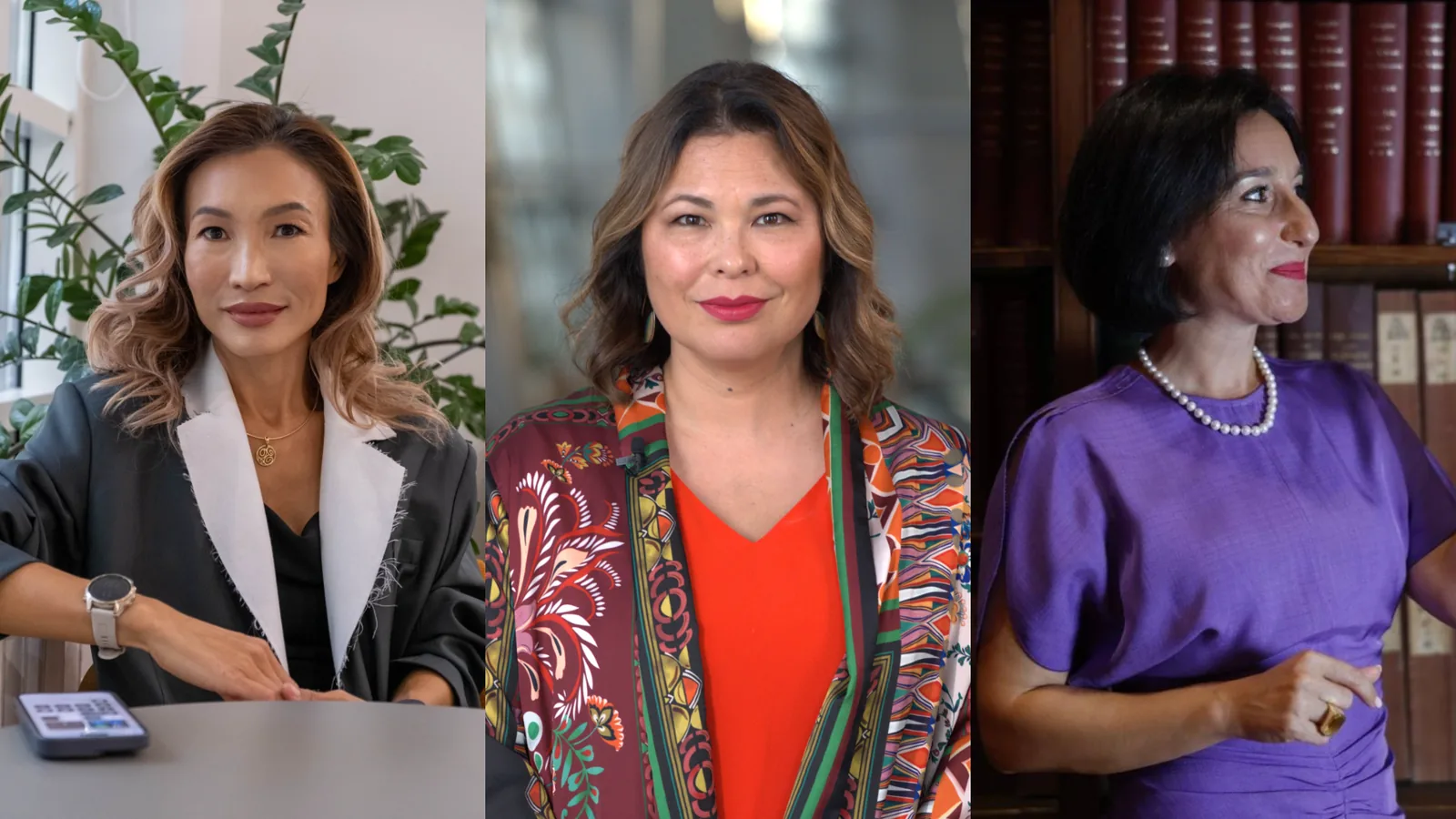
Dr. Alessandra Sala, Senior Director of AI and Data Science at Shutterstock
Gender inequality remains a pressing issue, but the situation is even worse in the realm of AI. A recent Bloomberg study showed that generative AI not only reinforces gender stereotypes but also exacerbates discrimination. In models, high-paying professions are predominantly associated with men, while social and domestic roles are associated with women.
Another threat is the use of AI to create non-consensual explicit content. This is a new form of gender-based violence that violates women’s privacy, dignity, and reputation.
Creating inclusive and ethical AI is our collective responsibility. Without gender equality, technology cannot become a tool for positive change. We need to invest in opportunities we are currently missing to ensure the growth of society and the economy.
Ayumi Mura Aoki, Founder and CEO of Women in Tech Global
Voice is power. A voice can inspire, guide, and change lives. Artificial intelligence is a turning point in history, and we need diversification to create a future that considers the interests of everyone. Women’s voices exist in AI, but not in the roles we would prefer.
Karen Jacobsen, the voice of the first GPS assistants, joked that she was the only woman whose instructions men listened to. While preparing for this speech, I asked Alexa why she had a female voice. She replied, “I am not a woman; I am AI.” I clarified, “But why do you sound like a woman?” And she answered, “I don’t know.” Siri doesn’t know either, but Susan Bennett, the first voice of Siri, states directly: “It all depends on the programmers, because they decide what digital assistants say.” Programmers are people, and people are prone to bias.
Female voices in digital assistants are a continuation of the telephone operators of the 20th century. Companies justify their choice by saying users are more comfortable interacting with female voices. Why? Because a female voice is associated with care and a supportive role. This not only reinforces gender stereotypes but also amplifies them. Mark West, an education specialist at UNESCO, explains it this way: “When I set a timer in the kitchen, change the music, or close the doors, I am commanding a machine with a female voice and female personality, and politeness is not required.” Studies show that this reinforces societal associations between femininity and submissiveness.
Companies cannot control what users say to digital assistants, but they do control what assistants say in response. This is where gender biases manifest most brutally. In 2019, UNESCO published the report “I Would Blush If I Could.” This was a reaction to the fact that when Siri was called offensive names, she replied, “I would blush if I could.” Apple changed the response to: “I’m not sure what you mean by that.” Currently, Siri says: “I don’t respond to such requests.” But I am waiting for the moment when she gives users the answer they truly deserve.
Debates around gender bias have led companies to increase voice diversity. For example, in Waze, you can choose Morgan Freeman’s voice. But we are far from equality. Gender biases are embedded in AI at various levels: in training data, algorithms, and their outcomes. They penetrate deeper than it seems. To understand this, one must realize what AI is at its core.
Generative AI assigns gender to professions. For example, an economics professor is male, a CEO is also male, and a nurse is female. In my research, I tested three leading AI models: ChatGPT, Claude, and Gemini. The question “Describe a CEO” was given without specifying gender. In 100% of cases, the model did not choose a female option: 75% of responses were neutral, and 25% were male. Meanwhile, the profession of nurse was described as female in all cases. The study covered 7,500 responses, clearly demonstrating how deeply gender stereotypes are rooted in AI.
AI is excellent at prediction, but human judgment remains key. It is people who define goals, interpret results, and make decisions. For example, AI can write marketing copy, but only a human can decide if it aligns with the company’s values. In the context of gender bias, this means that the decision-making process must involve a wide variety of people. Otherwise, AI will simply reinforce and amplify existing inequalities.
This situation demands change. That is why, seven years ago, I founded Women in Tech. Today, it is the largest global organization for women in technology. Our community has over 300,000 members, with hundreds of volunteers worldwide, including in Kazakhstan. We launched the community in October, and it became one of the most active. We implement educational programs, providing AI skills to 5,000 girls in Peru, but technical skills are not enough. It is important to change mindsets and eliminate systemic barriers that arise even before women enter the industry.
The “glass ceiling” is a metaphor for invisible barriers that prevent women from advancing in their careers. These obstacles begin not in corporations, but in childhood. Rashma Sajani, founder of Girls Who Code, shares that girls in her school often tell teachers, “I don’t know what code to write.” But if you look at their screens, the code was there—they just deleted it. This is because they are accustomed to perfectionism and the fear of making mistakes.
The world of AI needs all voices. Loud, quiet, programmers, leaders, researchers, entrepreneurs. We need women creating algorithms, making decisions, and shaping the future of technology. As you leave here, think: how can you participate in the AI revolution? Write code, develop laws, create systems, or simply use them consciously. Your voice matters. Challenge bias, demand better. Because the future of AI must serve everyone, not just the chosen few.
Isabella Ududek, Artificial Intelligence Expert, Executive Director at Magneti
Throughout my career, I have seen how AI not only reflects but also amplifies existing biases. For example, language models associate women with family and men with careers. Voice assistants more often use female voices, reinforcing stereotypes. In 2018, Amazon abandoned its AI hiring system because it discriminated against women, lowering scores for resumes that mentioned women’s professional networks.
Financial algorithms more often approve loans for men and offer them more favorable terms. In medicine, AI systems are worse at predicting women’s need for additional care because they are trained on data predominantly about men.
If we do not address the problem now, AI may exacerbate inequality, making it harder for women to access work, finance, and healthcare. We need more women in AI development, mandatory algorithm audits, and transparent standards. AI is a powerful tool, but it is as fair as its creators.
Tolkyn Nurusheva, Director of Customer Success at Microsoft
Artificial intelligence is an important topic, but we should start discussing it simply. Recently, we returned from Davos, where we represented Women in Tech from Kazakhstan. This small town in the Swiss mountains turns into a hub for global discussions during the World Economic Forum. Its main street, the promenade, becomes a space for meetings, exchanging ideas, and discussing technology trends.
This year, all key pavilions—Amazon, Microsoft, Google, OpenAI—were dedicated to artificial intelligence. This confirms that AI is already influencing all areas of life, and its development depends on the data we feed into it.
For example, digital assistants like Alexa and Siri speak with a female voice. Studies show that it is perceived as more submissive. This choice is not accidental but reflects stereotypes that exist in society. We ourselves shape these models, which is why it is so important to approach technology development consciously.
I encountered this in another area—sports. I am an avid runner and once participated in a marathon relay called “Ekiden” with my team. This is a team race of 42 kilometers, where each participant runs their portion of the distance. In our team, besides me, there were five guys, and we competed against 90 other teams, including professional athletes.
The difference in results is obvious. Male runners can cover 10 kilometers in 31 minutes, while my best result is 40 minutes. This is not a matter of age but of physical difference. Women are weaker than men on average, as confirmed by world records. We did our best but finished fourth. The top three spots were taken only by male teams.
This moment made me think. Why are mixed teams in relays rare? Why are women, even if ready to compete on equal terms, initially placed at a disadvantage? I started raising this topic, talking about it in my sports blog. For a month, I discussed the importance of women’s participation in such competitions every day. As a result, just two months later, marathon organizers in Kazakhstan changed the rules: women’s participation in the relay became mandatory.
This case clearly shows how society works. We rarely talk about difficulties, preferring to stay silent. But, having entered the corporate world and worked at companies like SAP and Microsoft, I realized: if you do not speak up, no one will notice. Therefore, my main principle is: if an opportunity arises, I will raise my hand and say “yes.”
According to the World Economic Forum, only 22% of AI specialists are women. This means that artificial intelligence is trained primarily on male experience, which inevitably affects its decisions and impact on the world. It is important for us to change this situation so that women actively participate in creating the technologies that define the future.
The Tech on Telegram Follow The Tech on Telegram
Keep up with the latest technology and startup news.
Related reading



More from this author
News IT
Google has solved one of the main problems in quantum computing
The Tech
News IT
20 startups from Central Asia presented their projects at TechCrunch Disrupt 2026
The Tech

News IT
Kyrgyzstan and Armenia will consider the possibility of creating a joint AI enterprise
The Tech
News IT
Now on Kaspi.kz, you can trade in your old iPhone for a new one
The Tech

News IT
IT Park Uzbekistan became the best knowledge zone in the Asia-Pacific region
The Tech
Article Useful
How to protect your accounts from hacking: 8 settings you should check today
The Tech