Top Home Audio System Trends for 2026: High-Quality Sound, Hi-Fi, and Powerful Bass
In 2026, the home audio industry responds to this demand with the concept of a seamless ecosystem. Using the example of major updates from market leaders — Japanese Onkyo and American Klipsch — we examine what makes up the ideal home sound today.
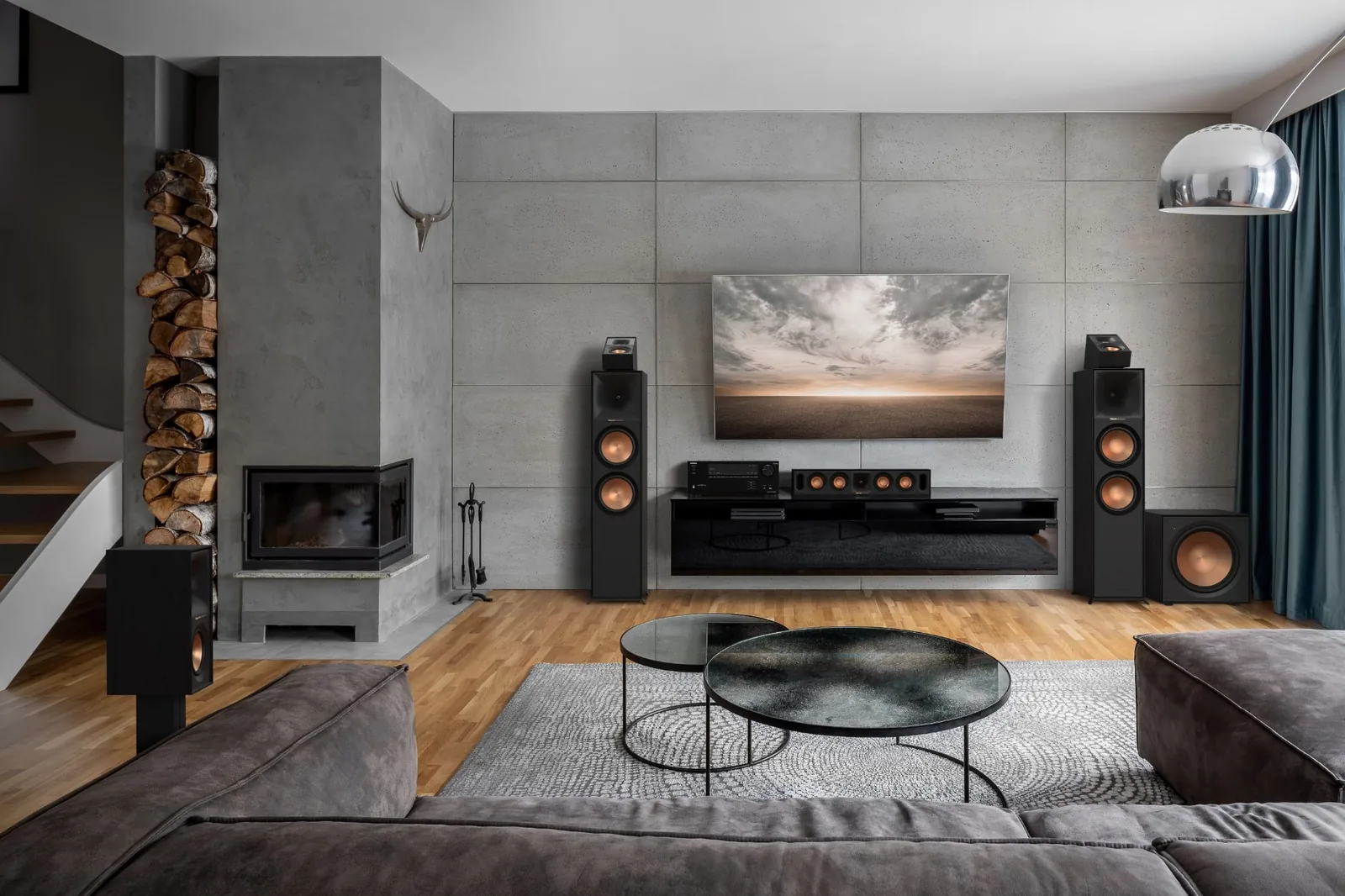
Trend #1: «Quiet Luxury» and the comeback of legendary brands
For a long time, an unwritten standard existed in the premium audio market: the more complex and massive a device looked, the cooler it was. In 2026, this stereotype has been shattered. The focus has shifted to visual minimalism and natural materials that integrate easily into modern interiors.
A vivid example of such transformation is the large-scale revival of the Japanese giant Onkyo. The brand, which has defined sound standards since 1946, has presented a completely updated philosophy.
What has changed
Strict minimalism, a combination of warm and cool tones, natural materials, and a restrained corporate style have replaced overloaded panels. Now, AV receivers and components are not just “hardware,” but an aesthetically pleasing center for multimedia control.
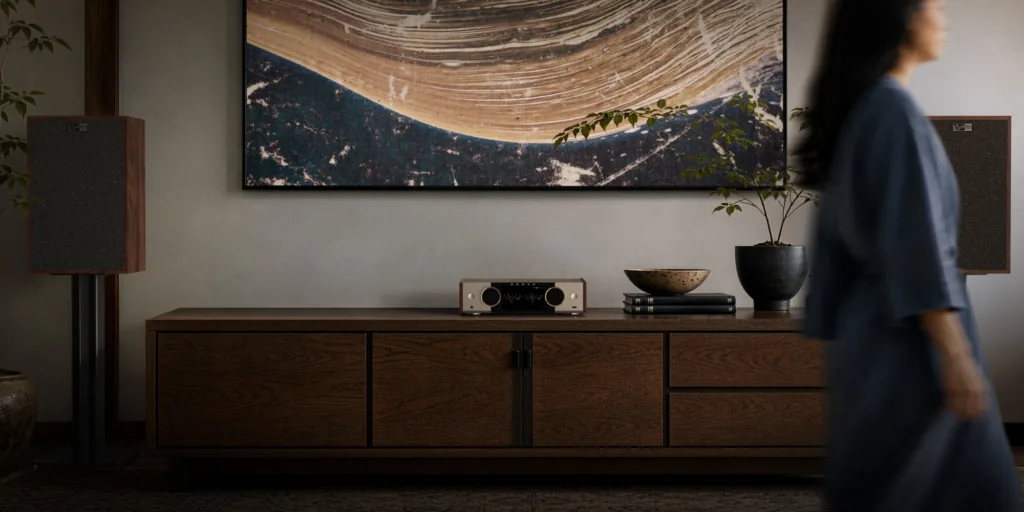
Trend #2: Acoustic evolution and hidden integration
The second important trend is the deep integration of surround sound, particularly the Dolby Atmos format, at the construction level. Acoustics must deliver a grand soundstage while remaining visually clean.
American brand Klipsch has caught this wave by releasing the third generation of its most acclaimed Reference Premiere series. The lineup of 11 models — from monumental floor-standing speakers to compact bookshelf speakers — has received the most significant technological upgrade in its history:
— enlarged Tractrix® horns
— LTS titanium tweeters and Cerametallic™ cones
— premium cabinet design.
Key feature: engineers have provided hidden connectors for connecting Dolby Atmos height modules and integrated cast aluminum stands. No hanging cables or bulky mounts — the system looks monolithic and neat.
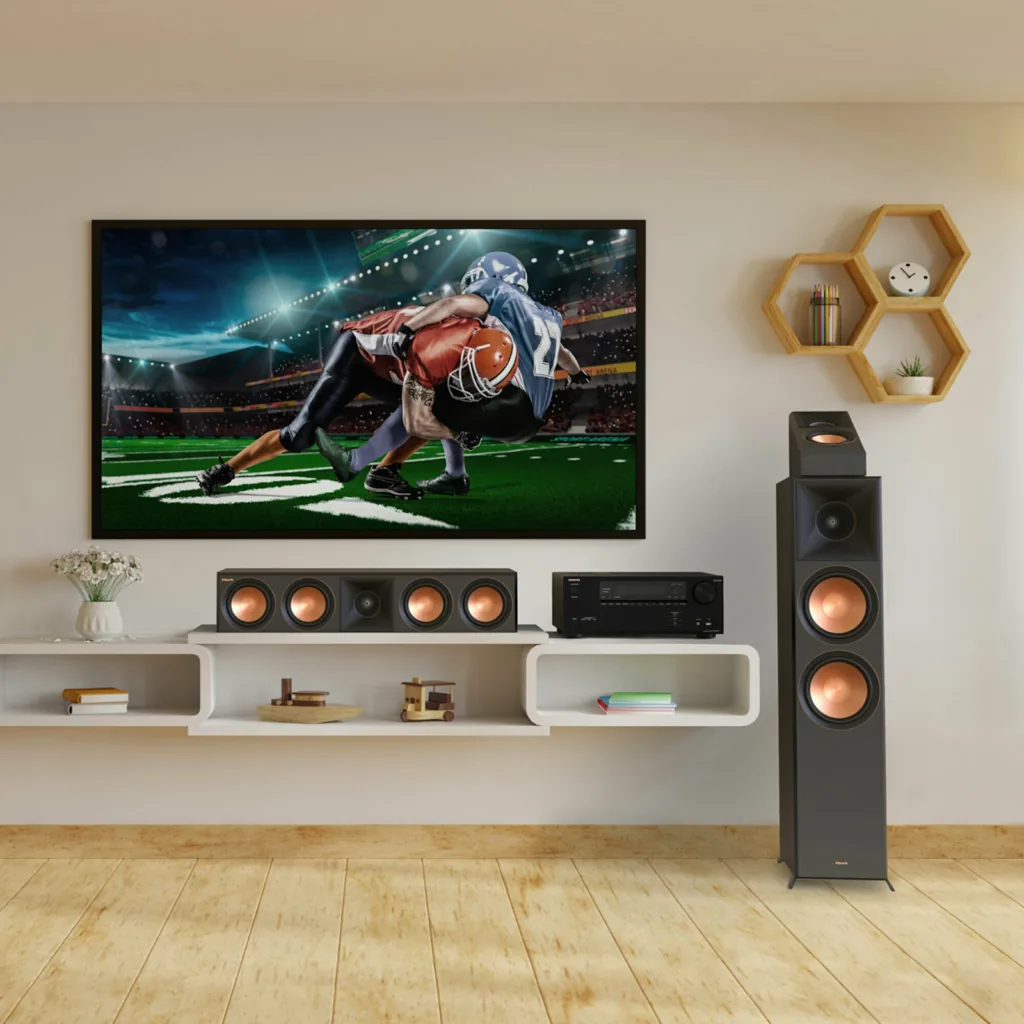
Trend #3: Smart bass and power synergy
In 2026, low frequencies are no longer perceived simply as “volume” — their accuracy, speed, and texture come to the forefront. This is clearly visible in the example of Klipsch Reference Premiere subwoofers. In the Kazakhstan and Central Asian markets, the lineup is represented by four key models:
- RP-1000SW, 10 inches: a basic model for small and medium-sized rooms.
- RP-1200SW, 12 inches: a balanced solution for most standard living rooms.
- RP-1400SW, 14 inches: a high-performance subwoofer for dedicated home theater spaces.
- RP-1600SW, 16 inches: an uncompromising flagship of the series with peak power up to 1600 W, designed for large spaces and professional installations.
The subwoofers combine analog pre-amplification circuits and Class D amplifiers, combining signal purity with high power and efficiency. To reduce air flow noise, an Aerofoil Slot Port bass reflex system is used, providing more accurate and controlled bass even at high volumes.
Additionally, the subwoofers support both traditional RCA connections and the wireless WA-2 module, allowing them to be integrated into various audio systems within the same space.
Trend #4: One central control for the entire ecosystem
One of the key directions in the development of home audio is the formation of a fully connected ecosystem, where devices from different brands work as a single entity.
This global shift has become possible thanks to the Premium Audio Company holding — a subsidiary structure of VOXX International Corporation. Today, Premium Audio Company is one of the leading global suppliers of premium audio solutions. The holding’s portfolio strategy unites such brands as Klipsch, Onkyo, Integra, Magnat, and Heco.
As part of this holding’s ecosystem strategy, the Powered by Onkyo concept was launched, which translated the theoretical interaction of brands into practical product solutions. This approach reflects the unification of engineering competencies and technologies within a single platform. A vivid example is the Klipsch Flexus Sound Systems soundbars, created in collaboration with Onkyo engineers.

Ecosystem integration reaches a new level through deep device integration. Onkyo and Integra AV receivers come with preset configurations for all Klipsch speaker systems, so the system already “knows” the speaker characteristics and does not require manual setup or complex calibration.
Another important aspect is how different technologies begin to work together without unnecessary user configuration. Modern systems already support a wide range of standards and platforms — from Dirac, IMAX Enhanced, and THX to smart home solutions like Control4, Savant, and Josh.ai. As a result, all complexity goes “under the hood,” and the user simply needs to turn on the system to get ready, pre-aligned sound without additional settings or paid modules.
Ultimately, a unified audio ecosystem is formed, where all components are initially aligned with each other.
The portrait of the ideal audio system of 2026
Modern premium sound is moving further away from fragmented components and turning into a single ecosystem. In this model, Onkyo sets the intelligent foundation of the system, while Klipsch is responsible for power, dynamics, and emotional sound.
This approach forms a new standard for home audio: Onkyo AV receivers and Klipsch acoustics work as a single system, providing studio-quality sound without complex setup. The user receives a solution that is easy to integrate into an interior and supports any modern formats and streaming services — from Dolby Atmos to content from Disney+ and Marvel.
You can select and purchase acoustic systems and AV receivers from partners and major audio equipment retailers — HiFi4you, iSpace, Technodom, Mechta, Sulpak, Kaspi, and others. HiFi4you offers an up-to-date model range and equipment selection consultation.
The Tech on Telegram Follow The Tech on Telegram
Keep up with the latest technology and startup news.
Related reading




More from this author

Article Useful
How to protect your accounts from hacking: 8 settings you should check today
The Tech

Article Useful
500 Global: How the Accelerator Works and Who Can Receive Investments
The Tech

Article Interviews
Game Development in Central Asia: Arkady Moldavski on Developing Reverb and the Growth of the Industry
The Tech

Article Useful
Google, Tesla, BlackRock, and the IMF: Where to Apply for an Internship in Fall 2026
The Tech

News IT
Tesla unveiled the flying electric car Roadster
The Tech

News IT
Intero Biosystems startup won the Startup Battlefield at TechCrunch Disrupt 2026
The Tech