Top 7 Unresolved Problems Worth Billions of Dollars
"What I took away from analyzing the thoughts of opinion leaders is that no top-tier fund is currently chasing easy niches. All ten points are infrastructural, long-term, and sometimes thankless problems that require real focus, not a pitch deck on pretty slides. I've already written that you can't be a leader for four hours a day—here, the same logic applies, but on the scale of entire industries: labor, healthcare, energy, defense—these are not things that can be solved casually."
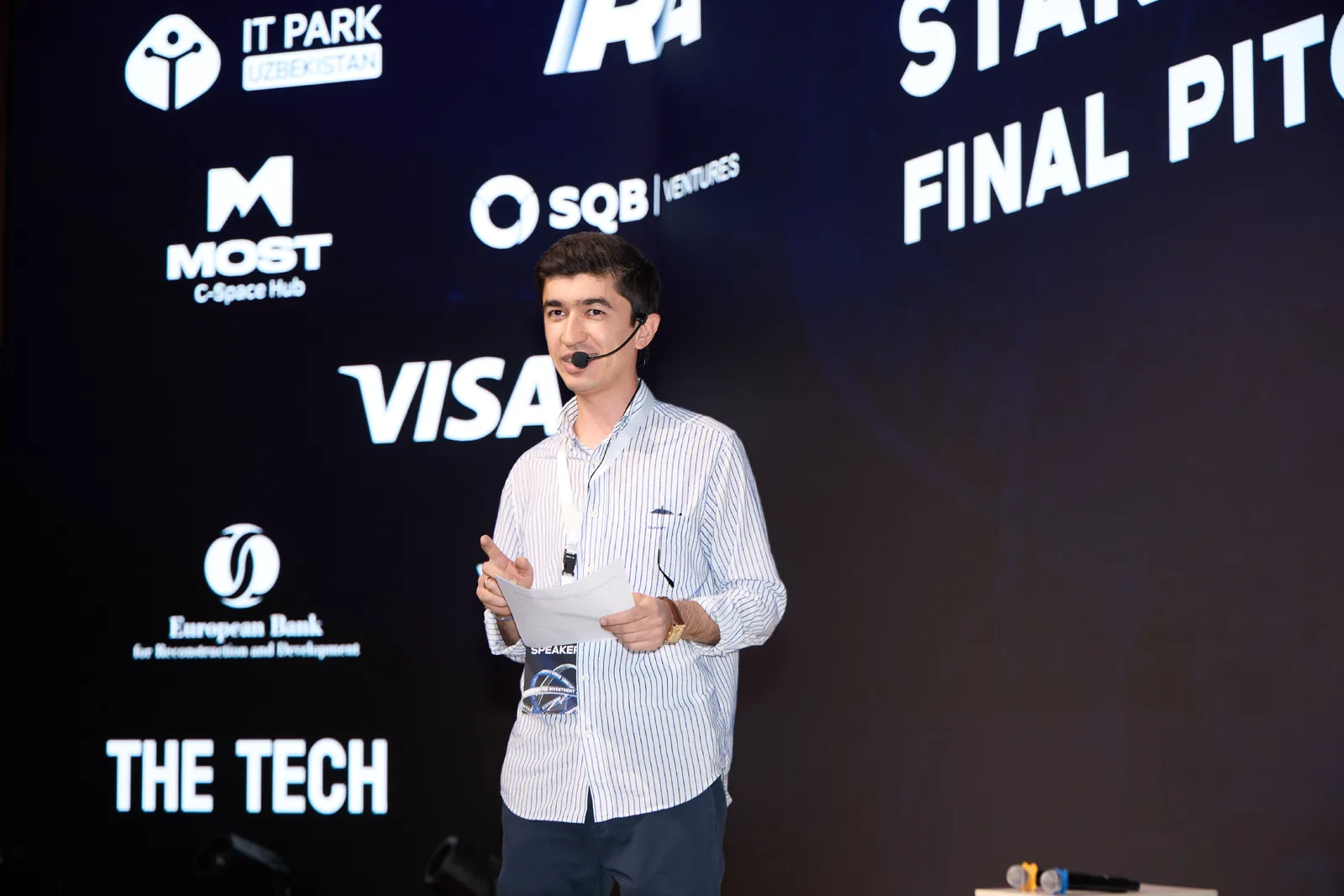
Azizbek Kurbonov studied the blogs and letters of top venture capital firms worldwide — a16z, Khosla Ventures, Founders Fund, Lux Capital, and Y Combinator — and compiled a list of problems on which, in their view, the next generation of unicorns will grow.
Azizbek Kurbonov, city — Tashkent, IT entrepreneur, Instagram
In recent times, I have made it a habit to read not the pitch decks of startups, but the letters from the funds themselves. Quarterly letters to LPs, manifestos, program posts in blogs — this is what investors write not for hype, but to fix their own strategy for years ahead. And when you read a16z, Khosla Ventures, Founders Fund, and Lux Capital in succession, a general picture begins to emerge: where exactly the top minds of Silicon Valley see the next trillions.
I have collected 10 problems that are most frequently repeated across different funds. For each one — who among the investors raises it and why this is no longer theory, but practice.
1. Mass displacement of labor by artificial intelligence
Vinod Khosla, one of the first investors in OpenAI, considers this the central problem of the decade. His calculation is straightforward: $15 trillion of US GDP is human labor, and a large portion of this sum will simply disappear because AI is beginning to automate expertise that was previously available only through humans. For a founder, this is not an apocalyptic scenario, but a market: someone must build the infrastructure for retraining and new employment for millions of people.
Soon, accountants, financial analysts, junior specialists, and almost everyone in all sectors may find things difficult. And someone must help them retrain into specialists of the future. For example, becoming electricians to service data centers.
2. Drug development and approval — a process that is too slow
Founders Fund points out a paradox in its manifesto: the number of new molecules found is growing, while the number of drugs that actually reach approval and the patient is decreasing. This is not a scientific problem, but a structural one: the bottleneck lies in testing and regulation. Whoever builds the infrastructure to accelerate clinical trials will gain a huge market.
Imagine a molecule reaching the market not in 10 years, but in one year. I can only imagine how much the quality of life for patients around the world will change.
3. Cheap and accessible energy remains unsolved
The American Dynamism team at a16z explicitly formulates its focus for 2026 — the restoration of the physical economy: energy, manufacturing, logistics, infrastructure. Lux Capital has been investing for years in boring, thankless energy and resource projects that other funds ignore because they don't look as flashy as the next app. But energy right now is literally currency: more energy means more computing power, which means more money.
Central Asia has every chance to ride this wave by taking the right steps in the direction of energy.
4. Cybersecurity is fundamentally broken
a16z calculated that between 2013 and 2021, the number of unfilled cybersecurity vacancies grew from less than a million to three million. The reason is banal — teams buy systems that detect absolutely everything and drown in routine log checking, which no one wants to do by hand. This creates a vicious cycle of labor shortage. Whoever automates this routine solves a problem that is truly worth billions.
The intellectual potential of Central Asian countries in exact sciences, and not only, amazes the whole world, so why don't we protect the whole world from hackers?
5. Supply chains in critical industries rely on Excel spreadsheets
Recent Requests for Startups from Y Combinator provide a harsh example: one $300 chip in 2021 halted the production of a $50,000 car, resulting in $210 billion worth of automobiles not being built. Companies see their direct suppliers but absolutely do not see what is happening at the second and third levels of the supply chain. This is a huge, untapped niche for software, not just another feature inside SAP.
6. Agriculture is losing the chemical arms race
Another point from YC: pesticide residues are now everywhere — in food, water, and soil, while pests continue to adapt. Farmers respond in the only available way — increasing the dose of chemicals, getting less result, and spending more money. A vicious circle with a clear exit: AI can already recognize specific pests and weeds in real time, and this changes the economics of the entire industry.
As the number of people on our planet increases, land resources do not increase. Income from agriculture makes up a significant part of the GDP of our countries, which means high priority for the development of this sector.
7. The gap in defense technologies
Khosla draws our attention to the asymmetry in the development of AI in the defense industry, where some countries significantly outpace others. This is an important signal for the venture industry. The defense industry of the future cannot be imagined without the use of AI, and the use of autonomous solutions is not excluded.
With the help of advanced technologies, the metaphor of David and Goliath becomes relevant.
For founders from Central Asia, there is also good news in this list. Most of these problems are global, but their local versions — labor shortages in cybersecurity, transparency of supply chains, access to medical expertise — are acute for us as well.
It is enough to take one specific question and answer it! But, start not on Monday, or on the first of next month, but start here and now.
The Tech on Telegram Follow The Tech on Telegram
Keep up with the latest technology and startup news.
Related reading




More from this author

Article Useful
How to protect your accounts from hacking: 8 settings you should check today
The Tech

Article Useful
500 Global: How the Accelerator Works and Who Can Receive Investments
The Tech

Article Interviews
Game Development in Central Asia: Arkady Moldavski on Developing Reverb and the Growth of the Industry
The Tech

Article Useful
Google, Tesla, BlackRock, and the IMF: Where to Apply for an Internship in Fall 2026
The Tech

News IT
Tesla unveiled the flying electric car Roadster
The Tech

News IT
Intero Biosystems startup won the Startup Battlefield at TechCrunch Disrupt 2026
The Tech