A technology from "Dune" in reality: a jacket from the University of Texas engineers extracts drinking water from the air.
Engineers at the University of Texas at Austin have created a jacket that collects drinking water directly from the air. The device is designed for those who spend time in areas without access to clean water: tourists, agricultural workers, rescuers, and military personnel.
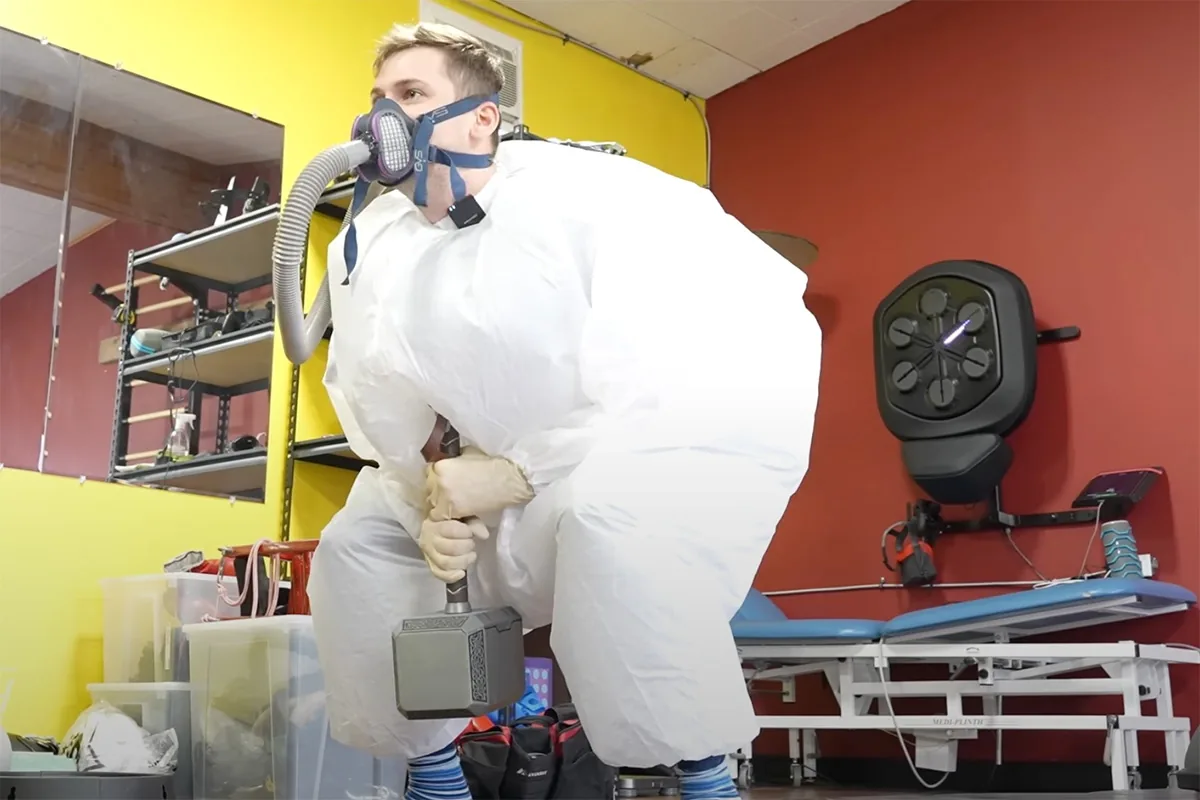
How It Works
The jacket's fabric absorbs moisture from the air and directs it to removable storage units. These units are placed in a foldable collector and heated, producing drinking water.
Depending on the humidity level, the jacket produces between 400 and 900 milliliters of water per day. Compared to traditional water-harvesting materials, the new textile has shown results three to ten times better.
Kit Johnston, co-author of the study and professor in the Department of Chemical Engineering at the Cockrell School of Engineering at the University of Texas at Austin
The key breakthrough here is that the team did not just create another material that absorbs water. They designed a pathway for rapid water transport: from vapor in the air to liquid on the fiber surface, and then into the fabric. This transport architecture allows the material to function not only in small-scale laboratory tests but also in wearable systems.
Professor Guihua Yu, one of the study's leaders, explains the concept as follows: water harvesting from the air is typically envisioned as a stationary device—a box, panel, or large sorption block. The team wanted to rethink the very form of the technology: if the fabric itself can harvest water from the air, it opens up a new direction for personal and portable access to water.
Applications
Beyond clothing, researchers are considering applications for the technology in backpacks, tents, emergency shelters, and other gear. Plans include testing in field operations, disaster response scenarios, and regions with limited water infrastructure.
A Parallel Record by the Same Team
Alongside the jacket development, the same team set a record with a separate stationary device. During tests in the arid climate of the Chihuahuan Desert in New Mexico and the semi-humid environment of Austin, the device collected 1.3 liters of pure water per day—4.3 liters per kilogram of sorption material per day, surpassing any other research group.
The device is based on a specially developed hydrogel fabric made from biomass materials. It absorbs moisture from the air and releases it when heated by sunlight for condensation and collection.
According to Weixing Guo, lead author of the paper in Nature Water, the development represents a significant step toward the practical use of atmospheric water harvesting. The goal had been pursued for years—from molecular design to real-world operating conditions.
Where the Technology Is Most Needed
The regions where the device should operate most effectively largely overlap with the world's most water-stressed areas: parts of North Africa, the Middle East, South Asia, and sub-Saharan Africa. This makes the technology particularly promising as a decentralized solution for remote communities and emergency response.
This development is part of a broader project by the AirGel team, which took first place in the graduate student category at the 2025 National Student Inventor Competition.
The Tech on Telegram Follow The Tech on Telegram
Keep up with the latest technology and startup news.
Related reading




More from this author

Article Useful
How to protect your accounts from hacking: 8 settings you should check today
The Tech

Article Useful
500 Global: How the Accelerator Works and Who Can Receive Investments
The Tech

Article Interviews
Game Development in Central Asia: Arkady Moldavski on Developing Reverb and the Growth of the Industry
The Tech

Article Useful
Google, Tesla, BlackRock, and the IMF: Where to Apply for an Internship in Fall 2026
The Tech

News IT
Tesla unveiled the flying electric car Roadster
The Tech

News IT
Intero Biosystems startup won the Startup Battlefield at TechCrunch Disrupt 2026
The Tech