AI-powered smartphones: what's new from Apple, Google, Samsung, and Xiaomi
In 2026, all major smartphone manufacturers updated their AI-powered devices, with most of the innovations focused on the software side. Assistants have evolved beyond voice search and can now execute multi-step actions—booking, ordering, editing photos, and gathering data from chats and calendars. We’ve compiled the year’s key announcements and analyzed which of these features actually work in our region.
Apple Intelligence and Siri AI: What Changed in 2026
On June 8, at WWDC26, Apple introduced Siri AI—a new version of the assistant and the next generation of Apple Intelligence. Siri AI searches through messages, emails, and photos while considering personal context, performs actions within apps, answers questions about screen content, and accesses the web. The assistant now has a dedicated app, and conversation history is synchronized via iCloud.
The core of the update is an agreement with Google. On January 12, the companies announced a long-term partnership: Apple will use Gemini models and Google Cloud for future Apple Foundation Models. In April, Google Cloud CEO Thomas Kurian confirmed the partnership at the Cloud Next 2026 conference.
Apple Intelligence supports 16 languages, but Russian is not among them. Siri AI will be available in beta only in English by the end of the year. In the European Union, the assistant will first appear on Mac and Apple Vision Pro, while the launch in China has been delayed. Supported smartphones include iPhone 16 and newer, as well as iPhone 15 Pro and iPhone 15 Pro Max. A detailed breakdown of the system can be found in our article about iOS 27.
Gemini Intelligence in Pixel 11
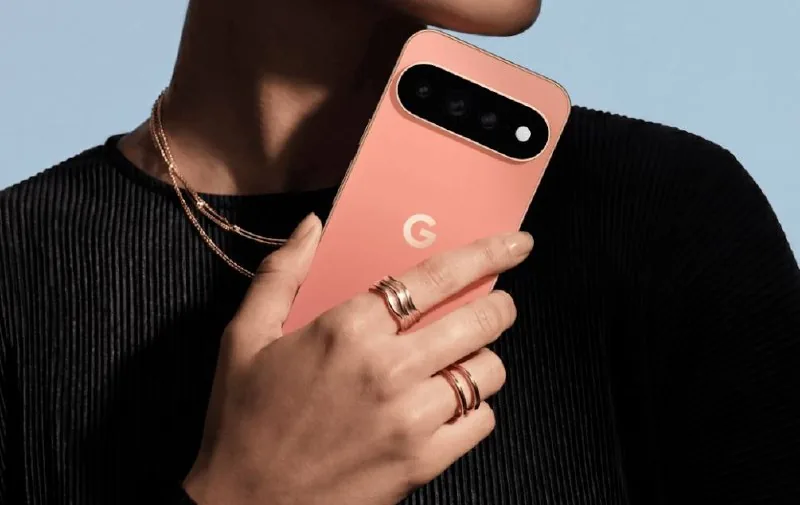
On August 12, at the Made by Google conference, the company unveiled the Pixel 11 lineup—Pixel 11, Pixel 11 Pro, Pixel 11 Pro XL, and Pixel 11 Pro Fold, powered by the Tensor G6 processor, along with the Pixel Watch 5 and the first Pixel Tag tracker. The focus is on agentic scenarios: Gemini orders products, calls taxis, and contacts restaurants to book tables or schedule appointments. The "Circle to Search" feature has moved directly into the camera. Gemini handles multi-step tasks in more than 40 apps.
Among the new tools are Rambler, a voice input feature that removes filler words and converts speech into coherent text, and Magic Capture: the camera analyzes about 400 frames on the device and in Gemini models, selects the best moment, crops the shot, and removes blur. The Live Transcribe feature now supports American Sign Language—the camera translates signs into text. Google notes that availability depends on the country and language. Sales begin on August 20.
Galaxy AI in the Galaxy S26 Series
On February 25, the Galaxy S26 series was released in San Francisco—described by the company as the third generation of smartphones with artificial intelligence. The Now Nudge feature suggests actions based on context: it selects photos from a trip when a conversation partner asks for them and checks the calendar when a meeting message arrives. "Circle to Search" can recognize multiple objects in a single search, and the updated Bixby manages settings using natural language. Gemini and Perplexity work alongside it: ordering a taxi via an agent boils down to making a request, checking details, and confirming.
In the "Photo Assistant," edits are described in words—down to transforming a daytime scene into a nighttime one. The Galaxy S26 Ultra features the Snapdragon 8 Elite Gen 5 for Galaxy: the neural processor performance increased by 39%, the central processor by 19%, and the graphics processor by 24% compared to the Galaxy S25 Ultra. The model includes a built-in Privacy Display and seven years of security updates. In Kazakhstan, the series went on sale on March 25.
In July, in London, the company showcased the Galaxy Z Fold8 Ultra, Galaxy Z Fold8, and Galaxy Z Flip8, where agentic AI automatically opens multi-window mode, and My FanCam reframes video around a selected person.
HyperAI and Xiaomi's New System
On February 28, a global presentation of the Xiaomi 17 series with HyperOS 3 took place in Barcelona. The HyperAI suite includes AI Writing with four text tones, AI Speech Recognition with speaker identification and summaries, AI Interpreter for real-time translation, and AI Erase Pro, glare removal, frame expansion, and AI Film video compilation. A separate layer involves Gemini integration with overlays, image generation, and extensions.
On May 26, Xiaomi President Lu Weibing stated that 2026 could be a turning point for AI smartphones, describing a shift from app-centric interaction to agent-centric interaction at the operating system level. He cited miclaw as the first attempt, which already works on tablets, computers, and screen-equipped speakers. He also announced that the new generation of the operating system would be released in July or August, and that miclaw would become the technical foundation for the Super Xiao AI assistant.
Which AI Smartphone to Choose in 2026
Functionally, the four systems have converged at one point—all promise an agent capable of executing multi-step tasks. The difference lies in what they are built on and where they operate.
Three of the four companies rely on Google models: Apple licensed Gemini for Apple Foundation Models, Samsung integrated Gemini alongside Bixby, and Xiaomi embedded Gemini into HyperAI. Google and Xiaomi are developing their own system agents.
For users in Central Asia, language and region are decisive factors. Apple does not support Russian at all, and Siri AI launches only in English. Google's feature set depends on the country and language, with some agentic scenarios tied to the US market. Samsung's features vary by country, language, model, and carrier, but the lineup is officially sold in Kazakhstan. Xiaomi's HyperAI tools are available only on select models and require an internet connection.
The Tech on Telegram Follow The Tech on Telegram
Keep up with the latest technology and startup news.
Related reading



More from this author

Article Useful
How to protect your accounts from hacking: 8 settings you should check today
The Tech

Article Useful
500 Global: How the Accelerator Works and Who Can Receive Investments
The Tech

Article Interviews
Game Development in Central Asia: Arkady Moldavski on Developing Reverb and the Growth of the Industry
The Tech

Article Useful
Google, Tesla, BlackRock, and the IMF: Where to Apply for an Internship in Fall 2026
The Tech

News IT
Tesla unveiled the flying electric car Roadster
The Tech

News IT
Intero Biosystems startup won the Startup Battlefield at TechCrunch Disrupt 2026
The Tech