The Silicon Valley of Malaysia: How the Technological Ecosystem of Kuala Lumpur and Cyberjaya is Structured
In Malaysia, the "Silicon Valley" was not grown spontaneously but designed and built—on former agricultural lands south of the capital. In 1996, the government launched the Multimedia Super Corridor program, and its physical center became the new city of Cyberjaya.
The Tech AI
Get the key points in seconds - a short summary from The Tech AI.
In 2024, the volume of approved digital investments in Malaysia reached $40.7 billion, with approximately $33.8 billion accounted for by the Klang Valley agglomeration. Kuala Lumpur and Cyberjaya share the technological ecosystem: the former focuses on venture capital and startups (ecosystem valuation of $9–13.4 billion), while the latter specializes in data centers, where 90% of the country's colocation capacity is located. The largest investors are Singapore, the United States, and China; key projects include Microsoft's $2.2 billion investment and the growth of cloud infrastructure share to 76.8%.
Today, the country’s technological ecosystem rests on two pillars: Cyberjaya, with its data centers, universities, and offices of international corporations, and Kuala Lumpur, with its venture capital, financial district, and startups. Both cities are part of the Klang Valley—the country’s largest urban agglomeration surrounding Kuala Lumpur.
What the numbers say
According to Malaysia Digital Economy Corporation, approved digital investments in Malaysia reached a record $40.7 billion in 2024, compared to $11.6 billion the previous year—hereinafter, amounts in ringgit are converted using the exchange rate at the end of August 2026. The Klang Valley, which includes Kuala Lumpur, the state of Selangor, and Cyberjaya, accounted for about $33.8 billion. The share of data centers and cloud infrastructure rose to 76.8%, up from 55.5% the previous year. The largest foreign investors are Singapore, the United States, and China.
According to MDEC statistics for the third quarter of 2025, approved digital investments totaled $13.5 billion and created 21,815 jobs. The Klang Valley accounted for 88% of the total—$11.9 billion—while about 90% of new digital jobs were created in Kuala Lumpur and the state of Selangor. For the full year 2025, digital investments amounted to $21.7 billion and more than 31,000 new jobs, of which over 12,600 were related to artificial intelligence.
According to Startup Genome, the total valuation of Kuala Lumpur’s startup ecosystem is estimated at $9 billion, with venture funding totaling $2.8 billion between 2021 and 2025. The city ranks 19th in Asia and falls within the 31–40 range in the global ranking of emerging ecosystems for 2026. The median seed round is $110,000, and the median Series A round is $2.1 million.
The total valuation of Malaysia’s ecosystem, according to Dealroom, is $13.4 billion, of which $12.8 billion is attributed to Kuala Lumpur. Over five years, the capital’s ecosystem valuation grew 4.6 times, placing Malaysia at 49th globally in this metric. The country has two unicorns.
A separate segment of the capital’s economy consists of regional headquarters of international companies. The state agency InvestKL has attracted more than 150 global service hubs and 31,000 highly skilled jobs to Greater Kuala Lumpur throughout its operation. In the first half of 2025 alone, it secured $700 million in investments, five new regional hubs, and 1,197 jobs.
Cyberjaya in numbers
According to Cyberview, the city covers 2,817 hectares—28.2 square kilometers. More than 140,000 people live and work here, including over 39,000 qualified professionals and more than 29,000 students. Over 400 companies with Malaysia Digital status and more than 1,000 other legal entities are registered in Cyberjaya, and over 429 startups have passed through local support programs.
More than 90% of Malaysia’s colocation data centers are located in Cyberjaya. Three-quarters of the country’s digital investments in 2024 flowed into data centers and cloud infrastructure.
Key companies and sectors
Data centers and cloud services. This segment is growing faster than others: its share in approved digital investments rose from 55.5% in 2023 to 76.8% in 2024. In May 2024, Microsoft announced a $2.2 billion investment over four years into Malaysia’s cloud and AI infrastructure, training 200,000 people in AI skills, and establishing a national AI center of excellence in collaboration with the Ministry of Digital Development. Among infrastructure operators in Cyberjaya is the Japanese company NTT.
Global business services and development centers. HSBC, DHL, BMW, Dell, AMD, Huawei, Fujitsu, Panasonic, Experian, Atos, AT&T, Tech Mahindra, T-Systems, Engie, AIA, and AIG operate in Cyberjaya. These are operational, service, and technology centers serving the Asian region.
FinTech and digital banks. On April 29, 2022, the central bank Bank Negara Malaysia issued five digital bank licenses. Three under the Financial Services Act were awarded to the Boost Holdings and RHB Bank consortium, GXS Bank and Kuok Brothers, and Sea Limited and YTL Digital Capital. Two under the Islamic Financial Services Act were granted to the AEON Financial Service, AEON Credit Service, and MoneyLion consortium, as well as KAF Investment Bank. Three of the five consortia are controlled by Malaysian shareholders.
Local technology companies. Cyberjaya is home to Aerodyne—an industrial drone operator, Poladrone—agricultural drones, Measat—satellite communications, Animonsta and Seed Studios—animation and gaming, as well as BasisBay and DreamEdge.
Startups and unicorns. The most well-known company in the ecosystem is Carsome, an online platform for buying and selling used cars. Founded in 2015, it operates from Petaling Jaya, a satellite city of Kuala Lumpur, and has a valuation exceeding $1 billion.
Financial district. The capital’s new business center is Tun Razak Exchange, a 28-hectare project fully owned by the Ministry of Finance of Malaysia. Residents include Apple, Huawei, Ericsson, HSBC, Prudential, MUFG Bank, Swiss Re, and MoneyLion.
What to see in Cyberjaya
Multimedia University Campus. The country’s first private university and the starting point of the city’s development. The campus opened in 1999 and hosts students in engineering and digital disciplines.
RekaScape. A public space near the Futurise center, featuring coworking spaces, food outlets, the EventScape event hall, the open IdeaScape area, and an urban vertical farming project.
Taman Tasik Cyberjaya and Cyberjaya Mini Park. A lakeside park and urban square, providing green spaces in the heart of the development.
Smart city services. The city operates the TRYKE micromobility service with more than 90 stations, the KUMPOOL shuttle service, and SOCAR car-sharing at 30 locations. Traffic lights on Persiaran Multimedia street are equipped with IoT sensors. The city aims to become Malaysia’s first low-carbon city by 2030.
Cyberview Living Lab. A format where technologies are tested directly in the urban environment. The operator of the national regulatory sandbox is Futurise, a subsidiary of Cyberview.
What to see in Kuala Lumpur
MRANTI Park. The Malaysian Research Accelerator for Technology and Innovation park in the Bukit Jalil area covers 278 hectares, bringing together more than 150 technology companies and institutions and around 30,000 specialists. The site includes drone testing zones, autonomous vehicle lanes, a 5G-enabled hub, and the MakersLab prototyping workshop.
Petrosains, The Discovery Centre. An interactive science center by oil and gas company Petronas, dedicated to science, technology, and energy. Open daily from 9:30 AM to 5:30 PM. Address: Level 4, Suria KLCC, Kuala Lumpur.
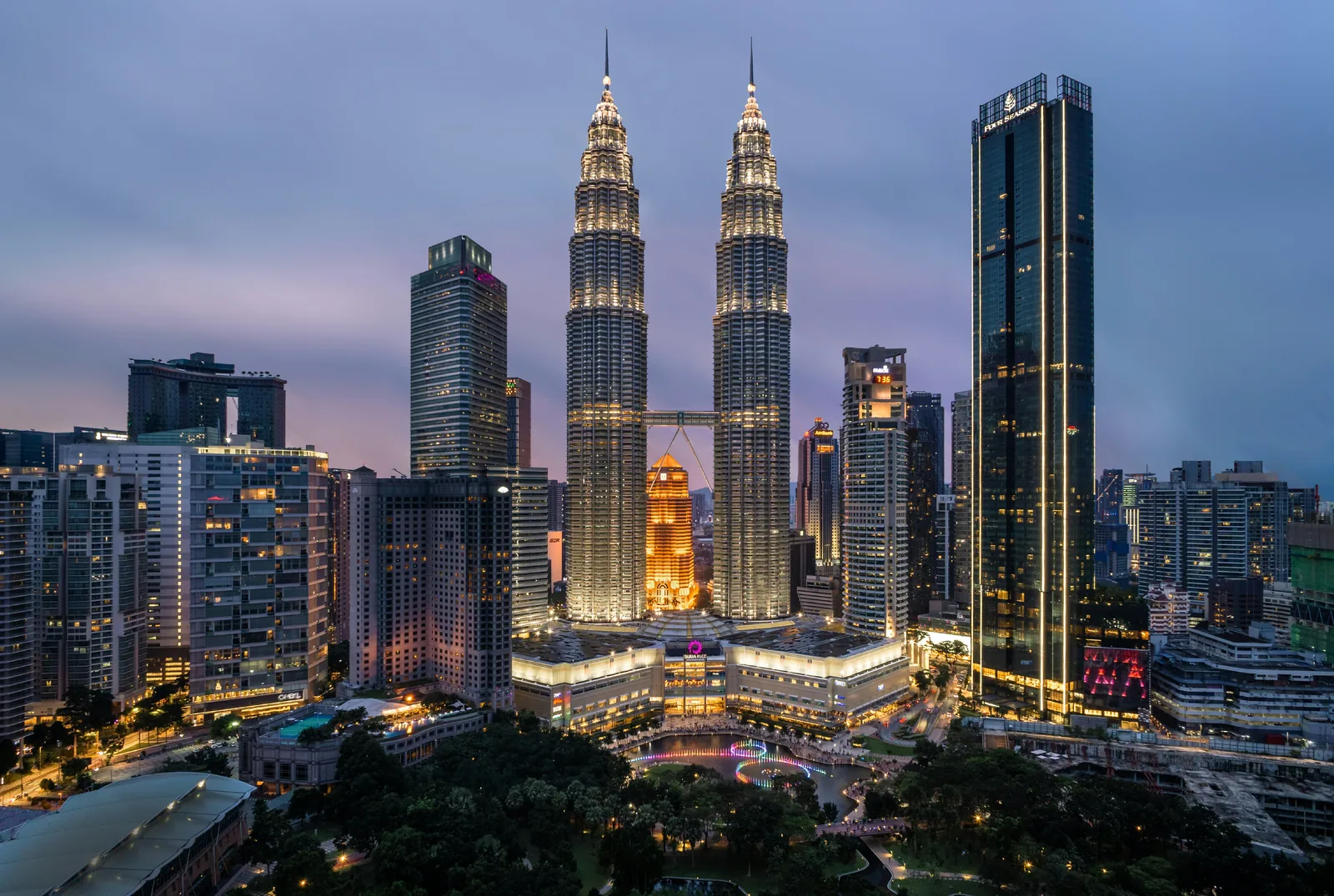
Petronas Towers and KLCC area. The northern point of the Multimedia Super Corridor, from which the country’s technological axis was extended to the airport.
Tun Razak Exchange. The capital’s financial district: office towers, The Exchange TRX shopping mall, and an urban park.
Bukit Jalil and Bandar Sunway. Suburban clusters where universities are located alongside research centers and incubators.
For up-to-date information on schedules, ticket prices, and operating hours, it is recommended to check the official websites of the venues.
The Tech on Telegram Follow The Tech on Telegram
Keep up with the latest technology and startup news.
Related reading



More from this author

Article Useful
How to protect your accounts from hacking: 8 settings you should check today
The Tech

Article Useful
500 Global: How the Accelerator Works and Who Can Receive Investments
The Tech

Article Interviews
Game Development in Central Asia: Arkady Moldavski on Developing Reverb and the Growth of the Industry
The Tech

Article Useful
Google, Tesla, BlackRock, and the IMF: Where to Apply for an Internship in Fall 2026
The Tech

News IT
Tesla unveiled the flying electric car Roadster
The Tech

News IT
Intero Biosystems startup won the Startup Battlefield at TechCrunch Disrupt 2026
The Tech