Silicon Valley of India: an overview of the IT capital — the city of Bangalore
Bangalore, officially renamed Bengaluru in 2014, is the capital of Karnataka state and India's primary technology hub. Over 2 million software developers work here, along with headquarters of Infosys and Wipro, R&D centers of Google, Amazon, and Microsoft, and more than 400 global development centers of multinational corporations. Due to the high concentration of IT companies, research centers, and startups, Bangalore has earned the unofficial nickname "India's Silicon Valley." In international studies, the city also regularly ranks among Asia's largest technology ecosystems.
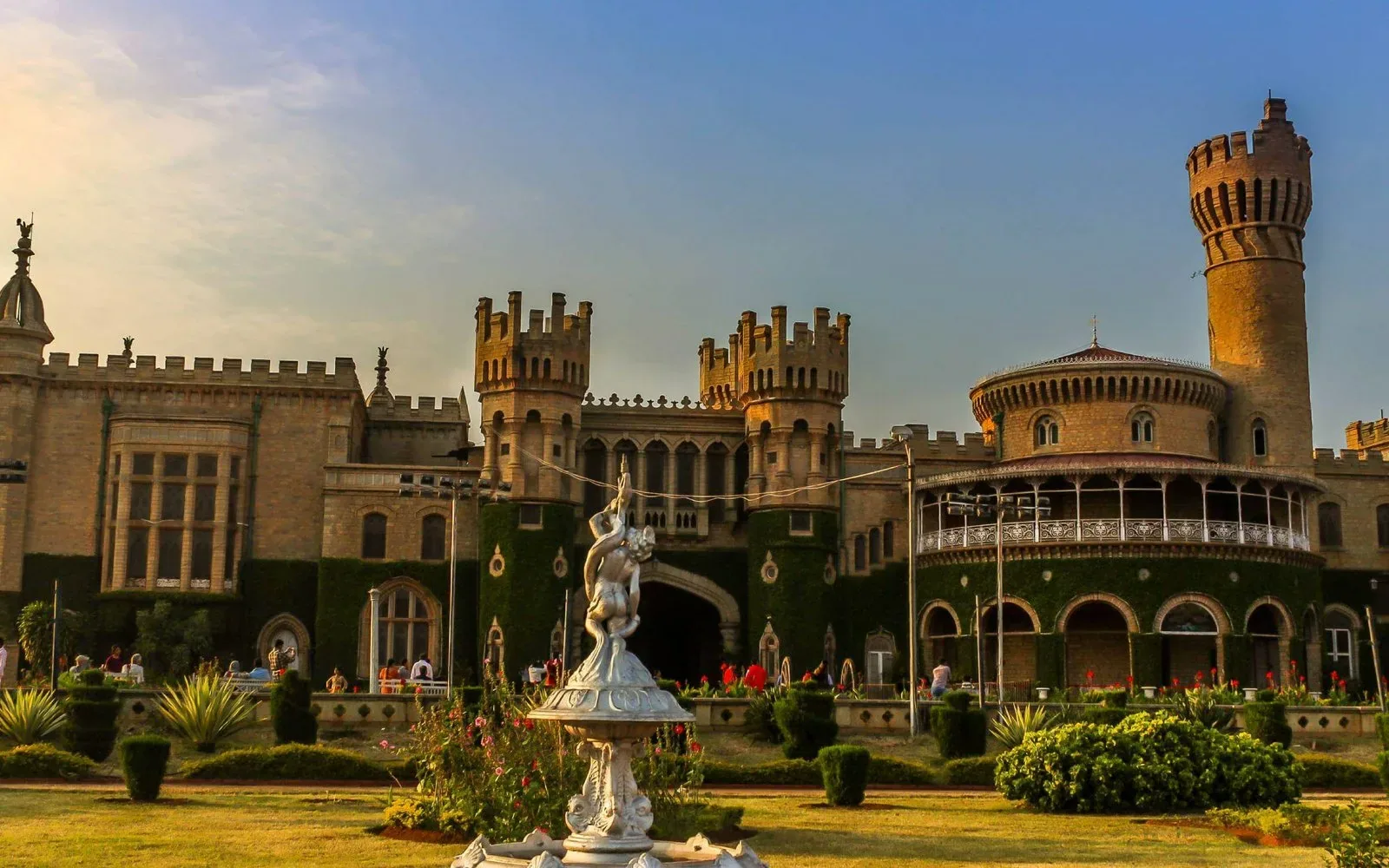
Why Bangalore is Called India’s Silicon Valley
Just as Silicon Valley formed around Stanford and venture capital, Bangalore grew around a strong engineering school, government research institutes, and decades of IT-friendly policies. The city produces about 90,000 engineering graduates annually and remains home to 6 of India’s 20 largest IT companies.
According to the 2026 Global Startup Ecosystem Report by Startup Genome, Bengaluru ranks 15th among global startup ecosystems—immediately after Toronto-Waterloo and Paris, which tied for 13th. The top three positions in the ranking remained unchanged. Meanwhile, the city scored 9 out of 10 in “efficiency” and “R&D” metrics—higher than Silicon Valley itself—and 8 points in the “AI-native cluster” category, placing Bangalore among the world’s strongest centers for artificial intelligence development.
The southern states of India account for about 60% of the country’s total IT exports, with Bengaluru’s contribution alone estimated at $64 billion. Since 2010, startups headquartered in the city have attracted a total of approximately $79 billion in venture capital investments—roughly 46% of all venture capital invested in Indian startups during this period.
How It All Began
Before becoming the startup capital, Bangalore was a hub for state-sponsored science and the aerospace industry. In the 1960s–70s, the Indian Space Research Organisation (ISRO) and Hindustan Aeronautics Limited settled here, laying the foundation for the city’s engineering talent culture.
A turning point came in 1985 when Texas Instruments opened its first Indian development center for a foreign company in Bangalore. Other corporations soon followed, drawn by cheap labor, a deep talent pool, and growing infrastructure. The government supported this process by launching the Software Technology Parks of India program in the early 1990s. The Bangalore Technopark became the first in the country, providing companies with tax incentives and infrastructure for software exports.
By the 2010s, Bangalore had evolved from merely an outsourcing hub into a platform for indigenous innovation and entrepreneurship: Flipkart, Ola, Swiggy, and Razorpay were born here, and engineering graduates increasingly chose startups over corporate jobs.
A separate milestone was the city’s name change: in November 2014, India’s Ministry of Home Affairs officially approved the transition from the colonial “Bangalore” to the original Kannada name “Bengaluru,” simultaneously renaming 11 other cities in the state.
Major Companies
Infosys — one of India’s largest IT companies, founded in 1981 in Pune but based in Bangalore since 1983. Its relocation catalyzed the influx of other IT companies into the city.
Wipro — an Indian technology giant offering end-to-end IT services and consulting, headquartered in Bangalore.
ISRO — the Indian Space Research Organisation, whose headquarters are also located in Bangalore. The city remains the center of the country’s state-run aerospace program.
Among international corporations that have opened major R&D offices in the city are Google, Amazon, Microsoft, IBM, Oracle, Cisco, Intel, SAP Labs, Goldman Sachs, as well as Walmart’s global technology center.
Bangalore is the birthplace and home to a number of Indian “unicorns”: Flipkart, Ola, Swiggy, Byju's, Razorpay, Udaan, Zerodha, CRED. As of mid-2025, the city concentrates over 40% of India’s total startup funding, while the number of active tech startups is estimated by various sources at between 2,500 and more than 7,000–10,000, depending on the methodology used.
Universities and Institutes
Indian Institute of Science — founded in 1909 through the donation of industrialist J. N. Tata, it regularly ranks among Asia’s leading research institutions.
IIM Bangalore — one of India’s premier management institutes, training managerial talent for the technology sector.
IIIT-Bangalore — a specialized institute for information technology.
Additionally, the city hosts research centers such as NIMHANS and NCBS, DRDO, and engineering universities affiliated with Visvesvaraya Technological University—including RVCE, BMSCE, and PESIT—which graduate thousands of engineers annually.
Karnataka state was the first in India to adopt a dedicated IT policy, followed by policies on biotechnology, startups, and Global Capability Centers (GCCs). Since 1998, the city has annually hosted the Bengaluru Tech Summit—South Asia’s largest technology event.
Technology Sectors
Today, Bangalore’s ecosystem is developing across several key areas: generative AI and AI-based enterprise software, fintech, healthcare, cybersecurity, as well as aerospace and defense technologies—supported by ISRO, HAL, and private space startups like Skyroot and Pixxel.
Notably, there has been significant growth in AI startups: for example, Bengaluru-based Sarvam AI recently became a new Indian “unicorn” after raising $234 million in a funding round at a $1.5 billion valuation, while Maya Research secured $1.9 million for voice AI development.
However, the ecosystem also has weaknesses: according to Startup Genome’s methodology, the city scored only 4 out of 10 in “talent access” and just 1 point in access to highly qualified talent in technology and life sciences, despite its reputation as the country’s talent capital. The average salary of a software engineer in the city in 2025 was approximately $19,600 per year—significantly lower than the global average of $54,000. This gives startup founders a cost advantage but creates retention risks.
What to See
Electronic City — a historic IT park in the southern part of the city, whose development began as early as 1978. It houses offices of major Indian and international technology companies.
Whitefield — the city’s eastern technology corridor, featuring corporate offices, shopping malls, and residential complexes for IT professionals.
Koramangala — the informal center of Bangalore’s startup culture: coworking spaces, affordable cafes, and the very “engineers and entrepreneurs” atmosphere noted by almost everyone who writes about the city.
Indian Institute of Science — the campus of one of India’s oldest and most prestigious scientific institutions, symbolizing the intellectual foundation upon which technological Bangalore was built.
Lalbagh Botanical Garden and Cubbon Park — the city’s main green spaces, laid out during the colonial era and beloved by both tourists and local IT professionals for relaxation between meetings.
Vidhana Soudha — the building of the Karnataka state government in Neo-Dravidian style, one of the city’s architectural landmarks.
The Tech on Telegram Follow The Tech on Telegram
Keep up with the latest technology and startup news.
Related reading




More from this author

Article Useful
How to protect your accounts from hacking: 8 settings you should check today
The Tech

Article Useful
500 Global: How the Accelerator Works and Who Can Receive Investments
The Tech

Article Interviews
Game Development in Central Asia: Arkady Moldavski on Developing Reverb and the Growth of the Industry
The Tech

Article Useful
Google, Tesla, BlackRock, and the IMF: Where to Apply for an Internship in Fall 2026
The Tech

News IT
Tesla unveiled the flying electric car Roadster
The Tech

News IT
Intero Biosystems startup won the Startup Battlefield at TechCrunch Disrupt 2026
The Tech