China's Silicon Valley: A Review of the Technological City of Shenzhen
Shenzhen is not just a city. It is an economic experiment that has succeeded. Over four decades, a fishing village has transformed into a global technology hub with a population of 17.7 million, home to Huawei, Tencent, BYD, and DJI. In 2026, the city will host APEC — and this is yet another confirmation of its status.
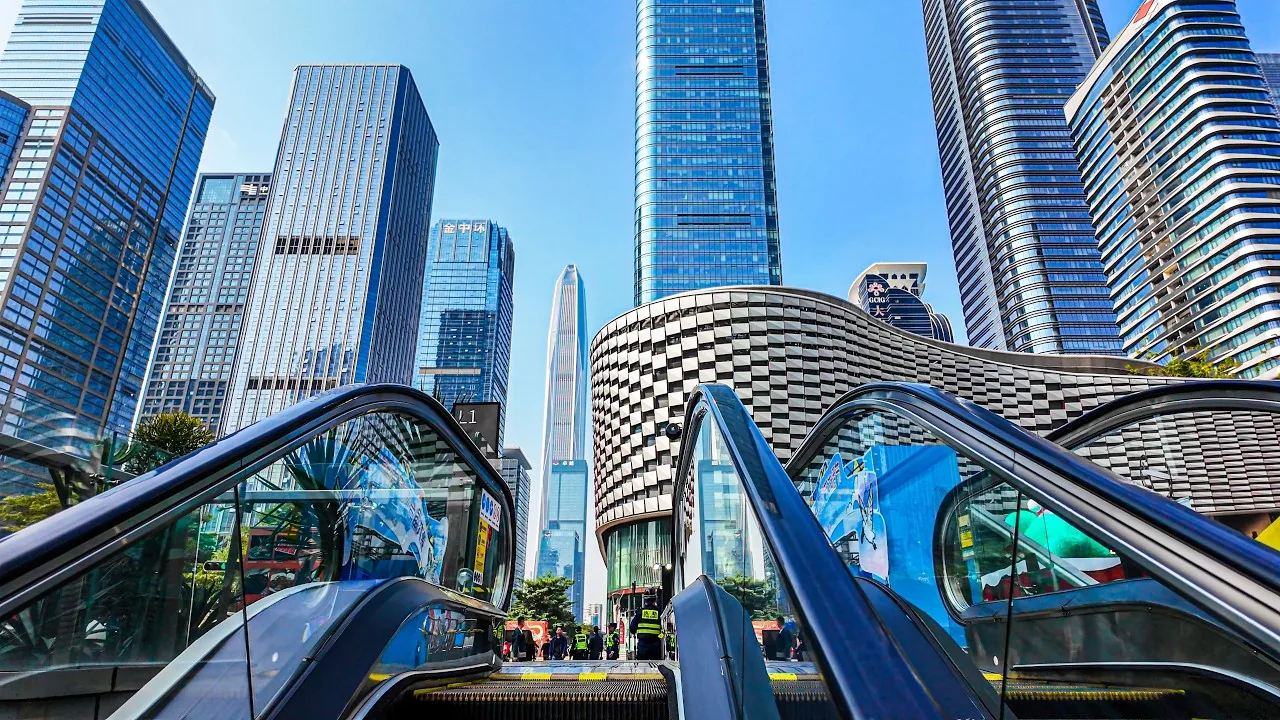
Where the name comes from
“Silicon Valley of China” is not a marketing slogan. It is a comparison: just as an ecosystem around semiconductors and IT developed in California, an ecosystem around hardware manufacturing, telecommunications, and now artificial intelligence has developed in Shenzhen.
The difference is that Silicon Valley grew organically over decades, while Shenzhen was built according to a plan—and built quickly. The term “Shenzhen speed” emerged in the 1980s, when a 50-story building here was constructed in just 37 months.
How it all began
In 1979, Deng Xiaoping established Special Economic Zones in the Pearl River Delta. Shenzhen was chosen deliberately: its border with Hong Kong provided direct access to international markets and foreign investment.
The task in the first stage was simple: cheap production, attracting capital, and accumulating expertise. “Made in China” initially meant cheap copies of Western goods. But this was temporary and intentional—imitation as a path to innovation.
In 1983, the city’s first university opened. Among its early graduates were the founders of Tencent, including CEO Pony Ma. In 2014, China announced a course toward mass entrepreneurship and innovation—and Shenzhen was ready.
Over 40 years, Shenzhen’s GDP surpassed Hong Kong’s. The population grew from 300,000 to 17.7 million. Ninety percent of residents are migrants from other regions, so traditional hierarchies are absent: the city operates on a meritocratic principle.
What the city produces today
Shenzhen is not just an assembly workshop. It is a full cycle: from R&D to mass production.
Companies based here:
Huawei — telecommunications and networking equipment. Tencent — WeChat, QQ, and the gaming industry.
BYD — the world’s largest electric vehicle manufacturer, surpassing Tesla in total sales.
DJI — controls about 70% of the global drone market.
CATL — the market leader in batteries for electric transport.
For the first seven months of 2025, the city’s foreign trade turnover amounted to approximately $361 billion—the highest among all Chinese cities. Exports of integrated circuits grew by more than 40% year-on-year. The city files over 80,000 patents annually, mostly in the fields of AI and telecommunications.
Robotics
If Shenzhen was previously the Silicon Valley of hardware, it now claims the title of the world’s robotics capital.
Tens of thousands of companies in the city are involved in robotics. In April 2026, the second international FAIR plus conference took place, jointly organized with the German exhibition company Messe Stuttgart. The focus is on standardizing development, open hardware platforms, and scaling robotic systems.
Robots here are not exhibits. Meituan drones deliver coffee to kiosks in urban parks. Driverless robotaxis from Pony.ai drive through the streets. Humanoid robots work in tech parks.
What to see in the city
Huaqiangbei — the world’s largest electronics market. Here you can find everything: from rare microchips to the latest gadgets. It is the physical embodiment of why the whole world assembles technology in Shenzhen.
Guangming Science and Technology Museum — a building designed by Zaha Hadid Architects. Inside: AI and robotics zones, smart city simulators, exhibitions of flying taxis and drones, and more than 950 interactive exhibits.
Ping An Finance Center — the fourth tallest building in the world. The observation deck offers a panoramic view of the entire business district.
OCT-LOFT — a former industrial quarter converted into design studios, galleries, and cafes. For those who want to see not only the technological but also the cultural side of Shenzhen.
Dafen Oil Painting Village — a district where hundreds of artists and galleries work. A sharp contrast to the city’s hi-tech atmosphere.
Tech Tour — organized three-hour excursions allow you to ride in a robotaxi, control a robot dog, interact with a humanoid robot, and drink coffee brewed by a robot barista.
The Tech on Telegram Follow The Tech on Telegram
Keep up with the latest technology and startup news.
Related reading




More from this author

Article Useful
How to protect your accounts from hacking: 8 settings you should check today
The Tech

Article Useful
500 Global: How the Accelerator Works and Who Can Receive Investments
The Tech

Article Interviews
Game Development in Central Asia: Arkady Moldavski on Developing Reverb and the Growth of the Industry
The Tech

Article Useful
Google, Tesla, BlackRock, and the IMF: Where to Apply for an Internship in Fall 2026
The Tech

News IT
Tesla unveiled the flying electric car Roadster
The Tech

News IT
Intero Biosystems startup won the Startup Battlefield at TechCrunch Disrupt 2026
The Tech