Sam Altman announced that soon people will pay for AI as they do for electricity and water.
In the future, artificial intelligence could become as fundamental a service as electricity or water. According to OpenAI CEO Sam Altman, users will pay for AI as they use it—essentially "by the meter." He made these remarks during a speech at the BlackRock Infrastructure Summit in Washington.
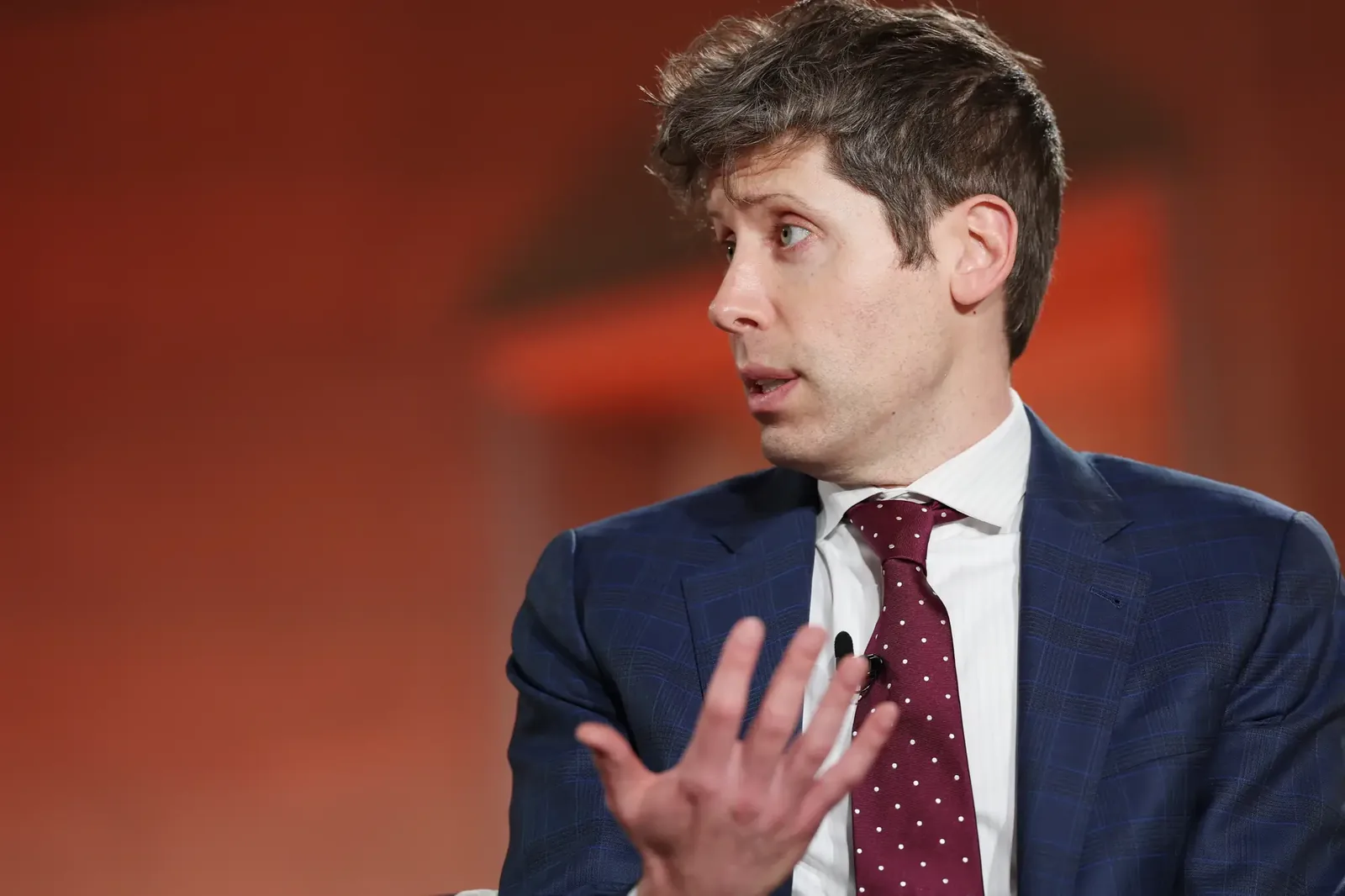
Sam Altman, CEO of OpenAI
In essence, our business, and I believe the business of any other model provider, will look like selling tokens. We see a future in which intelligence becomes a utility, like electricity or water, and people will buy it from us by the meter and use it for whatever they want.
Altman is referring to the units that AI systems use to process and calculate the cost of input and output data.
In such a world, it will be computing power that determines who gets access—and demand for AI is only growing.
Computing power is the volume of computational resources required to train and run artificial intelligence models. It is determined by infrastructure such as chips and data centers.
If OpenAI does not build enough computing power to meet demand, according to Altman, the company will either “be unable to sell access” or “the price will become very high.” In that case, access to AI could shift toward wealthier users, or governments would have to decide how to allocate limited computing resources.
The Race for Infrastructure
The largest technology companies plan to spend hundreds of billions of dollars this year on computing power to cope with the rapidly growing demand for AI.
During her keynote at CES 2026 in January, AMD CEO Lisa Su stated that the world will need more than 10 yottaflops of computing power—each yottaflop being 1,000,000,000,000,000,000,000,000 operations per second—a scale 10,000 times greater than the global AI capacity in 2022—to handle the growth.
Enabling such expansion creates a significant infrastructure challenge.
AI data centers can consume as much electricity as small cities. The strain on the U.S. power grid—along with a shortage of transformers and slow permitting processes for power lines—could become a bottleneck.
In an episode of the Moonshots with Peter Diamandis podcast in January, Elon Musk stated that electricity generation has already become a limiting factor for scaling AI. He predicted that China could surpass the United States in total AI computing power due to faster development of energy infrastructure.
Within technology companies, computing resources are a valuable but sometimes scarce commodity. Engineers compete for access to GPUs, and some job candidates now ask about the AI compute budget alongside salary and equity.
Last December, OpenAI President Greg Brockman stated that the company, which plans to invest approximately $1.4 trillion in data center projects over the next eight years, wants to “stay ahead,” but added that he does not think they will succeed, no matter how ambitiously they may dream today.
At the BlackRock Infrastructure Summit, Sam Altman said the company’s goal is to move away from a world where progress is constrained by a lack of computing power.
The Tech on Telegram Follow The Tech on Telegram
Keep up with the latest technology and startup news.
Related reading




More from this author

Article Useful
How to protect your accounts from hacking: 8 settings you should check today
The Tech

Article Useful
500 Global: How the Accelerator Works and Who Can Receive Investments
The Tech

Article Interviews
Game Development in Central Asia: Arkady Moldavski on Developing Reverb and the Growth of the Industry
The Tech

Article Useful
Google, Tesla, BlackRock, and the IMF: Where to Apply for an Internship in Fall 2026
The Tech

News IT
Tesla unveiled the flying electric car Roadster
The Tech

News IT
Intero Biosystems startup won the Startup Battlefield at TechCrunch Disrupt 2026
The Tech