New technologies that will change the economy and people's lives by 2030
Technologies are advancing faster than ever before, and many are already becoming part of real life. By 2030, several key areas have the potential to transform work, communication, transportation, and healthcare.
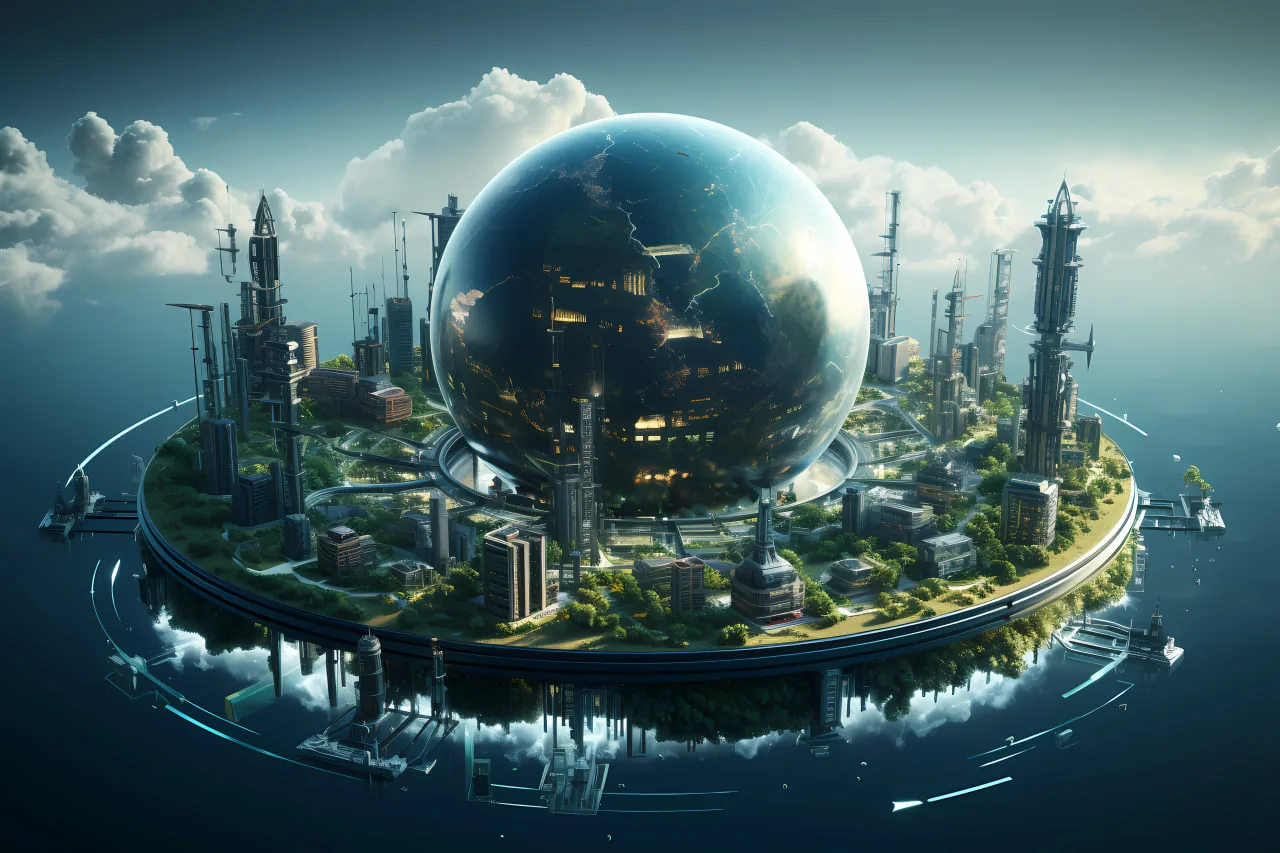
Below are the technologies that, according to experts, will have the greatest impact on the development of the world in the coming years.
AI Agents
AI agents are intelligent autonomous systems that not only process requests but also independently plan and execute complex tasks, make decisions, and interact with other digital systems and equipment. They are capable of adapting to changes in data and situations, acting without constant human oversight.
In industry, these AI agents are used to automate key processes: predicting equipment failures, optimizing production and logistics management, as well as controlling quality and safety on production lines.
It is expected that AI agents will become part of the digital infrastructure and be used in many automated online services and digital interactions, gradually evolving from simple tools into autonomous systems that independently perform complex tasks and integrate into workflows.
Space Technologies
Space technologies continue to develop, and they are already expanding beyond mere rocket and satellite launches. In 2026, important missions and developments are planned and implemented that are changing the practical use of space.
One of the key events is the planned return of humans to the Moon in 2026 — the Artemis II mission, under which astronauts will venture into deep space and test spacecraft systems before a future landing.
Additionally, Elon Musk and SpaceX have already achieved several important milestones: over 10,000 Starlink satellites have been launched for global internet connectivity, Falcon 9 rockets are being reused multiple times, reducing launch costs, and Starship V3 is being tested — a new reusable system for delivering cargo to the Moon and deep space.
Quantum Computers
Quantum computers represent a completely new type of computing system. Unlike conventional computers that use bits, quantum computers operate with qubits. This allows them to perform extremely complex calculations much faster.
Today, this technology is still in the development stage, but prototypes of quantum processors already exist. In the future, such systems will be able to solve problems that would take conventional supercomputers thousands of years to complete.
Quantum computing can transform fields such as drug development, climate modeling, cybersecurity, and financial forecasting. They will enable solving complex scientific and engineering tasks much faster than is currently possible.
Blockchain and the Digital Economy
Blockchain technologies are gradually moving from experimentation to real-world application. Using distributed digital ledgers, it is possible to create transparent and secure systems for data storage and financial transactions.
By 2030, blockchain could become the foundation of a new digital economy. Systems of independent finance, digital identities, and "smart contracts" will be able to automate transactions and financial operations without intermediaries.
Furthermore, blockchain can be used to track supply chains, verify product authenticity, and protect user data.
Extended Reality
Extended reality technologies combine augmented reality (AR), virtual reality (VR), and mixed reality. They enable the creation of digital spaces where people can interact with virtual objects and information.
In the future, these technologies could significantly change work, education, and entertainment. Users will be able to attend virtual events, work in digital spaces, and interact with 3D content.
In e-commerce, shoppers will be able to view products in three-dimensional format or "try them on" in a virtual environment before purchasing.
Robots and Autonomous Systems
Robotics is also developing quite rapidly. By 2030, robots will be able to operate independently, using artificial intelligence and machine learning.
Such systems can be used in manufacturing, logistics, agriculture, medicine, and the service industry. For example, robots will be able to manage warehouses, deliver goods, assist in hospitals, or perform repetitive tasks in production.
Automation will improve work efficiency and reduce the number of errors.
Autonomous Transport
Self-driving cars and other forms of autonomous transport are already undergoing trials in many countries. In the future, such technologies could become a standard part of urban infrastructure.
Autonomous systems will include not only cars but also trucks, drones, and other types of transport. They will be able to communicate with each other and with urban infrastructure, improving road safety and enhancing logistics.
This could make transportation more efficient and reduce the number of traffic accidents.
New Communication Technologies
The development of communication networks is an important part of digital infrastructure. The 5G technology is currently being actively developed, providing higher data transmission speeds.
However, research is already underway for the next generation of networks — 6G. It is expected that such networks will provide data transmission speeds hundreds of times higher than current networks.
This will enable connecting billions of devices worldwide and laying the foundation for smart cities, autonomous transport, and the Internet of Things.
Biotechnology and Gene Editing
Biotechnology is becoming one of the most promising areas of science. Gene editing technologies, such as CRISPR, allow precise modification of DNA and open new possibilities for medicine.
It is expected that such technologies will help treat genetic diseases, create personalized treatment methods, and increase healthy life expectancy.
Beyond medicine, biotechnology can be applied in agriculture — for example, to create crops resistant to climate change and to produce new types of food products.
Renewable Energy and New Materials
The energy sector is also undergoing significant changes. Renewable energy sources, such as solar and wind power, are becoming more accessible and efficient.
According to expert forecasts, by 2030, renewable energy could supply a significant portion of the world's electricity.
The development of energy storage technologies and new materials will also enable the creation of more efficient batteries, electronics, and industrial solutions.
The Tech on Telegram Follow The Tech on Telegram
Keep up with the latest technology and startup news.
Related reading




More from this author

Article Useful
How to protect your accounts from hacking: 8 settings you should check today
The Tech

Article Useful
500 Global: How the Accelerator Works and Who Can Receive Investments
The Tech

Article Interviews
Game Development in Central Asia: Arkady Moldavski on Developing Reverb and the Growth of the Industry
The Tech

Article Useful
Google, Tesla, BlackRock, and the IMF: Where to Apply for an Internship in Fall 2026
The Tech

News IT
Tesla unveiled the flying electric car Roadster
The Tech

News IT
Intero Biosystems startup won the Startup Battlefield at TechCrunch Disrupt 2026
The Tech