A new scarce profession has emerged in the labor market at the intersection of business and AI
AI expert Jiaona Zhang announced a new role in companies — AI workflow specialists, who are becoming an important part of business digital transformation.
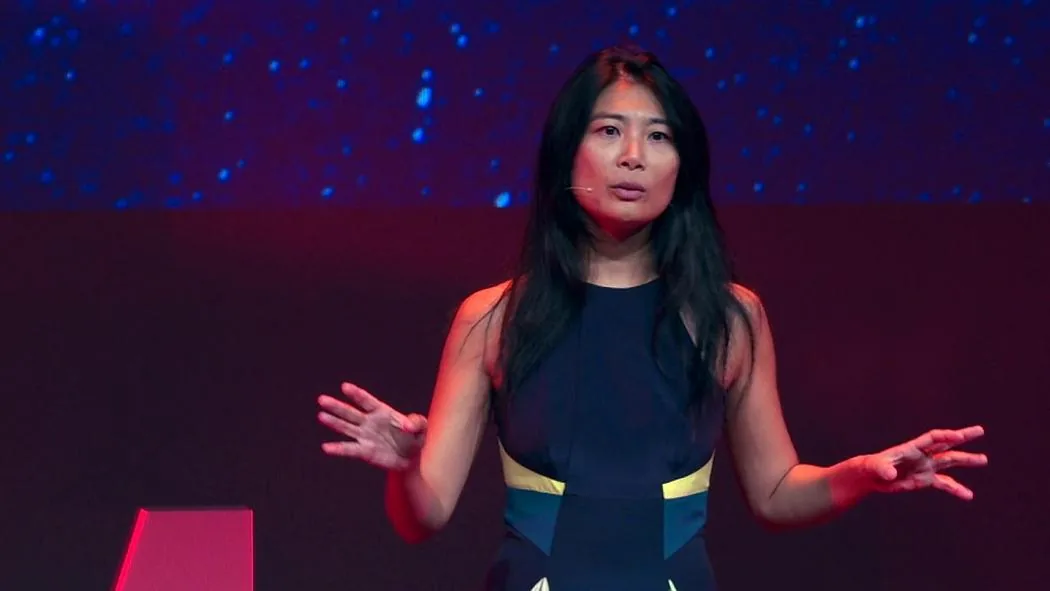
According to experts, amidst layoffs, hiring freezes, and a broader restructuring of the labor market driven by the development of artificial intelligence, a new type of profession is emerging.
This is not about developing AI models, but about specialists who integrate artificial intelligence into real-world business processes within companies. Companies are increasingly seeking employees capable of automating tasks, improving work efficiency, and optimizing operational processes using AI.
The Growing Role of AI Workflow Specialists
According to Business Insider, this new type of role is called an AI workflows specialist. These professionals analyze internal company processes and identify areas that can be automated or improved using artificial intelligence.
As Giaona Zhang, Chief Product Officer of the AI platform Laurel, explains, this role focuses on identifying areas where AI can reduce routine work and increase efficiency. Such tasks can be applied across various departments—from sales and customer support to operations management and internal administration.
One company has already hired a graduate for such a position. He developed an AI agent that performed the functions of a personal assistant for the sales team. According to Zhang, this employee became one of the company's most valuable specialists, and the AI Ops field continues to expand.
She also believes that such roles represent a new version of BizOps and should appear in every company.
What AI Workflow Specialists Do
Unlike traditional engineers, these specialists do not develop AI models. Their task is to integrate tools and create automated processes that save employees' time.
Their responsibilities include:
— integrating business systems: CRM, databases, communication platforms
— configuring automation between services
— using no-code and low-code tools instead of traditional programming
— creating quality control mechanisms where AI results are verified by humans before deployment.
Platforms such as Zapier or n8n are often used, allowing the creation of automations without coding.
A New Employee Role in the AI Era
According to Giaona Zhang, employees do not necessarily need to wait for official job postings. For example, sales specialists can themselves implement AI automation in their processes.
She notes that instead of focusing on local KPIs, employees can scale their efficiency across the entire team.
She also emphasizes that specialists who can demonstrate time savings and increased efficiency through AI will be particularly in demand in the market. This becomes a way to show their value to employers.
Companies Are Already Starting to Hire Such Specialists
The trend extends beyond startups. The company Box recently opened a position for an AI business automation engineer with a salary of up to $183,000 per year.
Box CEO Aaron Levie described this role as analogous to a forward-deployed engineer for internal business functions and noted that such positions will likely appear in many companies in the future.
The labor market is gradually shifting from employees who perform tasks manually to specialists who design and optimize business processes using AI.
The new role of AI workflow specialist reflects this transition and shows that companies increasingly value people who can work at the intersection of technology and business.
The Tech on Telegram Follow The Tech on Telegram
Keep up with the latest technology and startup news.
Related reading




More from this author

Article Useful
How to protect your accounts from hacking: 8 settings you should check today
The Tech

Article Useful
500 Global: How the Accelerator Works and Who Can Receive Investments
The Tech

Article Interviews
Game Development in Central Asia: Arkady Moldavski on Developing Reverb and the Growth of the Industry
The Tech

Article Useful
Google, Tesla, BlackRock, and the IMF: Where to Apply for an Internship in Fall 2026
The Tech

News IT
Tesla unveiled the flying electric car Roadster
The Tech

News IT
Intero Biosystems startup won the Startup Battlefield at TechCrunch Disrupt 2026
The Tech