Meta is preparing a superintelligence for everyone: what Zuckerberg promises the world
Meta CEO Mark Zuckerberg published a long essay on the future of personal artificial intelligence. In it, he described a world where every person will have their own AI capable of assisting with education, work, legal matters, and other tasks.
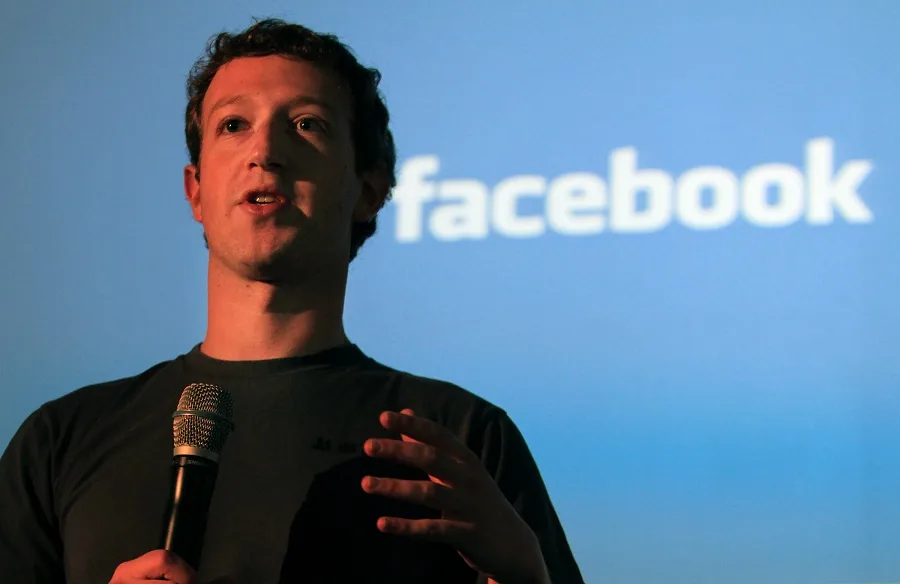
Zuckerberg believes that personal superintelligence should be accessible not only to wealthy individuals and large corporations, but to everyone. In his view, it is mass access to such systems that will allow their capabilities to be used for the benefit of society.
However, this idea has its flip side. As AI becomes more powerful, more questions arise about how people will use it and how much trust can be placed in the companies developing such technologies.
How Zuckerberg envisions personal superintelligence
In an essay of about 6,500 words, Zuckerberg describes the next stage of AI development — personal superintelligence. This is not just about a chatbot that you can ask questions. Zuckerberg envisions AI as a constant personal assistant who knows its user well, understands their goals, and is capable of performing a wide range of tasks.
Such an AI could simultaneously act as a tutor, career counselor, coach, programmer, or lawyer.
And most importantly — such an assistant, by Zuckerberg's design, should be accessible to everyone.
This idea did not appear for the first time in the new essay. A shortened version of the text was previously published in The Wall Street Journal, and Zuckerberg had already voiced some of its key points in his speeches. However, the new essay provides the most detailed explanation of his position.
AI tutor for everyone
One of the main examples cited by Zuckerberg is education.
He envisions a world where every child can have a personal tutor with the knowledge level of a specialist holding a doctoral degree.
If a schoolchild does not understand mathematics, AI can explain the topic again and offer a different way of explaining it. If an adult wants to learn a language or master a new profession, a personal AI can become their permanent mentor.
At first glance, such a system could make quality education more accessible.
But here arises a problem that modern AI services demonstrate in practice.
ChatGPT, Claude, and Gemini can also be used as personal teachers. However, schoolchildren and students often use them not for learning, but to complete assignments on their behalf — for example, to write an essay or solve a problem.
This creates a paradox: a technology designed to help with learning can simultaneously allow a person to avoid learning altogether.
The author of the article draws attention to such consequences. AI creators may expect one application of the technology, but users will find a completely different use for it.
Superintelligent lawyer for everyone
Another example from Zuckerberg is the legal system.
Imagine that one person has access to a super-powerful AI lawyer capable of quickly analyzing laws, court decisions, and documents. The other party does not have such a tool. In this case, the first person gains a clear advantage.
But if such AI becomes available to everyone, the situation changes. According to Zuckerberg, the technology can make the legal system more fair: a person with limited financial resources will gain access to a tool that was previously available only to those who could afford expensive specialists.
However, unexpected consequences are also possible here. If every person gets a powerful legal AI, the number of court cases and legal documents could rise sharply. Instead of simplifying the system, the technology could create additional strain on the courts.
Therefore, the question is not only about how intelligent the AI will be, but also about how human behavior will change after its emergence.
Free AI for billions
Zuckerberg also speaks about the accessibility of personal AI. By his design, the basic capabilities of such systems should be free and available to billions of users. At the same time, individuals and companies that require more computing resources could be provided with additional capabilities for a fee.
Zuckerberg mentions a model of dynamic allocation of computing power: those who need large resources at a specific moment will be able to access them depending on demand.
The idea is to ensure that computing power is used where it brings the greatest benefit, while keeping costs as low as possible.
However, this model could create a new problem: if the price of access to computing depends on demand, using AI for everyday tasks will become harder to predict.
Why the question of trust arises
However, the main question of Zuckerberg's essay is not only about technology.
Society already regards large technology companies with caution. In the case of Meta, this is particularly evident after years of debates about the influence of Facebook and other social platforms on society.
According to a Pew Research Center survey, 64% of Americans believe that social media negatively affects democracy. Approximately the same proportion supports stricter regulation of social platforms.
Therefore, when a technology company says, "We are going to give everyone superintelligence," a natural question arises: what will happen if this technology is used differently than its creators intended?
This is where the experience of social networks becomes important.
Facebook and other platforms were created with one goal, but over time they became tools for spreading disinformation, political advertising, manipulation, and other types of content, the consequences of which platform creators could not fully predict.
The same could happen with AI — only the consequences could potentially be much larger in scale.
Zuckerberg bets on accessibility
At the same time, Zuckerberg views the problem differently than many AI critics. His logic is simple: if powerful AI ends up in the hands of only a few companies, states, or the wealthiest people, it could lead to even greater inequality.
If everyone gets personal superintelligence, opportunities will be distributed more widely.
A schoolchild will have access to a personal teacher. A person with a modest income will have access to legal assistance. A budding entrepreneur will have access to a consultant and assistant that could previously cost thousands of dollars.
This is why Zuckerberg considers mass accessibility of AI as one of the main conditions for a positive future.
How Meta's position differs from OpenAI and Anthropic
Zuckerberg's public rhetoric differs from the approach of the leaders of OpenAI and Anthropic.
Sam Altman and Dario Amodei regularly speak not only about the possibilities of AI, but also about the risks associated with the development of increasingly powerful models. They also detail the safety measures that companies are trying to implement. Zuckerberg focuses on something else: he talks more about what people will gain from AI if given access to sufficiently powerful systems. This does not mean that Meta ignores risks. But at the center of its approach is the idea of widespread dissemination of the technology.
What Zuckerberg ultimately proposes
In essence, Zuckerberg's vision can be summed up in one idea: every person should have their own very powerful AI that will expand their capabilities. It will be able to teach, help with work, provide legal advice, create content, and solve many other tasks. But along with this comes a more complex question: is society ready for such technology, and can it trust the companies that create it?
The experience of social networks shows that even technologies created with positive intentions can lead to unexpected consequences. Therefore, the future of personal superintelligence will depend not only on how intelligent AI becomes. Equally important is who will control it, how accessible it will be, and what restrictions will apply when such systems become part of the daily lives of billions of people.
The Tech on Telegram Follow The Tech on Telegram
Keep up with the latest technology and startup news.
Related reading



More from this author

Article Useful
How to protect your accounts from hacking: 8 settings you should check today
The Tech

Article Useful
500 Global: How the Accelerator Works and Who Can Receive Investments
The Tech

Article Interviews
Game Development in Central Asia: Arkady Moldavski on Developing Reverb and the Growth of the Industry
The Tech

Article Useful
Google, Tesla, BlackRock, and the IMF: Where to Apply for an Internship in Fall 2026
The Tech

News IT
Tesla unveiled the flying electric car Roadster
The Tech

News IT
Intero Biosystems startup won the Startup Battlefield at TechCrunch Disrupt 2026
The Tech