Who owns the copyright to tracks created by neural networks
AI-generated music is becoming a new trend, along with questions of copyright. In Kazakhstan, this issue has already received its first legal regulation. We explore what tools are used for music generation and how authorship is determined in such cases.
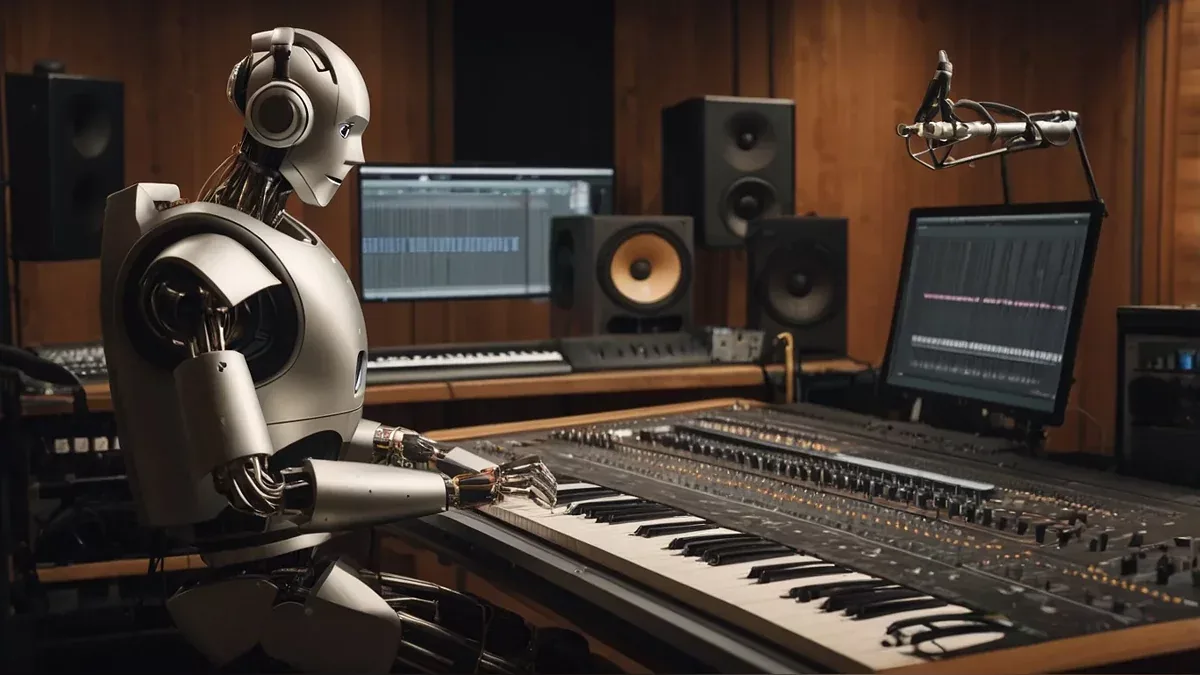
How AI is changing music
Artificial intelligence has already become part of mass production. Generative models allow creating full compositions — from instrumentals to vocals — with just a text description.
Now anyone can make music, even without musical education or studio skills. However, the legal status of such works remains ambiguous and directly depends on the degree of human creative involvement.
Copyright and ownership of AI-generated works
Copyright traditionally requires human creative input. Artificial intelligence itself is not recognized as the author of a work.
In the Republic of Kazakhstan, this issue is regulated by Article 23 of the Law "On Artificial Intelligence":
— works created using AI systems are protected by copyright only if there is a human creative contribution to their creation
— text prompts sent to AI, if they are the result of human intellectual creative activity, are themselves recognized as objects of copyright
— fully automatic generation without significant human intervention generally does not receive copyright protection.
In practice, two approaches are distinguished:
- Fully automatic generation — the person only initiates the process, without influencing the structure, melody, or final appearance of the track. Such works are usually not considered objects of copyright.
- Creation with human participation — the person writes a detailed prompt, edits the result, changes the structure, adds their own elements, or makes key creative decisions. In this case, the track may be protected by copyright, and the author/co-author is considered to be the human.
On which platforms are AI-generated works released
AI music is distributed through standard streaming platforms, just like regular music:
— Spotify
— Apple Music
— YouTube Music
— TikTok.
Uploading tracks usually occurs through digital distribution services. At the same time, monetization rules and content rights depend on the terms of specific platforms and the generative tools used.
What tools are used to create AI music
Several main services stand out in the generative music market that allow creating musical compositions using artificial intelligence.
Suno
— a music generation tool based on text prompts
— allows creating ready-made tracks with vocals and instrumental parts.
Udio
— a music generation service using artificial intelligence
— focused on creating full compositions based on text descriptions.
Stable Audio
— a tool for generating audio and musical content
— used to create sounds and musical fragments based on text prompts.
The Tech on Telegram Follow The Tech on Telegram
Keep up with the latest technology and startup news.
Related reading




More from this author

Article Useful
How to protect your accounts from hacking: 8 settings you should check today
The Tech

Article Useful
500 Global: How the Accelerator Works and Who Can Receive Investments
The Tech

Article Interviews
Game Development in Central Asia: Arkady Moldavski on Developing Reverb and the Growth of the Industry
The Tech

Article Useful
Google, Tesla, BlackRock, and the IMF: Where to Apply for an Internship in Fall 2026
The Tech

News IT
Tesla unveiled the flying electric car Roadster
The Tech

News IT
Intero Biosystems startup won the Startup Battlefield at TechCrunch Disrupt 2026
The Tech