Chinese Robot Championship 2026: How humanoid robots competed in football, running, and weightlifting
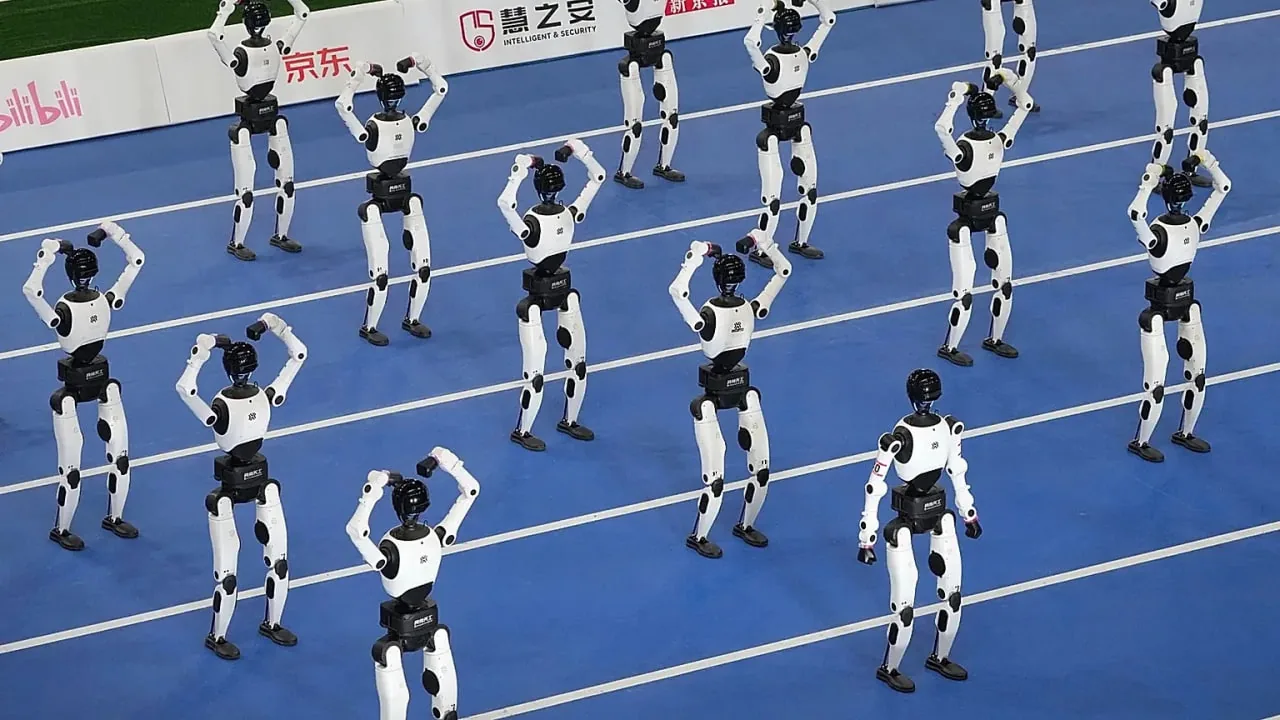
The second World Humanoid Robot Games 2026 concluded in Beijing — a competition where humanoid robots participated in sports and applied disciplines. This year, more than 2,000 robots from 666 teams across 16 countries attended the championship. Participants competed in 51 disciplines, including football, running, table tennis, boxing, dancing, and weightlifting.
The Tech AI
Get the key points in seconds - a short summary from The Tech AI.
At the championship, the Chinese robot Tiangong Ultra ran 100 meters in 8.64 seconds, and the Hephaestus Team won the RoboCup China Open with a score of 8:2. In weightlifting, one robot lifted 16 kg. Chinese companies UBTech Robotics and Booster Robotics are developing the market, winning all gold medals in bipedal disciplines. The competitions help test balance and autonomy for transitioning from demonstrations to real production tasks.
What the robots demonstrated at the championship
One of the main events of the competition was the 100-meter race. The Chinese humanoid robot Tiangong Ultra completed the distance in 8.64 seconds. For comparison, Usain Bolt's human world record is 9.58 seconds. However, the conditions for robot competitions differ from human sprinting, so directly comparing the results is incorrect.
Robots also participated in team football matches. The Chinese team Hephaestus Team from Tsinghua University won a major tournament, the RoboCup China Open, in the large humanoid robot category in 2026, defeating the Beijing Information Science and Technology University team in the final with a score of 8:2.
Another new discipline was weightlifting. It demonstrated not only the capabilities of modern robots but also their limitations: one participant lost balance while attempting to lift the barbell and fell toward the judges. Another robot managed to lift a 16-kilogram weight.
Why China is hosting the humanoid robot championship
The World Humanoid Robot Games are not just a sports show. Such competitions allow developers to test robot balance, motion control, vision, coordination, and autonomy in conditions where the machine must quickly react to changes.
This is especially important for the development of embodied AI—systems that connect artificial intelligence with a physical device. Unlike a standard AI model, such a robot must not only recognize information but also act independently in the real world.
China is simultaneously transitioning humanoid robots from demonstration projects to real production tasks. At the World Robot Conference 2026 in Beijing, companies showcased robots that handle cargo, sort goods, perform manufacturing tasks, and are used in pharmaceutical logistics.
Which companies are developing robotics in China
One notable market participant is UBTech Robotics, which presented the humanoid robot U1 Pro at the conference. The company is considering its application in service, elderly care, and other human-interaction scenarios.
Another example is Booster Robotics. Its robots were used by teams at RoboCup 2026, and 38 teams at the competition utilized the company's developments. Chinese robots won all the gold medals in bipedal humanoid disciplines.
What this means for the robotics market
The championship results show how rapidly Chinese humanoid robotics is developing. However, sports achievements do not mean that robots are already ready to replace humans in most jobs.
Even modern humanoids still face issues with stability, speed in performing complex tasks, and autonomy. Therefore, the next stage of industry development involves not only teaching robots to run or play football but also making them reliable enough to work in factories, warehouses, hospitals, and other real-world conditions.
The Tech on Telegram Follow The Tech on Telegram
Keep up with the latest technology and startup news.
Related reading




More from this author

Article Useful
How to protect your accounts from hacking: 8 settings you should check today
The Tech

Article Useful
500 Global: How the Accelerator Works and Who Can Receive Investments
The Tech

Article Interviews
Game Development in Central Asia: Arkady Moldavski on Developing Reverb and the Growth of the Industry
The Tech

Article Useful
Google, Tesla, BlackRock, and the IMF: Where to Apply for an Internship in Fall 2026
The Tech

News IT
Tesla unveiled the flying electric car Roadster
The Tech

News IT
Intero Biosystems startup won the Startup Battlefield at TechCrunch Disrupt 2026
The Tech