Which startups will get funding in 2026: investors' answers
Against the backdrop of CEVF 2026, it becomes evident that a new investment cycle is taking shape in Central Eurasia: the venture market is shifting toward AI-native startups, DeepTech, and teams for whom the key factors are not just the idea, but execution speed, niche expertise, and scalability.
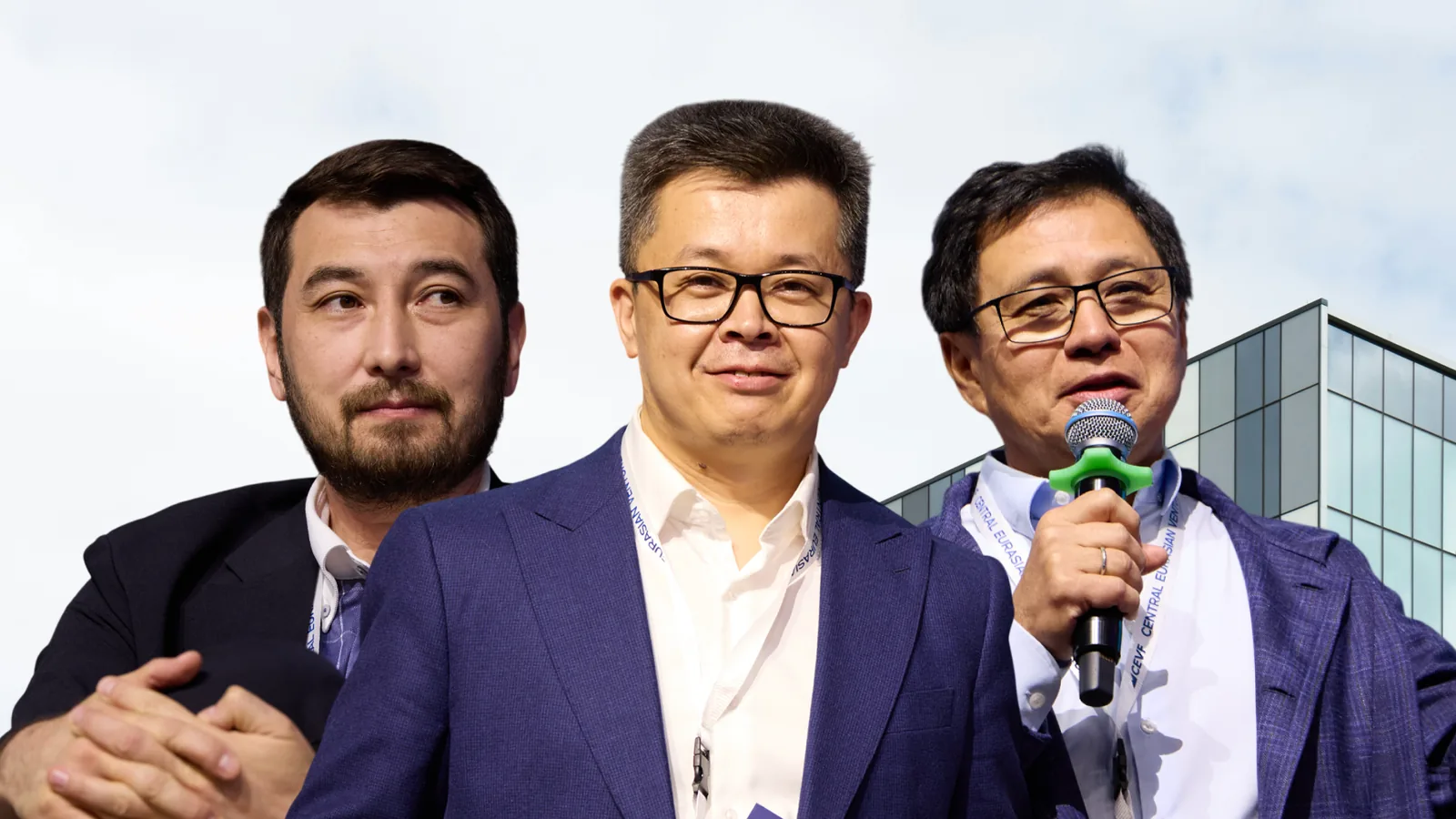
We asked investors what is currently interesting to the market, which directions they consider priorities, and where the main investments in the region will be directed in 2026.
? Watch the full episode on YouTube: https://www.youtube.com/watch?v=bwCeXLLeX3M&t=279s
Alim Khamitov, Head of MOST Ventures
In 2026, we plan to invest in at least 10 companies. Currently, we are actively investing through our MOST Accelerator Fund — a new model for the region, a sort of Y Combinator for Central Asia.
We are looking for strong projects at the Late Pre-Seed stage and are launching a fund at the Pre-Series A stage. We are already ready to work with companies at the Late Seed stage — those who have proven their business model, product, and are ready to scale. The check size will range from $250,000 to $1,000,000.
Our mandate remains the same: we invest in founders from Central Asia, wherever they are located, if they are building a big story. We also consider international companies that see Central Asia as a market for scaling.
Murat Abdrakhmanov, Founder of MA7 Ventures
The venture market is changing before our eyes — it is becoming more resilient and mature. Startups are gradually shifting from copying existing models to creating AI-native solutions capable of forming new industries and entering the global market.
We invest in AI and AI-native startups — this is a general trend. Investments continue in both 2025 and 2026.
Startup founders' brilliant ideas are often overvalued. Today, execution, speed, and distribution play the key role.
Adil Nurgozhin, Managing Partner of Big Sky Capital
The startup ecosystem and the market as a whole are currently unstable. Large companies such as Anthropic and Gemini regularly release new technological solutions that transform the market.
This affects startups, corporations, and the entire enterprise segment. Under these conditions, it is important to learn quickly, dive deeply into technologies, and develop expertise in specific verticals.
This is where the potential lies today for creating strong startups and attracting quality investment rounds.
Yagiz Karadeniz, Managing Partner of DOMiNO Ventures
We plan to invest in startups from Kazakhstan, Uzbekistan, Georgia, and Azerbaijan. The main focus is on projects with a global orientation and ambitious founders. Our investments are concentrated in the areas of AI, DeepTech, CleanTech, and related fields.
First of all, we assess the depth of expertise in a specific industry.
Abdulalet Toshkhuzhaev, Managing Partner of UzVC
DeepTech will sooner or later become ordinary tech, just like any other directions that existed before. Because for us, even ordinary IT companies were once startups. The same thing will happen with innovative companies: they are innovative now, but in the future, they will become commonplace.
We expect that DeepTech, which was difficult to implement just five years ago, will now be easier to launch — including thanks to the use of artificial intelligence.
As UzVC, we plan to start a DeepTech direction in 2026 — focusing on pharmaceuticals and health science.
The Tech on Telegram Follow The Tech on Telegram
Keep up with the latest technology and startup news.
Related reading




More from this author

Article Useful
How to protect your accounts from hacking: 8 settings you should check today
The Tech

Article Useful
500 Global: How the Accelerator Works and Who Can Receive Investments
The Tech

Article Interviews
Game Development in Central Asia: Arkady Moldavski on Developing Reverb and the Growth of the Industry
The Tech

Article Useful
Google, Tesla, BlackRock, and the IMF: Where to Apply for an Internship in Fall 2026
The Tech

News IT
Tesla unveiled the flying electric car Roadster
The Tech

News IT
Intero Biosystems startup won the Startup Battlefield at TechCrunch Disrupt 2026
The Tech