How a startup can enter the US market: mistakes made by founders from the CIS countries when entering Silicon Valley
On the air of The Tech, entrepreneur Oleg Sotnikov, who has been living in Silicon Valley for seven years, discussed the real mistakes made by founders from the CIS when entering the American market. Oleg explained why the US is not just a large market, but a completely different planet: a different sales culture, a different level of competition, and different rules of the game.
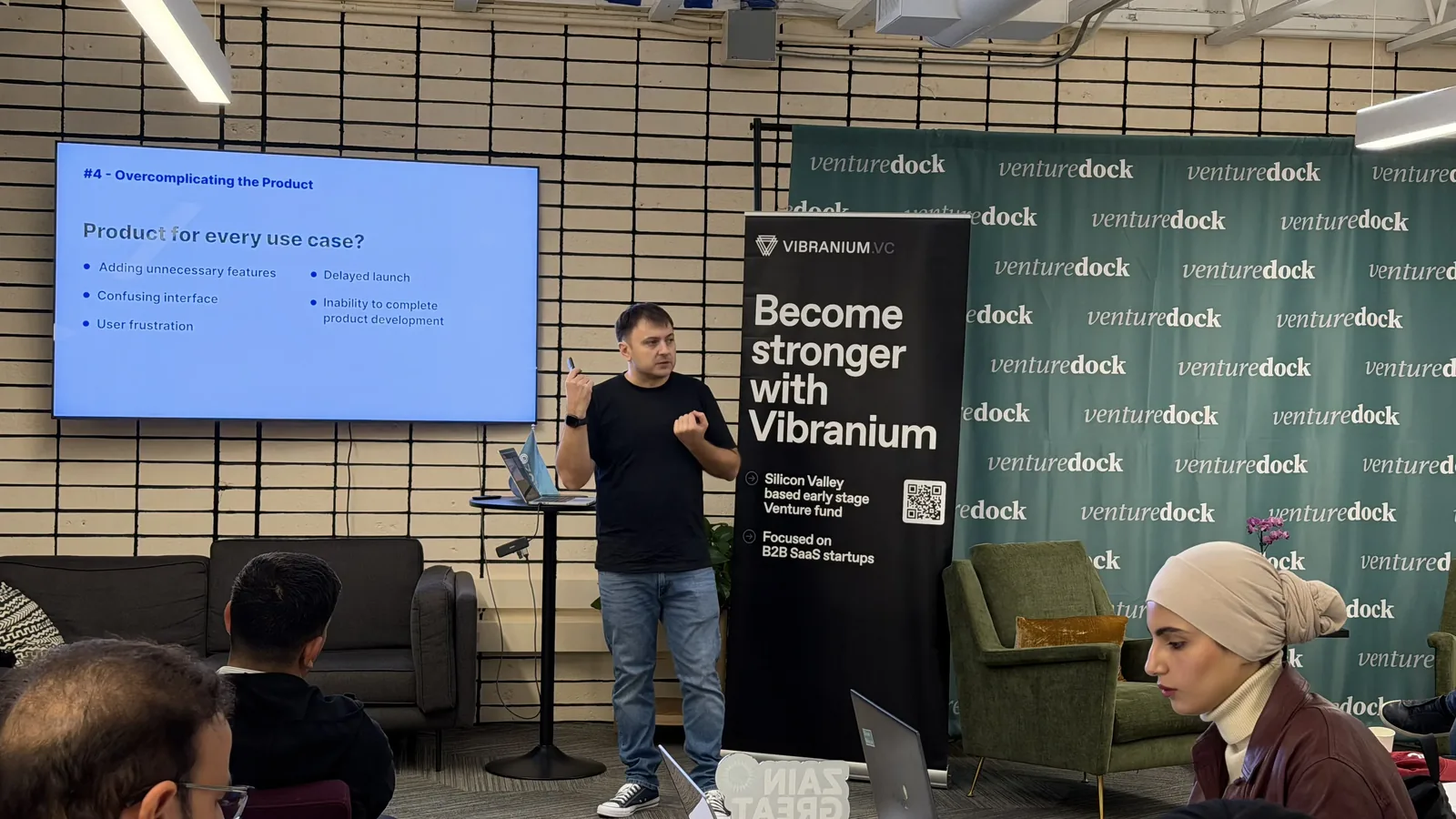
Oleg Sotnikov, City — Palo Alto, startup advisor and CTO with experience working with technology teams and expanding into international markets
About Me
I have been working in IT for the last 25 years. From 1999 to 2019, I lived in Kazakhstan and built various startups — over 17 years, I launched nine projects, two of which were successfully sold. In 2019, I moved to Silicon Valley, where I have lived ever since. I build startups, provide consulting, and help founders from our region — often without any financial expectations.
Why the US — and what is the main difference from Central Asia
For any technology startup, the US is the ideal place for development and scaling. The largest corporations are concentrated here: NVIDIA, AMD, Google, Meta. The corporate market is deep, and clients can pay huge sums. Even for a small startup, deals worth $100,000, $200,000, or $500,000 a year are born here — you cannot earn such money in Europe or Central Asia.
It is important to understand the B2C market as well. When I moved from Kazakhstan, I was struck by how expensive everything is in the US: coffee for $6-7, apartment rent in Silicon Valley — $5,000-$5,500 per month. But this precisely means that the purchasing power of an American is five to six times higher than that of a resident of any other country. A subscription costing $200-$300 per month, which seems unrealistic in Kazakhstan, is normal in the US. The market is huge for both B2B and B2C.
However, the US market does not forgive weak positioning and an inability to sell.
In Central Asia, you can build a strong team, create a good product, and make initial sales, but a ceiling appears quickly. The market is relatively small, companies do not spend much on innovation, venture capital is scarce, and there is insufficient culture of purchasing new technologies.
The main difference in the US is pragmatism. Buyers are not interested in listening to company stories or technical details. People are so busy that they only care about four things: what problem you are solving, for whom exactly, how you are better than alternatives, and what effect you will deliver. If you do not say this within the first one or two minutes, there will be no conversation.
In Central Asia, you can sell through relationships and trust. In the US, personal connections open the door, but they do not replace the value of your product. If there is no clear understanding of who your customer is and what pain you are solving, even the warmest introduction to a buyer will lead nowhere.
Another fundamental difference is the level of noise. Thousands of startups are born in the US every day. You cannot be “just another AI platform” or “just another SaaS.” If you have not explained what pain you are solving and why someone should buy from you right now, you will not stand out from this noise.
Founders’ mistakes before entering the US market
Mistake number one: thinking that the US is just a large market.
This is the biggest misconception. The US is a completely different sales culture, a different level of competition, different expectations for communication, and different requirements for legal structure.
If you do not have a C-corporation in the US, selling is practically impossible. Investors and buyers immediately check: are you local, will you leave? Investors look closely at success stories specifically in the US.
A separate major issue is security compliance. In Kazakhstan, in the CIS market, no one really asked about certifications. In the US, this is a huge topic. If you work with user data, you need HIPAA compliance. If you work in medicine, it is mandatory. If you sell to large corporations, you will need SOC or ISO certification. It may seem that you can build a product and sell it, but when you start working with large companies, everything always comes down to this.
It is better to prepare well from the start and understand that this is a completely different planet.
Mistake number two: entering without focus.
This is my personal mistake. I always wanted my product to be general purpose — suitable for everyone. In the US, this never works. If a product is for everyone, it is for no one.
With AppMaster, on which we spent more than six years, we had exactly the same problem. We focused on the widest possible segment of users, afraid to make a mistake in choosing the ICP — ideal customer profile. This scattered our focus and cost us several years. We spent them wandering and not understanding what needed to be done with the product to improve sales.
The correct advice I received from experienced founders and investors: start with a narrow segment. A specific industry, a specific buyer role, a specific customer profile, a specific pain point, and the right use case. The smaller it is, the easier it is to test the hypothesis. There is no harm in testing several hypotheses in parallel, but positioning must be clear.
Mistake number three: spending too much money too early on marketing, PR, and conferences.
There is a certain level of romanticization of the US. Many think: let’s do marketing, the market is huge — they will buy from us. But it does not work that way.
Until you have verified the basics — who the buyer is, why they buy, how much they are willing to pay, who makes the decision, and what the sales cycle is — spending money on marketing and PR is pointless.
Come to Silicon Valley, see how everything works, go to meetups — this is inspiring. But there is no point in burning money on marketing at early stages.
We ourselves once paid $10,000–$15,000 for a booth at TechCrunch Disrupt — everyone who has watched the series “Silicon Valley” is familiar with this scene. We took good photos, but in fact, we did not capture a single lead or a single investor. Those were the most useless $15,000 in my life.
Where founders lose time and money
I have worked with people who invested money in the wrong activities: they went to accelerators, made expensive pitches to investors, burned money on PR, built expensive websites, and sent the entire team to Silicon Valley. Meanwhile, they did not validate the market.
Hiring salespeople or a marketing team in the US too early is another big mistake. There is a misconception that if you hire an American salesperson for $100,000-$120,000 a year, they will suddenly start selling your product. This does not work. If the founder themselves cannot sell the product in the US, no hired person will fix it.
There is a concept called “chief installer”: when a site first receives an experienced team that shows how to install equipment correctly, and only then is the process scaled. The same applies to founders: the founder must blaze the trail themselves, talk to clients, describe how we sell, what phrases we use, and how we handle objections. Test it yourself — and only then scale with hired employees. In all other cases, this is practically an immediate failure.
The best investment of your money when entering the US market is to have 50, or better yet, 100 honest conversations with potential buyers. Understand: are they willing to talk to you, do they understand what you are offering, test the positioning. The same product can be sold from different angles. There is no more important task at the start.
Is physical presence in the US necessary
At the early stage, you can do discovery, initial calls, outbound, and even remote pilots — especially if the product is purely software. But for serious B2B sales, partnerships with large vendors, and fundraising, local presence is required.
I do not know a single investor at the Pre-Seed, Seed, or Series A stage who would invest in a non-American team. The first question is always: is the company in the US? Where are you located? If you do not live full-time in the US, this is a red flag for investors.
At the same time, it is not necessary to open an office immediately — you often do not need one. At AppMaster and in other products, we do not even open an office in the US. We have a mail address, and the entire team works remotely. But you need someone who understands the American market: an advisor, fractional GTM, partner, or angel investor. Anyone who can help adapt the product and positioning to a specific industry and explain why something works in the US and something does not.
The most dangerous situation is when the team is physically outside the US and thinks they understand the market after reading LinkedIn or attending one conference. LinkedIn is a huge bubble. Business is built completely differently. I only realized this after five years of living in the US.
What is more important: a strong product, connections, or the ability to sell
When I moved to the US, I was convinced that a good product knows how to sell itself. At that time, the term PLG — Product-Led Growth — was popular. At every conference, they told stories about how companies reached a first billion-dollar valuation simply because they had a good product. This is not entirely true.
The most important thing is the ability to sell and learn from the market. Especially now, when AI has made the cost of product development practically zero. Any of the top 20% of needed features can be copied — and it costs nothing. The product itself has ceased to be a competitive advantage.
The product gives you the right to talk. Your connections open doors. But only sales and real revenue show whether you can build a real business.
This is especially important for founders from Central Asia to understand. We have excellent engineers — teams in Kazakhstan, Uzbekistan, and Kyrgyzstan work at a high level. But there is absolutely no culture of aggressive customer development, aggressive market research, and proper B2B sales. And in the US, it is often the aggressiveness of sales that determines whether a startup survives or not.
How to test hypotheses in the US market
Testing a hypothesis is selling. You need to talk to a potential client. If the client is ready to subscribe — that is your hypothesis.
In Central Asia, it is cheaper to reach clients: you can launch an advertising campaign on Yandex for a relatively small budget.
In the US, everything is different. If you work in a specific niche, each click in advertising will cost very high. Outreach via LinkedIn is also limited — no more than 120 contacts per week, and even then, with a good profile. Generating correct hypotheses is much more difficult than testing them. Therefore, it is so important to clearly understand who your customer is in advance.
Regarding risks: the first and biggest is compliance. The US has strict requirements for user data protection. Any violation will result in serious fines. The second risk is loss of client revenue. If your service goes down or data leaks, the client will instantly stop trusting you. You need to approach each client individually and find a real hook — not a fabricated pain, but a specific problem that truly hurts them.
When we sold AppMaster to medical organizations in the US, we discovered that a huge number of small clinics used software that did not comply with patient data legislation. This gave us a very good idea for positioning. The hypothesis worked, and we began signing clients quickly. The most important thing here is to confirm the hypothesis at least on a small scale.
4 main tips for founders from Central Asia
Tips number one: narrow your focus
Do not try to sell to everyone at once. Choose one narrow segment, one pain point, one decision-maker, one clear case. The narrower the focus at the start — whether you are working in the home market or going to the US — the easier it is to test the hypothesis and find the right words for initial sales.
When you focus on a narrow type of client, you begin to study them: you read articles, make assumptions, and speak their language. Developed markets never forgive a broad focus. If you do this consistently even in Kazakhstan — you will have more sales in Kazakhstan. Take best practices from the US and bring them to Central Asia.
Tips number two: start with conversations with clients, not with scaling
As early as 2018, when we went through acceleration at Astana Hub, it took us a very long time to instill this idea in us: stop building the product and start talking to clients. Not with friends, not with other founders, not with investors — but specifically with those who can buy. Other founders, as a rule, will not buy anything from you.
When you talk to potential clients, it is important not to sell to them immediately, but to understand: how they think, what language they speak, what hurts them, and what the decision-making process is. You cannot scale chaos. If you do not understand how to make a sale — there is nothing to scale. This will simply be scaling chaos and losing money.
Tips number three: adapt communication
No long messages, abstract phrases, or technical jargon. Only the language of results: what we will do for you, how much money we will save, how we will increase revenue, how we will reduce risks, how we will speed up processes.
When we entered the Kazakhstan market with AppMaster — which happened late, in 2024-2025 — we took the same messages we created for the US market. Very specific, without corporate language. We wrote to companies six or seven times. As a result, we received a huge number of meetings — with the largest Kazakh companies. They responded because the messages were understandable. Each time they thought a real person was writing to them, not a mass mailing.
Show why the problem is important, why your solution is better than everyone else’s, and why it is important right now. This communication works in both the US and Central Asia.
Tips number four: do not romanticize the US
This is not a place where everything is good and unicorns are everywhere. It is a huge, expensive, and harsh market. You can achieve rapid growth if you are prepared and do everything correctly. But you can also burn all your money very quickly if there is no focus and proper preparation.
Find anyone who knows how this market works and can quickly answer your questions. This will save you a huge amount of time and money.
The Tech on Telegram Follow The Tech on Telegram
Keep up with the latest technology and startup news.
Related reading




More from this author

Article Useful
How to protect your accounts from hacking: 8 settings you should check today
The Tech

Article Useful
500 Global: How the Accelerator Works and Who Can Receive Investments
The Tech

Article Interviews
Game Development in Central Asia: Arkady Moldavski on Developing Reverb and the Growth of the Industry
The Tech

Article Useful
Google, Tesla, BlackRock, and the IMF: Where to Apply for an Internship in Fall 2026
The Tech

News IT
Tesla unveiled the flying electric car Roadster
The Tech

News IT
Intero Biosystems startup won the Startup Battlefield at TechCrunch Disrupt 2026
The Tech