How a startup attracted over $2.5 million in investments: analyzing the Extella.ai case
The Tech AI
Get the key points in seconds - a short summary from The Tech AI.
DeepTech startup Extella.ai has raised over $2.5 million in seven years, including an $860,000 round in January. CEO Anvar Bakiyev (who joined in early 2026) and co-founder Timur Ryspekov created an AI-agent platform for businesses. The company successfully works with large corporations, such as Kazakhtelecom, but has abandoned the B2C segment due to users' lack of understanding of the product's value.
In this episode, we analyze the case of the DeepTech startup Extella.ai, which raised over $2.5 million in seven years, progressed from Research and Development without a ready-made product to securing its first major corporate clients, and closed a funding round of $860,000 in January. CEO Anvar Bakiev shares how the team searched for a business model, why their first market entry failed, how they managed to attract an investor in just two weeks, and what mistakes they had to learn from along the way.
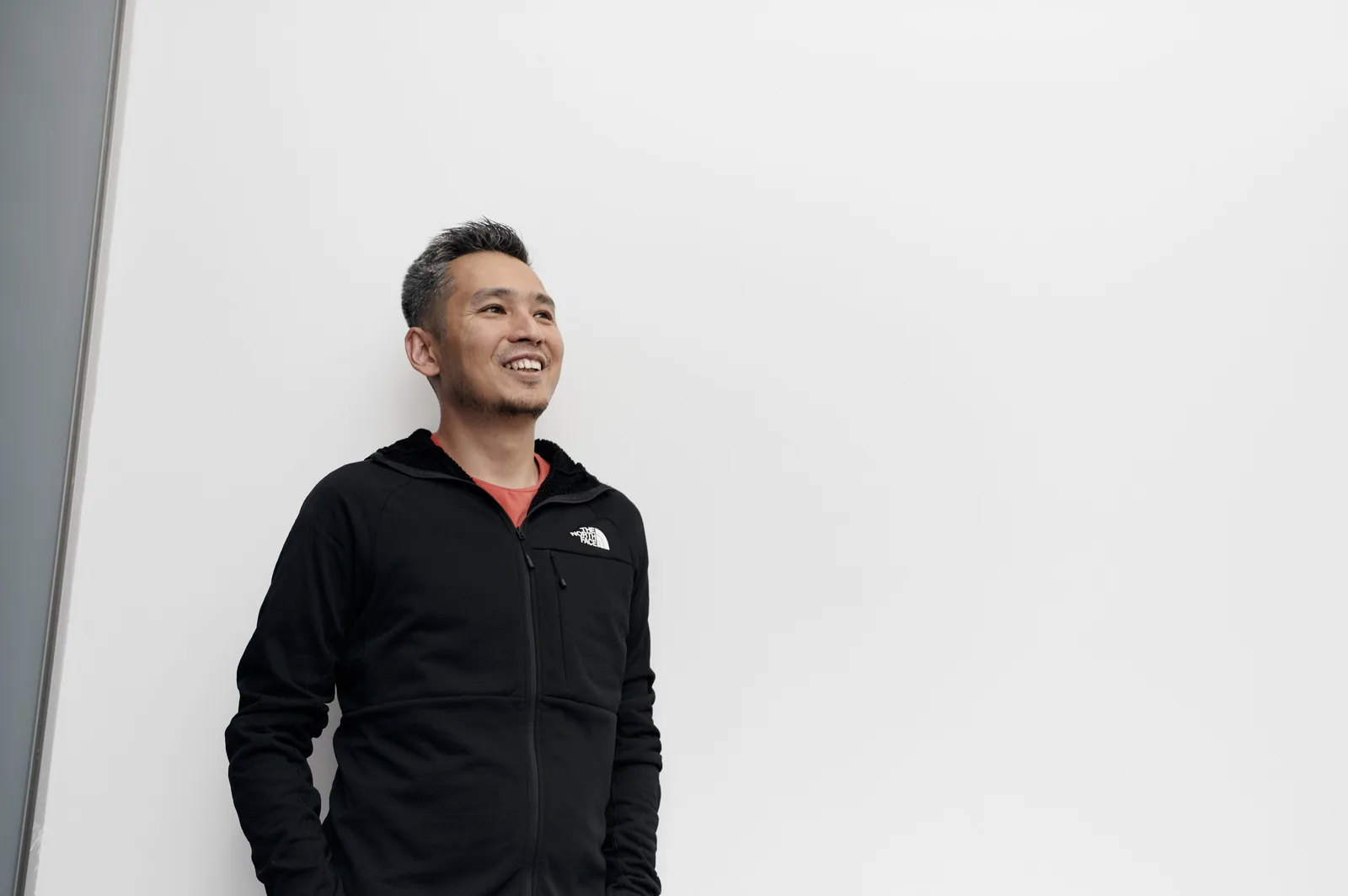
Anvar Bakiev, CEO Extella.ai
About the startup
I joined the company only in early 2026. Before that, for 15 years, starting from 2011, Ramil Mukhoryapov and I together developed the Chocofamily holding. I was responsible for finance, legal matters, and Mergers and Acquisitions deals. Before Chocofamily, I worked in auditing, and by education, I am a lawyer and financier, born in Almaty.
Extella.ai was founded by Timur Ryspekov—an engineer and mathematician. He graduated from high school as an external student, entered the Massachusetts Institute of Technology, and began developing and inventing even while studying. Today, about ten patents are registered in his name.
The company is based on his development—a mathematical discovery, a new method for transforming logical and arithmetic operations that can be applied in cryptography. In 2019, we began investing in the development of this technology, and thus Extella.ai was born.
How the product works
Extella.ai is a platform for deploying, hosting, and managing AI applications for businesses—from small companies to large corporations.
I describe it as a layer that begins where development ends. The user creates an application using tools like Claude or Cursor, and then deploys and runs it on our platform. Users can be both developers and regular business users and managers.
All our applications are built on the basis of AI agents. I use a simple formula: an agent consists of four elements—the brain model, memory, a set of rules, and tools.
Applications can be connected to each other. For example, a logistics agent can call a tool to work with the 1C accounting system or a legal agent, assign it a task, and receive the necessary information.
In the Business-to-Consumer segment, we failed to enter the market: users simply did not understand the value of the product. In Business-to-Business, the results were much more successful. We signed contracts with major players whose total workforce amounts to about 20,000 people. Another 50 companies are currently in our sales funnel.
One of the most striking examples is our work with the Kazakh telecom operator "Kazakhtelecom." The company's call center receives about 200,000 inquiries monthly. Previously, a team of 10 experts manually checked the quality of operators' work and could physically process no more than 2,000 calls.
We built analytics for all 200,000 calls. The system understands what the client wanted, how many times they called, which tariff they used, and why they refused.
Now, the expert no longer needs to manually listen to calls. They receive ready-made data, analyze it, and make decisions.
Investment rounds and results
We invested our own money in the company for the first time in 2019 under the "friends and family of the founder" model.
The total amount of the first round was about $300,000. My personal contribution was $30,000—money I borrowed at interest.
Over seven years, we went through about five rounds, and all the funds raised were directed toward Research and Development. In total, during its existence, the company has raised over $2.5 million.
We closed the last round of $860,000 in January. In December, I pitched to Murat Abdurakhmanov. It took about 15 minutes. I showed the technology, which at that time could already independently open folders on a computer, write emails, and create documents, outperforming market analogs.
After that, the investor called our partner, Evgeny Usatov. We agreed on the valuation, and the deal was closed in about two weeks.
Mistakes and approach to development
The main mistake of our team was that we moved from technology to product, rather than the other way around.
We created a powerful development but started looking for a consumer for it too late. We released the first version of the product in March, confident in its uniqueness, but encountered user misunderstanding.
Later, we shifted our focus to direct sales and began explaining the value of the product through the concept of an application operating system.
There are also several other critical mistakes that I would highlight for founders.
The first is incorrect timing for entering the international market. Startups often go to Silicon Valley too early and start burning through budgets in conditions of high cost of living, still lacking sufficient product-market fit.
The second is delegating presentations to investors instead of pitching personally. If you are the founder, the investor must see and hear you. Passing this task to another person can seriously affect the outcome.
The third is attempts to bluff and say that the company supposedly does not need investor money. In my opinion, this is the wrong strategy. If you are raising investment, it is better to honestly explain why you need capital and what value it will allow you to create.
Plans
For the next 12 months, we have two key tasks ahead.
First, we need to determine a clear focus between Business-to-Consumer and Business-to-Business and choose a priority direction.
Second, we want to test a large-scale hypothesis about the possibility of building a full management cycle for one company using AI and automation.
In the future, we plan to develop customized solutions based on a reusable core and launch a marketplace where developers can exchange their ready-made tools.
The Tech on Telegram Follow The Tech on Telegram
Keep up with the latest technology and startup news.
Related reading




More from this author

Article Useful
How to protect your accounts from hacking: 8 settings you should check today
The Tech

Article Useful
500 Global: How the Accelerator Works and Who Can Receive Investments
The Tech

Article Interviews
Game Development in Central Asia: Arkady Moldavski on Developing Reverb and the Growth of the Industry
The Tech

Article Useful
Google, Tesla, BlackRock, and the IMF: Where to Apply for an Internship in Fall 2026
The Tech

News IT
Tesla unveiled the flying electric car Roadster
The Tech

News IT
Intero Biosystems startup won the Startup Battlefield at TechCrunch Disrupt 2026
The Tech