How a startup from Kazakhstan is building solutions for 3D modeling in MedTech
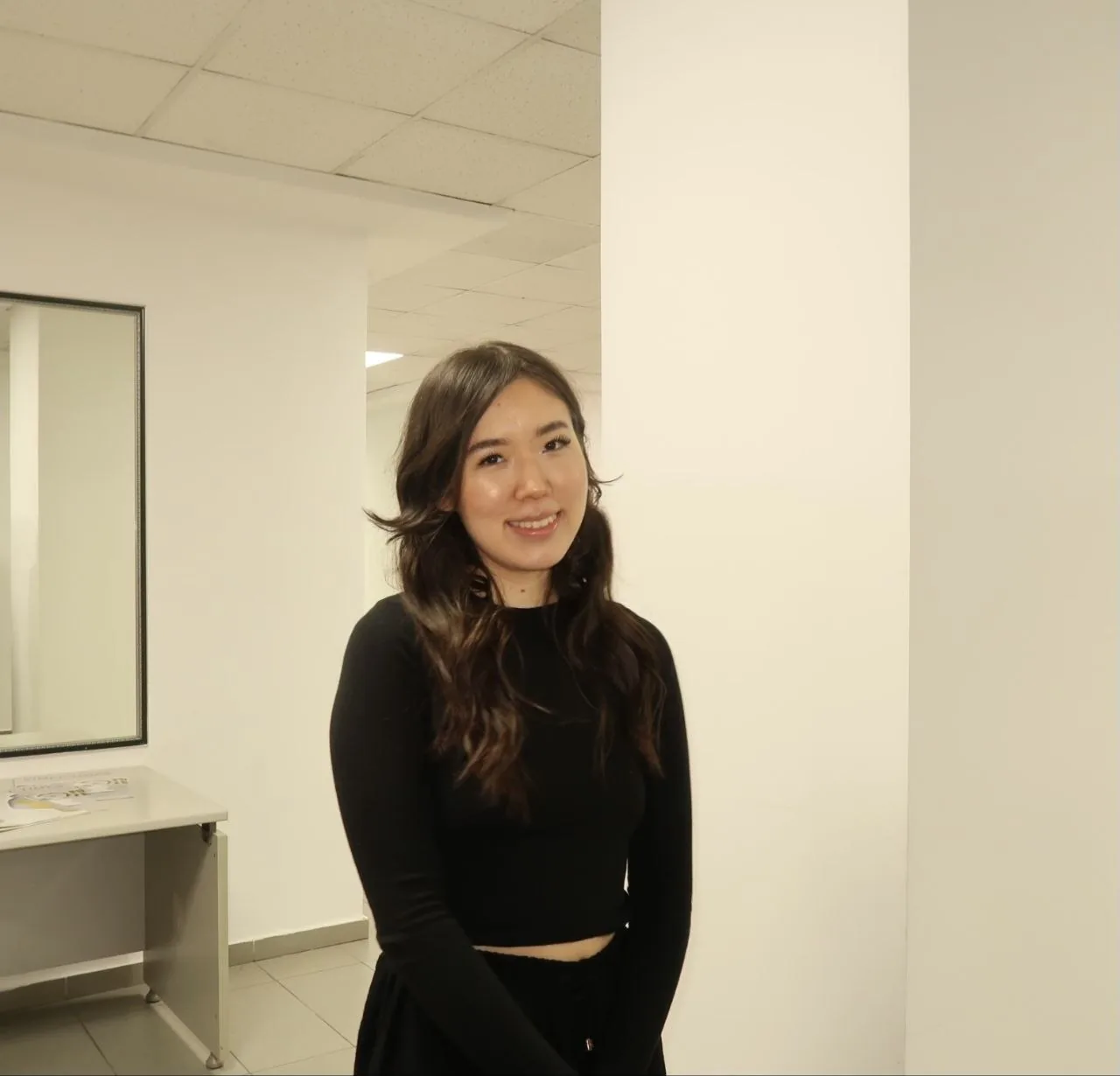
DeepTech platform for generative 3D simulations and digital twins, uniting MedTech, logistics, and neuromarketing around the concept of physically accurate modeling of the real world. From early startups at age 16 to international accelerations and real clients — in our interview, we break down the journey, ideas, and solutions.
Sabina Baitemirova, city — Almaty, CEO, LinkedIn
How it all began
My journey in startups began at 16, in 2016, as part of Girls in STEM at American Space, where we built our first application, Saubol App, using MIT App Inventor. This was my first experience creating a product. Later, I independently studied the startup ecosystem: pitch decks, investors, and Seed rounds. In 2019, the idea for SauCoin emerged—an attempt to link everyday activity with the digital economy, but the project never reached launch.
In 2022, I worked at a remote startup called Presence, which helped Digital Nomads find people nearby. Within a few months, we grew to ~15,000 users, and I saw how a product could scale and shift its positioning. In 2023, I participated in NASA Space Apps, where we built an AI Telegram bot that generated texts from images. The project quickly gained about 400 users in a day, but it didn’t scale due to infrastructure limitations.
After that, we tried the B2B direction through accelerations but failed to find product-market fit. In parallel, we worked on AI projects in waste recycling using vision models and a CRM to connect waste producers with farmers. This project took first place at the Google Developer Groups Hackathon. Later, we developed agritourism and participated in GCIP UNIDO—an international climate acceleration supported by the UN.
I came from logistics and transport, where digital twins and simulations of physical processes are applied tools. But the idea for FABS3D originated in dentistry. Doctors wanted not just a “before and after” visualization, but a physically accurate model of jaw system function—a digital twin of anatomy. I saw in this the same challenge as in logistics: simulating a physical object where accuracy matters, not just the visual shell. Thus, the idea for a platform for generative 3D simulations and digital twins was born—first in MedTech, then expanding further.
Startup Launch
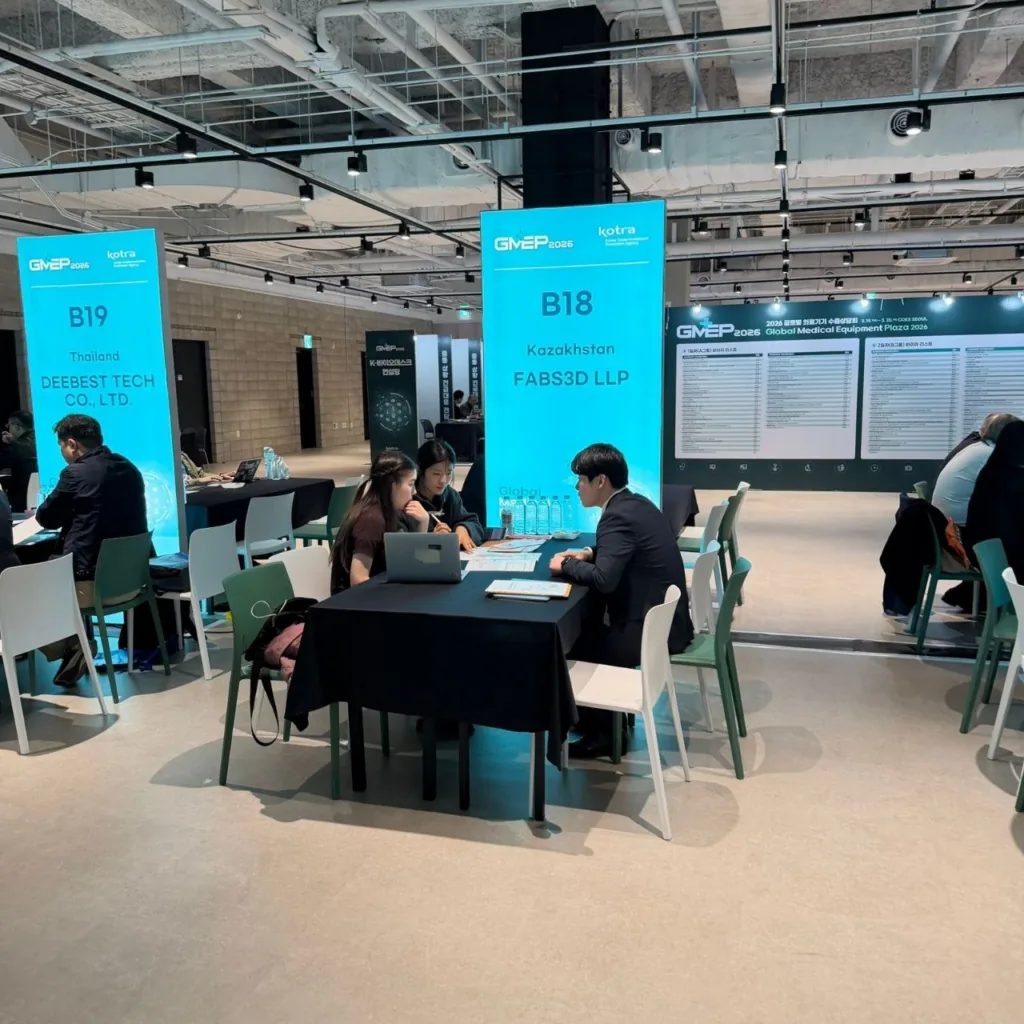
We started on bootstrapping—without external funding, using our own resources. The first clients came from dentistry, specifically orthodontics: they needed a tool for precise treatment planning and explaining changes to patients. This provided the first validation of the product.
In parallel, we developed the logistics track, where we had relevant background and a clear demand for digital twins of physical processes. We assembled the team around physical modeling, machine learning, and 3D generation. In Kazakhstan, this is a difficult market—narrow with a limited pool of specialists. There are also several 2D products that generate revenue, but they are not our focus—we position ourselves as a DeepTech company.
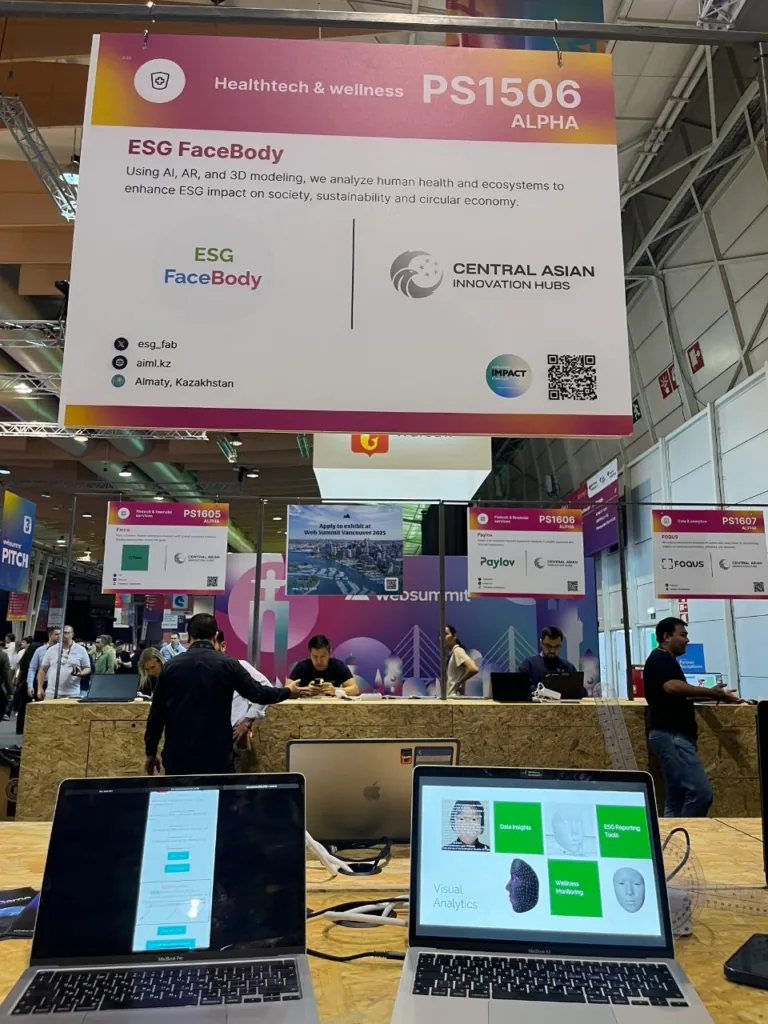
Some early experiments were related to ESG and ClimateTech: document-generation solutions and ESG frameworks for companies. We pitched to corporations, but the sales cycle was long, and monetization was limited. Later, this led to participation in Web Summit Lisbon in the ESG Track, where the project received exposure and won the Social Impact Award.
In parallel, the medical track took shape. Against the backdrop of personal experience with orthodontic treatment, I became interested in analyzing how the face changes with various interventions. We began using vision approaches to simulate changes, which led to the idea of applying this in HealthTech—from orthodontics to assessing functional parameters of the face.
At Web Summit, we met with an orthodontist from Europe who works with 3D aligners and remote diagnostics. This became a key moment of validation: we began collaborating, testing 3D scanning, and data exchange between clinics and patients.
As a result, we focused on the dental direction and digital models of anatomy, keeping the ESG/climate track as secondary. Over time, it became clear that the core of the product is the simulation of physical and biological structures with high accuracy, rather than specific verticals.
Target Audience
We have three main directions:
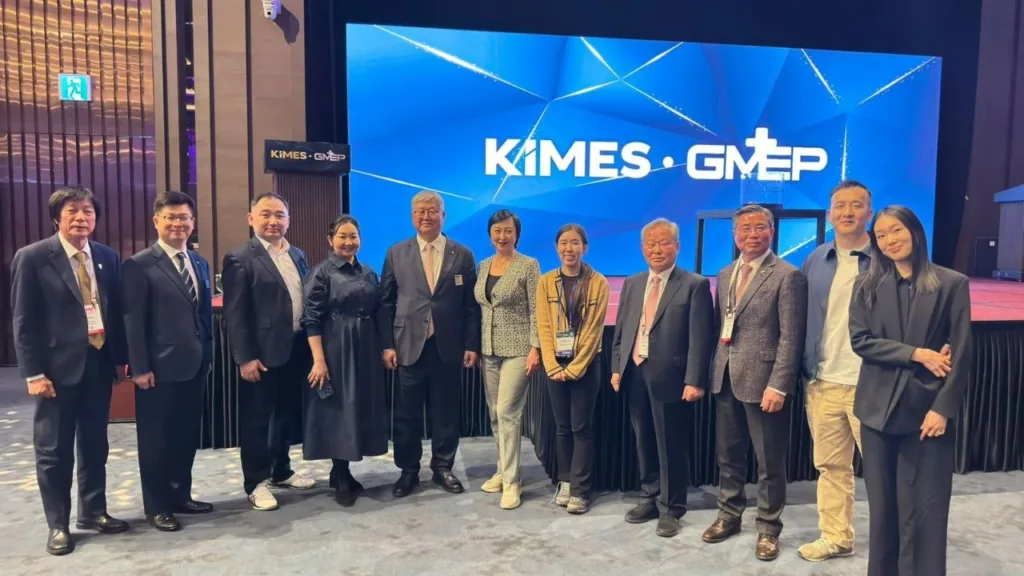
— Dentistry and MedTech—orthodontists and gnathologists. They need physically accurate simulation of treatment: how the bite will change, what will happen to bone tissue, and what the result will look like. We have clients in Kazakhstan and doctors from Japan.
— Logistics and transport—digital twins of physical objects and processes. Simulation before implementing changes, optimizing routes and flows through a model, rather than trial-and-error on real infrastructure.
— Neuromarketing—a digital twin of spatial perception and consumer behavior. How a person perceives space, packaging, and product placement—in 3D, with a predictive model, not just through surveys.
The common logic everywhere is the same: where the cost of error is high and simulation influences the decision—not just beautifying a presentation, but changing the outcome.
Incubation Programs
Currently, we are testing Dental Startup, and it is on this track that the first revenue began to appear. The main entry point is through an educational funnel—courses on AI in dentistry and related programs, including topics on sleep and breathing disorders. This helped form primary demand and reach initial users.
Later, we expanded our network through Web Summit, where we met with orthodontists and professors from New Zealand, Italy, and other countries. Through these connections, we entered adjacent fields—speech therapy, orthodontics, and craniofacial biomechanics. These areas turned out to be closely related: malocclusion, swallowing, and facial muscle balance are viewed as a single system.
This led to the first B2B orders from specialists—orthodontists, speech therapists, osteopaths, and cosmetologists. We tested an application for analyzing facial changes and muscle structure through 2D and 3D scanning. The product was already being sold, but it remained an early prototype: the main issue was the 3D part—the quality of texturing, model accuracy, and infrastructure limitations.
In parallel, we strengthened the technical side through external expertise and acceleration programs, including DeepTech communities and international initiatives. This gave us access to strong ML engineers and researchers and helped improve the model.
Later, the team participated in international events, including AI summits and Web Summit, where we gained additional networking in medicine and DeepTech. During this period, pilots in cosmetology and HealthTech were also developed.
Currently, one of the key pilots is with the cosmetology clinic ProFace. We use an ML model to analyze and simulate facial changes in 2D, for example, after injections, fillers, or botox. This allows for more detailed photo protocols and predictions of client changes. In the future, a transition to 3D modeling is planned.
The main difficulty now is infrastructure and GPUs. Training models and 3D computations require significant resources, which delayed the pilot launch.
At the same time, in the 2D version, we achieve accuracy of about 40-60%, whereas in 3D we could potentially reach ~99%. Therefore, strategically, the focus is shifting toward 3D and physical AI. Here arises a dilemma: 2D can be monetized faster, but long-term value lies in 3D simulation.
In parallel, there are additional products—nutrition bot, fitness bot, and other Telegram solutions with modest revenue and an audience of about a thousand users. However, they are considered auxiliary directions, as in the long term they may lose relevance against the backdrop of the development of large language models.
Therefore, the strategic focus is shifting toward physical AI and spatial computing—systems that model and understand the real world in 3D.
Within this direction, we participated in international competitions and hackathons, including Tokyo Takeoff, where we made it to the top 20 out of more than 150 teams and became the only startup from Kazakhstan at the final selection stage.
We also had experience entering the Japanese market. Despite stereotypes about its closed nature, we built a strong network with local clinics, orthodontists, and accelerators, including Antler and relevant founder communities.

On Difficulties
The main challenge of DeepTech in Kazakhstan is the long sales cycle and the need to explain the value of physical AI even before the deal. In fact, a significant part of the work goes not into selling, but into forming market understanding.
The second problem is talent. Specialists in 3D ML, spatial computing, and related fields are extremely scarce in the local market, so the team is assembled globally, which is more expensive and harder to manage.
A separate systemic barrier is the gap between startups and the scientific community. Access to funding often goes through scientific supervisors and long grant processes, which do not align well with the pace of product development. Grants are usually calculated for two to three years with strict planning, whereas startups operate in iterations measured in months, creating a structural mismatch.
Bootstrapping in DeepTech is a bet that you will reach product validation before resources run out. This requires working in a high-load mode with constant constraints.
Advice for those starting out: it is important to go not into a broad idea, but into a narrow industrial pain point where simulation directly influences a critical decision. In medtech, this is especially noticeable: a doctor cannot afford to make a mistake, so model accuracy becomes the key value.
If you are working with scientific or highly regulated fields, it is important to consider regulation and the decision-making cycle in advance. In such industries, the product may be technically ready, but the market may not be, and this needs to be factored in from the very beginning.
And one more important point—DeepTech almost always requires a long horizon. It cannot be built as a quick B2C product: value appears where there is complex physics, a high cost of error, and a need for accurate simulation of the real world.
Achievements
We reached international users, including doctors from Japan, which confirmed the demand for the solution beyond the local market and provided the first stable international signal.
Currently, we have three product tracks with a unified technological logic: medtech, logistics, and neuromarketing. All of them are based on physical modeling, spatial AI, and 3D generation.
Additionally, the project received external recognition:
— nomination at University of Tsukuba Venture Night 2026
— finalists at TechCrunch.
Plans
Currently, the main focus is bringing the core technology to a level where it can be scaled without compromising accuracy and quality. This is critical for us: in 2D solutions, accuracy can drop to 40-60%, whereas in 3D it approaches ~99%, and this determines the product architecture.
By the end of the year and beyond, we are moving in three directions:
- Launching Physical AI as a separate direction, transitioning from vertical solutions to a horizontal platform that unites different industries around physical modeling.
- Developing collaborations with scientists and research groups in the field of spatial AI, 3D generation, and physical modeling to strengthen the scientific base and model quality.
- Developing our own ML and GPU infrastructure for generative 3D models, necessary for scaling and improving simulation accuracy.
In parallel, we are preparing to raise a round based on already confirmed product validation, working clients, and international interest.
The Tech on Telegram Follow The Tech on Telegram
Keep up with the latest technology and startup news.
Related reading




More from this author

Article Useful
How to protect your accounts from hacking: 8 settings you should check today
The Tech

Article Useful
500 Global: How the Accelerator Works and Who Can Receive Investments
The Tech

Article Interviews
Game Development in Central Asia: Arkady Moldavski on Developing Reverb and the Growth of the Industry
The Tech

Article Useful
Google, Tesla, BlackRock, and the IMF: Where to Apply for an Internship in Fall 2026
The Tech

News IT
Tesla unveiled the flying electric car Roadster
The Tech

News IT
Intero Biosystems startup won the Startup Battlefield at TechCrunch Disrupt 2026
The Tech