How a schoolgirl from Almaty created a startup that helps overcome speech barriers
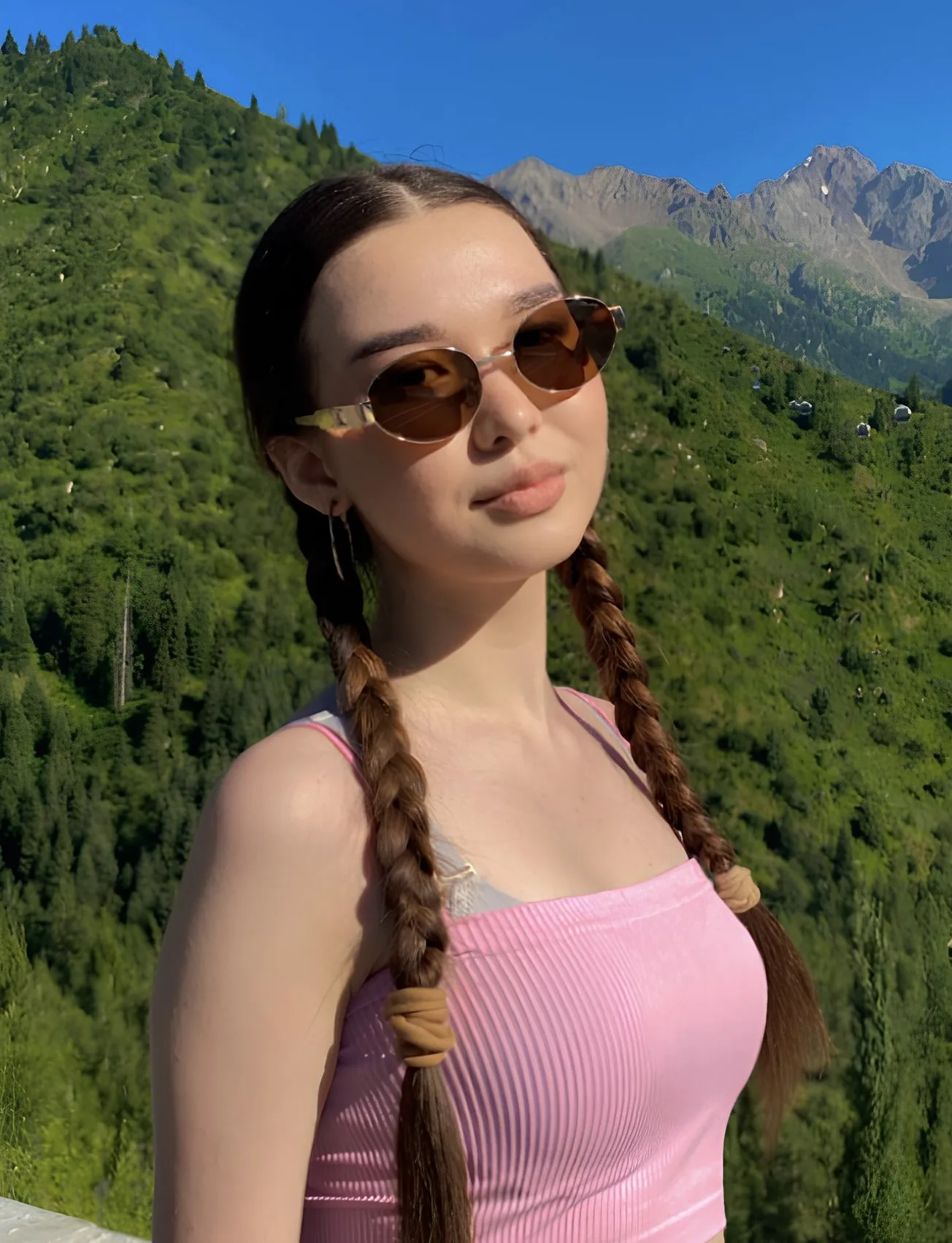
Ukili Omarova is a schoolgirl from Almaty who founded the startup Soile AI at the age of 15. Today, her team of four girls is developing technologies capable of recognizing impaired speech and helping people around the world speak confidently again.
The Tech AI
Get the key points in seconds - a short summary from The Tech AI.
Ukili Omurova, founder and CEO of Soile AI from Almaty, created an AI service for speech recognition and restoration. The platform assists over 800 million people with speech impairments, supports CIS languages, and integrates with smartwatches. The project took first place at IT-FEST 2024 and CIS social startup competitions. The team consists of four women; the company collaborates with 14 medical centers and plans to enter the markets of Uzbekistan and Kyrgyzstan.
Ukuly Omarova, city — Almaty, Founder and CEO Soile AI, Instagram
How It All Began
I have been working on projects since I was 12 years old—back then, they were mostly scientific research papers. Over time, I wanted to demonstrate my hypotheses through code, which gradually led me into the IT field. Last August, I learned about startups and began creating my own.
When I was little, my grandfather suffered a stroke and subsequently lost his speech skills. We all stopped understanding him. He faced challenges such as social isolation and a loss of self-esteem. Ten years passed. Then, I attended a hackathon where we had to develop an inclusive technology solution—that’s when I remembered that story, and the idea came to me. I conducted some preliminary research and found out that more than 800 million people worldwide suffer from speech disorders. In the CIS countries alone, this number exceeds 50 million and continues to grow, especially after the pandemic. People with such problems often face social isolation, loss of self-esteem, and many other difficulties. These issues stem from over 300 diseases—from cerebral palsy and Parkinson’s disease to post-stroke conditions.
Imagine being surrounded by your closest loved ones but still feeling lonely because no one “hears” or understands you. This is indeed a serious problem.
Now imagine there is a smart assistant that understands you. That is Soile AI—an artificial intelligence capable of recognizing impaired speech and effectively helping with its recovery.
Let me immediately show you a real-life example. We have a Telegram bot that performs speech recognition, as well as a web platform where advanced features are available: speech recognition, speech restoration, and an AI advisor.
How does it work? First, you select a language—we support a multilingual interface and focus on CIS languages. Then, you record a voice message. Our bot analyzes it and, within seconds, provides a text transcript, along with an adapted audio version in clear language.
Additionally, we integrate with smartwatches for faster and more convenient access to features.
But we are not stopping there. On our web platform, you can also use the speech restoration feature. Additionally, we offer:
— a collection of video training sessions: both long and detailed, as well as short ones in story format
— live consultations with specialists—speech therapists, psychologists, and others
— an AI advisor whom you can contact at any time with questions related to speech.
We combine professional expertise with the capabilities of artificial intelligence to ensure every user has access to an affordable, personalized, and, most importantly, high-quality approach to speech recovery.
Launching the Startup
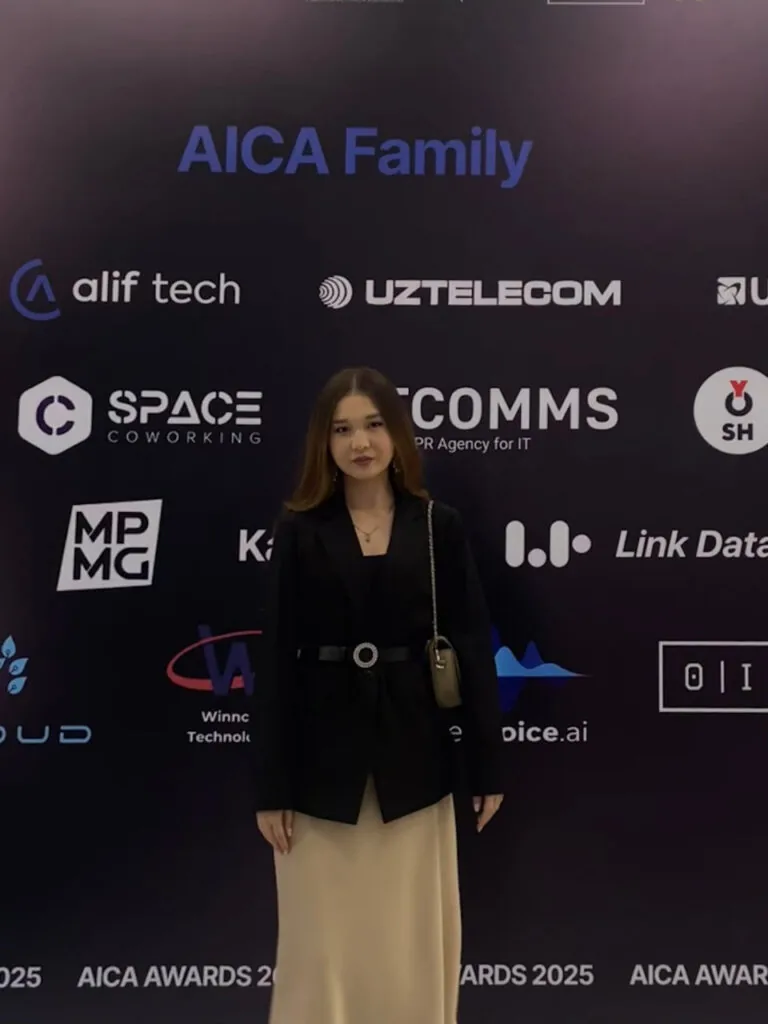
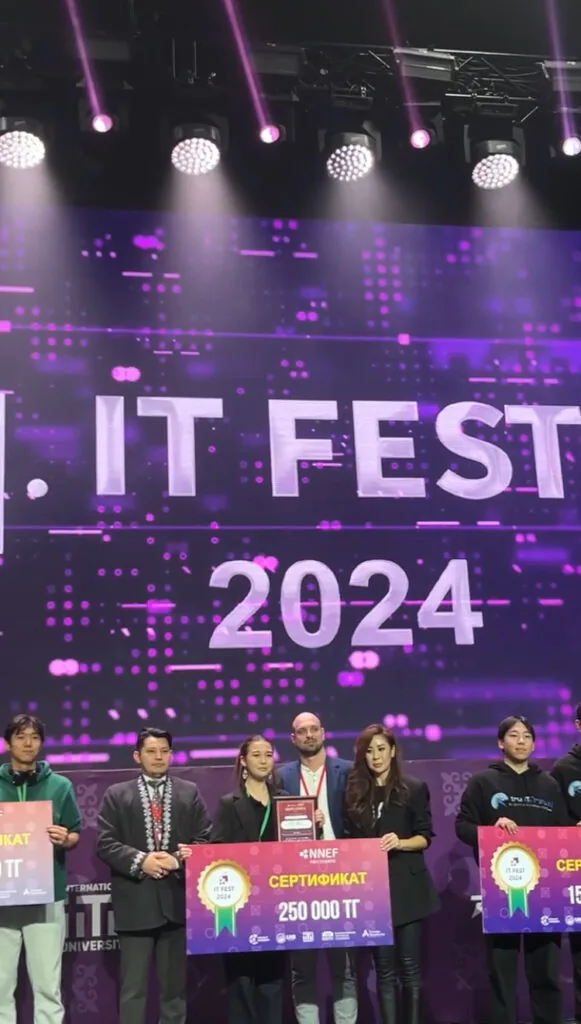
Six months ago, I had only an idea and a minimal prototype of the product. I was alone on the team and simply wanted to share the concept—to see how valuable it was. That’s how I won the hackathon on inclusive technologies using AI. IT-FEST 2024 is the largest festival in Kazakhstan, where participants from all cities gather to present their projects. There, I was the only schoolgirl—and I took first place in the startup battle.
Later, I took first place in the CIS in the social startup competition—again as the only schoolgirl among participants.
At that point, I realized: to truly realize the idea, I needed a strong team. I started gathering other schoolgirls from public schools. The path was not easy—there were many difficulties. I learned how to manage people, and I continue to learn this to this day—it is a separate, vast science. I mastered how to properly choose teammates, control processes, delegate tasks, maintain team spirit—and much more.
Our team consists of four girls. I am the founder and CEO of the startup, overseeing all areas and working in a multitasking mode. We have a programmer, a participant with medical expertise, and a social media promotion specialist.
Target Audience
We have a broad and flexible target audience. This includes not only people with speech disorders, their relatives, and specialists.
Our platform is also useful for:
— those who are learning a foreign language and dealing with an accent—the bot will tell you where you are pronouncing incorrectly and how to sound better
— those who want to speak confidently in public—because due to stage fright, many begin to stutter, hesitate, and lose confidence. We solve this problem with video courses on public speaking available on the platform.
In the B2B segment, we collaborate with private medical centers, schools for children with special educational needs, and public speaking academies.
Currently, 14 private medical centers and a public speaking school work with us. Additionally, BI Group has shown interest in implementing our solutions.
The B2G segment covers state clinics, educational institutions, and public spaces.
In the summer, we conduct pilot tests to expand the voice database on which we train our artificial intelligence.
Incubation Programs
We have not gone through any incubation programs or accelerators. We don’t even have a mentor—we do everything ourselves, learning from video lessons and materials from the internet.
As of today, we have several investors, but our priority is using state grants, as we consider them a more beneficial and sustainable source of funding at the early stage.
Challenges
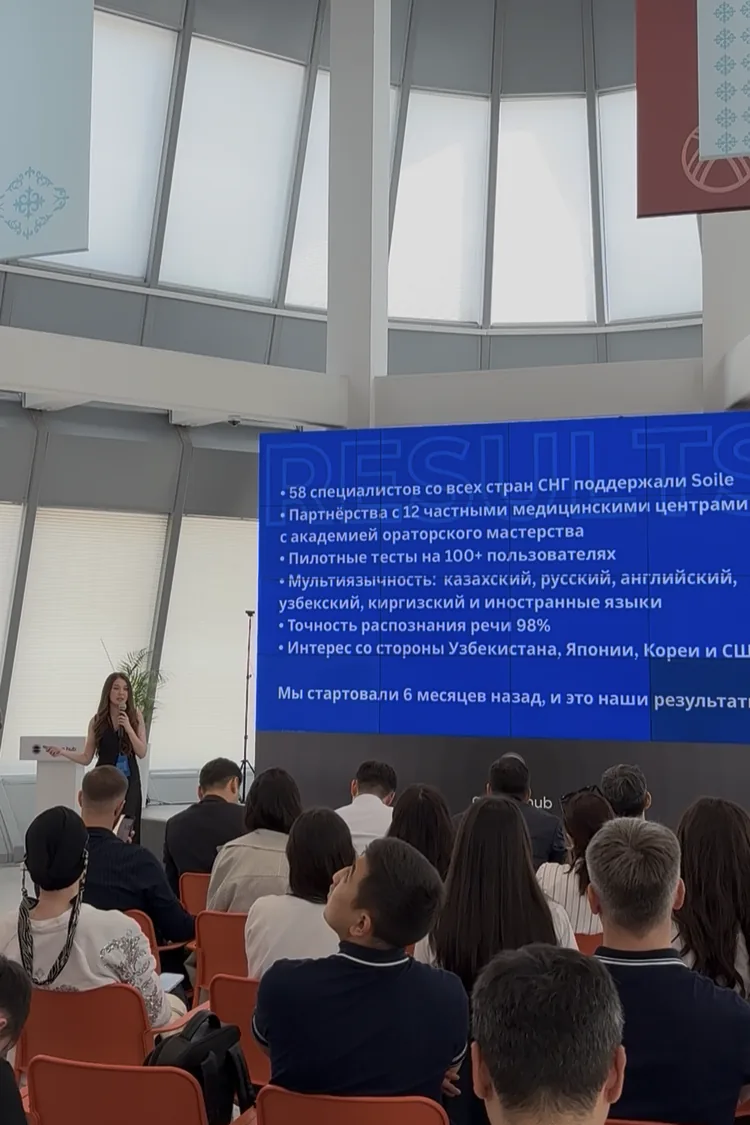
There have been many difficulties along our way that we do not speak about aloud. For example, we were not always taken seriously because of our age. Just imagine: recently I was only 15 years old, and I went to medical centers with partnership proposals. Age is both an advantage and a challenge at the same time.
The second difficulty is that we are girls. In our society, the belief that technology is “not a woman’s thing” is still widespread. But our team consists of four girls. And when we hear such stereotypes, we simply smile and continue doing our work. I hope that in the future, such beliefs will no longer exist.
My advice to beginners is never to give up. Before Soile AI, I had four startups in half a year. I constantly lost, lost my team—many simply stopped believing that we would ever succeed or realize the project.
But I kept going. So—try again and again. Do not stop. Go all the way, especially if you feel that this is truly your calling. Do what brings you joy—that is what gives you strength and moves you forward. And, of course, be in the right place at the right time.
Achievements
We are the top-1 startup in Kazakhstan, the CIS, and Asia in our category. Our project has attracted the attention of the International Association of Artificial Intelligence, and we are invited to speak at international forums.
We have already won more than 10 international startup battles and participate in international exhibitions alongside major technology companies.
And the most important thing—we are the only schoolgirls everywhere, and I am sincerely proud of this.
Our project has already attracted interest from countries such as Kyrgyzstan, China, Korea, Russia, the USA, Uzbekistan, and Japan.
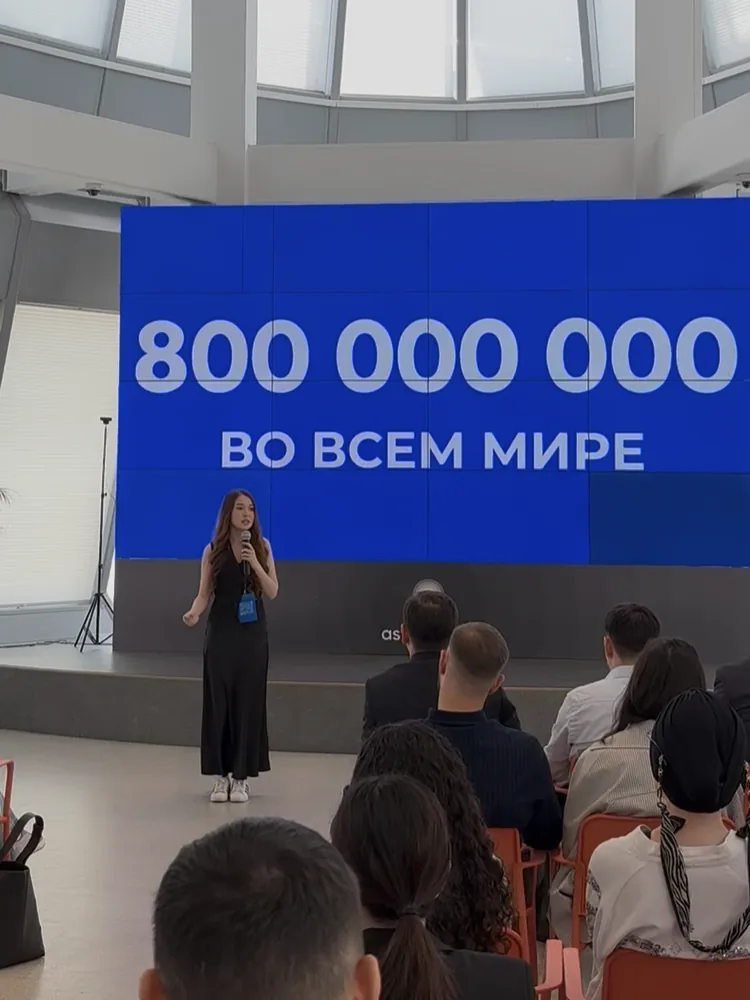
Plans
In the summer, we conduct pilot tests and continue to actively expand the voice database. We strive to speak at various venues to tell people about the project and help as many people as possible.
Our plans for the coming year are to enter the markets of neighboring countries—Uzbekistan and Kyrgyzstan.
At one of the international forums, vice-ministers mentioned our project, which was a pleasant surprise for us. Many respected representatives of Kazakhstan are surprised by our work and have expressed willingness to support us. Additionally, American scientists from prestigious universities have also shown interest in our project and want to support us.
The Tech on Telegram Follow The Tech on Telegram
Keep up with the latest technology and startup news.
Related reading



More from this author

Article Useful
How to protect your accounts from hacking: 8 settings you should check today
The Tech

Article Useful
500 Global: How the Accelerator Works and Who Can Receive Investments
The Tech

Article Interviews
Game Development in Central Asia: Arkady Moldavski on Developing Reverb and the Growth of the Industry
The Tech

Article Useful
Google, Tesla, BlackRock, and the IMF: Where to Apply for an Internship in Fall 2026
The Tech

News IT
Tesla unveiled the flying electric car Roadster
The Tech

News IT
Intero Biosystems startup won the Startup Battlefield at TechCrunch Disrupt 2026
The Tech