How to attract over $650,000 in investments: Shart Rate case
In this episode, we analyze a real case of a startup raising funds: Shart Rate. Founder Temir Aden shares his experience: from the initial idea and over 400 meetings with investors to two funding rounds totaling $650,000 from a single business angel. This is a story about solid fundraising, the power of networking, and creating a product that solves the everyday problem of trust between people.
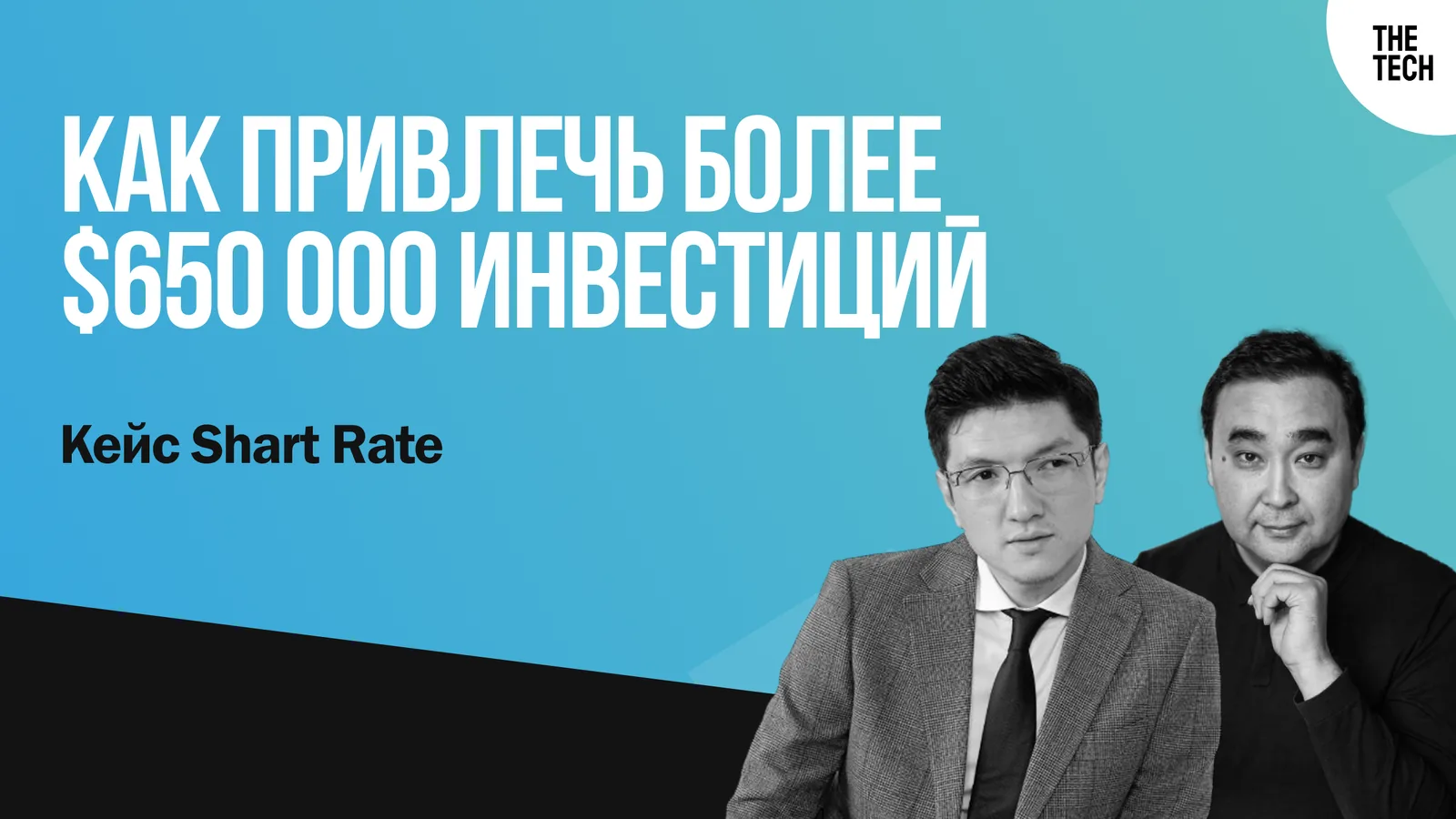
Temir Aden, Founder of Shart Rate
About the startup
We are building a culture of honest deals — helping people negotiate transparently and without conflict. We started with the topic of debts, as financial assistance between people in our region often leads to disputes and loss of trust.
Shart Rate is an app for safe loans without a notary. The user enters a phone number, loan amount, and term — the contract is automatically generated and signed via electronic signature (ESign) in one minute. The app also offers reminders and a trust rating: it increases when conditions are met and decreases when they are violated.
The service is universal but is especially in demand among friends, relatives, and entrepreneurs, where verbal agreements most often become the cause of problems.
How deal protection works
We use a mediation mechanism based on Anglo-Saxon law with the support of MCIA — the International Mediation and Arbitration Center. A mediation agreement is an indisputable tool: it is almost impossible to challenge it or prolong the process through numerous appeals. This is a key difference from standard judicial practice in Kazakhstan.
If one party fails to fulfill its obligations, the other party files an application with MCIA. The arbitrator reviews the agreement and sends a notification to the debtor: within three days, they must return the funds or renegotiate the terms of the deal. The entire process takes up to one month.
After that, a private bailiff can block bank accounts, restrict travel abroad, and impose restrictions on driver's licenses if the amount exceeds 250 MCI, approximately 1 million tenge.
Additionally, a rating system is in place: if a user violates their obligations, they are added to a list of untrustworthy participants, which becomes visible to other platform users. These tools motivate parties to adhere to agreements.
Investment rounds and key results
The first round amounted to $150,000 with a company valuation of $1,000,000. An investor was found at the demo day of RS Bootcamp: after a short presentation of the project, the topic resonated with him. The first meeting took place three days later, and a SAFE agreement was signed at the third meeting.
Half of the raised funds were directed to the team, and the other half to marketing. Promotion began even before the launch: videos were filmed and content was created for Instagram.
In June 2025, the product hit the market. In the first three months, 20,000 users were attracted, and deals began to be concluded on the very first day.
The second round amounted to $500,000 with a company valuation of $5,000,000. It was closed four months after launch — in October 2025. At that time, the product had about 30,000 users. Key metrics and growth dynamics were presented to the investor, after which the deal was closed.
Both rounds were funded by a single investor — Askhat Usmanov, owner of a collection agency.
To date, the platform has more than 70,000 users, and the total volume of deals within the app has approached 2 billion tenge.
Strategy and approach to fundraising
Fundraising started with a simple step — I contacted friends and told them about the idea. Most responded that the concept was interesting but they were not ready to invest yet. The first small check came from my friend Alisher, who liked the idea itself. These funds allowed us to engage an outsourcing company and start developing the product.
Later, through networker Telman Nagashbaev, we managed to reach Margulan Seyssembayev. We sent him a presentation via Telegram. Half an hour later, we received a response requesting contacts. Margulan noted that the idea was strong and relevant but suggested returning to the conversation after the appearance of an MVP and the first clients.
Building dialogue with entrepreneurs and business angels was easier than with venture funds. Funds operate more slowly: meetings can be postponed for weeks and months. Therefore, the main focus was on product development and demand validation, and only then on negotiations with institutional investors.
Company valuation
At the start, a valuation of $1,000,000 seemed like a significant amount. The logic was explained as follows: a strong idea is worth about $500,000, having a technical co-founder adds $250,000, and having development underway adds further value. This forms an initial valuation of around $1 million.
Later, the opposite was true — the environment convinced us that the company's potential was significantly higher. This strengthened our confidence and helped us move forward.
The valuation of $5,000,000 was based on market results: a sharp increase in audience, high interest in the product, and regular deals within the platform even on the early version of the product. After consulting with venture partners, it became clear that such a valuation corresponded to the achieved metrics.
Mistakes and lessons
Later, a meeting took place with an investor from a large company who was ready to invest about $150,000. However, he set a key condition — the presence of a co-founder responsible for the technological part.
After that, it was decided to end cooperation with the outsourcing team, settle payments for completed work, and focus on finding a technical partner. Later, we managed to assemble our own team and continue development without external investments.
The main takeaway for early-stage startups: it is important to find your own business angel — a person who understands the value of the idea, the market, and shares the project's mission. At an early stage, such a partner is often more effective than a classic venture fund, as they evaluate not only numbers but also the founder's personality, motivation, and ability to bring the idea to fruition.
Advice for founders
- Start with yourself, with your internal state. There are concerns that take away focus — address them first.
- Believe in the idea. When you believe strongly in it, anyone, even non-investors, will want to invest in you.
- Attend venture events, even if you don't have a ready product. Just show up and meet everyone — these are the connections you need to create.
- Don't be afraid of rejections. Before the first check, there were more than 400 conversations. It is scary to pitch at first — then the skill develops.
- Don't listen to everyone. People will say the project is not very good — just observe the reactions and keep moving forward.
- A startup is not just a business where you can make money. It is primarily a solution for improving the world. If you believe in it strongly and just keep moving — the money will come.
- If something specific isn't working — don't keep hitting the same spot. Look for other aspects, change your approach from the left side, from the right side — a solution will definitely be found.
The Tech on Telegram Follow The Tech on Telegram
Keep up with the latest technology and startup news.
Related reading



More from this author

Article Useful
How to protect your accounts from hacking: 8 settings you should check today
The Tech

Article Useful
500 Global: How the Accelerator Works and Who Can Receive Investments
The Tech

Article Interviews
Game Development in Central Asia: Arkady Moldavski on Developing Reverb and the Growth of the Industry
The Tech

Article Useful
Google, Tesla, BlackRock, and the IMF: Where to Apply for an Internship in Fall 2026
The Tech

News IT
Tesla unveiled the flying electric car Roadster
The Tech

News IT
Intero Biosystems startup won the Startup Battlefield at TechCrunch Disrupt 2026
The Tech