How to Raise $500,000 in Pre-Seed Funding and Enter the U.S. Market: The Call2action.ai Case
On the air of The Tech, Yersultan Jusakinov, founder of Call2action.ai, broke down his journey to entering the US market and raising a Pre-Seed round. In a conversation with Mikhail Smolyanov and Murat Zhunusov, he detailed bootstrapping, going through accelerators, a funnel of 100 investors, and why 80 rejections in Silicon Valley are just the beginning of fundraising.
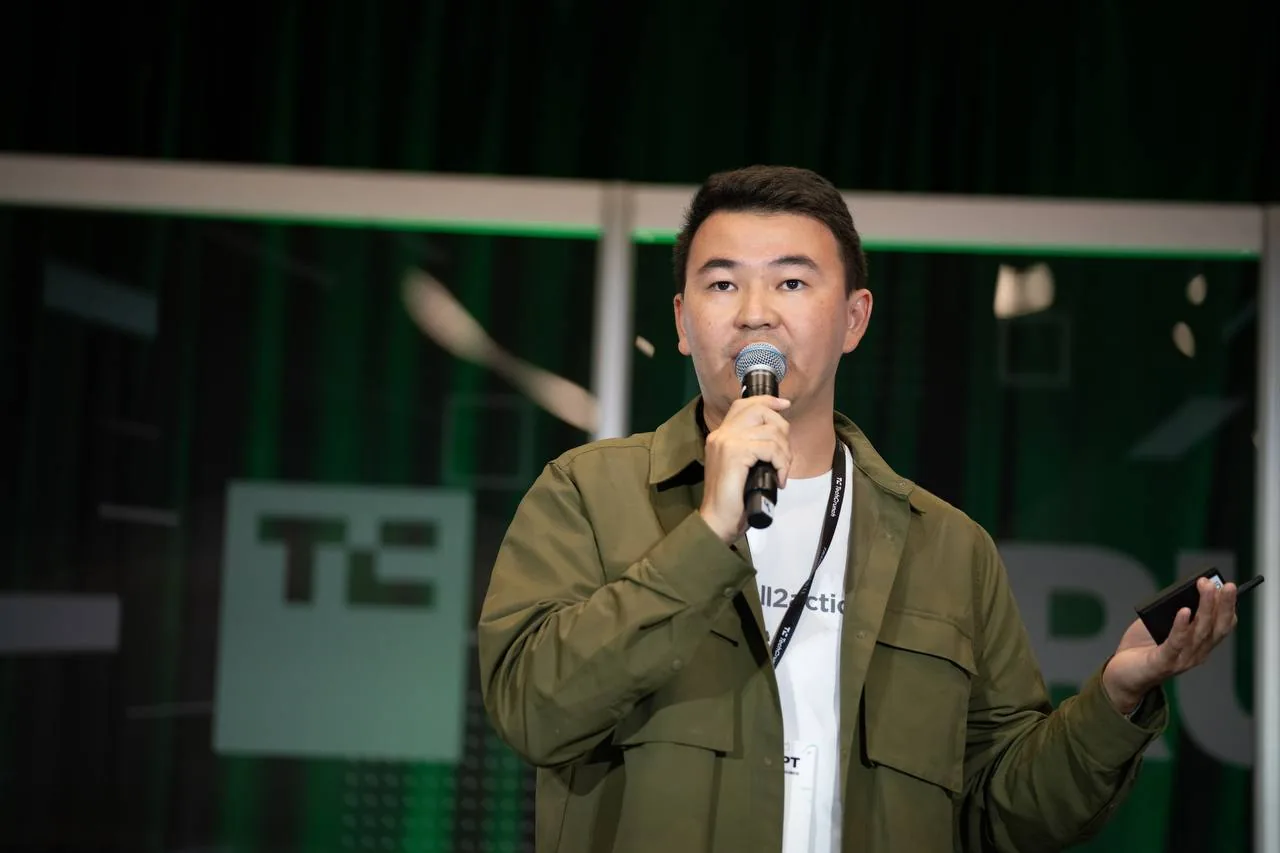
Yersultan Jusakinov, CEO Call2action.ai
About the Startup and Founder
Call2action.ai optimizes the hiring process using artificial intelligence in the trucking and logistics business in the United States. Our platform covers the entire cycle—from the job application on a job site to the employee’s start date—making the process faster, cheaper, and more efficient.
Before active fundraising, the project was developed using my own funds. The product began taking shape in Kazakhstan, and after entering the US market, we made several pivots to adapt to the new market. I participated in several accelerator programs, including Antler and Alchemist Accelerator, which significantly influenced my understanding of the venture industry and the mechanics of raising capital.
Investment Rounds and Key Achievements
After the bootstrapping phase and acquiring initial customers, we began active fundraising in May 2025. The goal was to raise $500,000–$600,000 in a Pre-Seed round, and in October, we fully closed the round at $500,000.
The lead investor was the Kazakh venture fund Most Ventures, with a check of $200,000. Additionally, a venture syndicate from Uzbekistan participated in the round, investing approximately $80,000–$100,000. The remainder of the round was funded by angel investors from the US, including early customers who became early adopters and believed in the product.
The raised funds are sufficient for 12–14 months of operations, after which we plan to pursue a Seed round with a focus on American venture capital funds, primarily from Silicon Valley.
Strategy and Approach to Fundraising
Accelerators played a key role in shaping my approach. It was there that I gained a step-by-step understanding of round structures, company valuation, investor communication, and the logic of the venture industry. I compare an accelerator to a sports coach—it is a fast way to acquire necessary skills, network, and access to a relevant community.
Fundraising was built on a strict mathematical approach. In my CRM, I compiled a list of about 100 funds and angel investors, primarily from Central Asia. Initial contact was made with all of them; about 20% expressed interest and moved on to deeper one-to-one meetings and the due diligence stage. I am convinced that if you have not contacted dozens of funds, you have not really started fundraising.
Another important element of the strategy was the conscious decision to raise an early round in the CIS region, because to conduct full-scale fundraising in the US, one needs to live there for one to two years, deeply understand the market, and build a local network.
Mistakes and Lessons Learned
Regular crisis moments are particularly characteristic of the early stages of projects and fundraising processes. Investor rejections are a natural part of the journey, and several rejections should not be perceived as a final verdict on the product or the market.
It is important not to make strategic decisions based on emotions. Any difficulties are temporary, and stepping back can cost significantly more. It is useful to constantly ask yourself about the project’s goals—this helps navigate the most difficult stages.
The community plays a special role. In the US, success is largely built on connections, support, and experience sharing among founders. Many insights come not from books, but through informal conversations with those who have already walked this path.
Advice for Founders
Accelerators help shorten the trial-and-error path, especially when entering new markets. It is useful to seek advice from more experienced founders, find mentors and fundraising advisors, and regularly communicate with those who have already achieved an exit.
Fundraising should be structured as a systematic sales funnel, considering conversion rates and the status of potential investors. You need to study each investor, understand their focus, investment cycles, and relevance to a specific niche.
The main practical principle is to rely on numbers, not emotions. If a project receives many rejections, this is not a reason to stop. It is important to expand the funnel, strengthen the network of contacts, and continue moving forward until a positive result is achieved.
The Tech on Telegram Follow The Tech on Telegram
Keep up with the latest technology and startup news.
Related reading




More from this author

Article Useful
How to protect your accounts from hacking: 8 settings you should check today
The Tech

Article Useful
500 Global: How the Accelerator Works and Who Can Receive Investments
The Tech

Article Interviews
Game Development in Central Asia: Arkady Moldavski on Developing Reverb and the Growth of the Industry
The Tech

Article Useful
Google, Tesla, BlackRock, and the IMF: Where to Apply for an Internship in Fall 2026
The Tech

News IT
Tesla unveiled the flying electric car Roadster
The Tech

News IT
Intero Biosystems startup won the Startup Battlefield at TechCrunch Disrupt 2026
The Tech