How to raise $3,000,000 in 6 months and get 400+ calls: Investbanq case
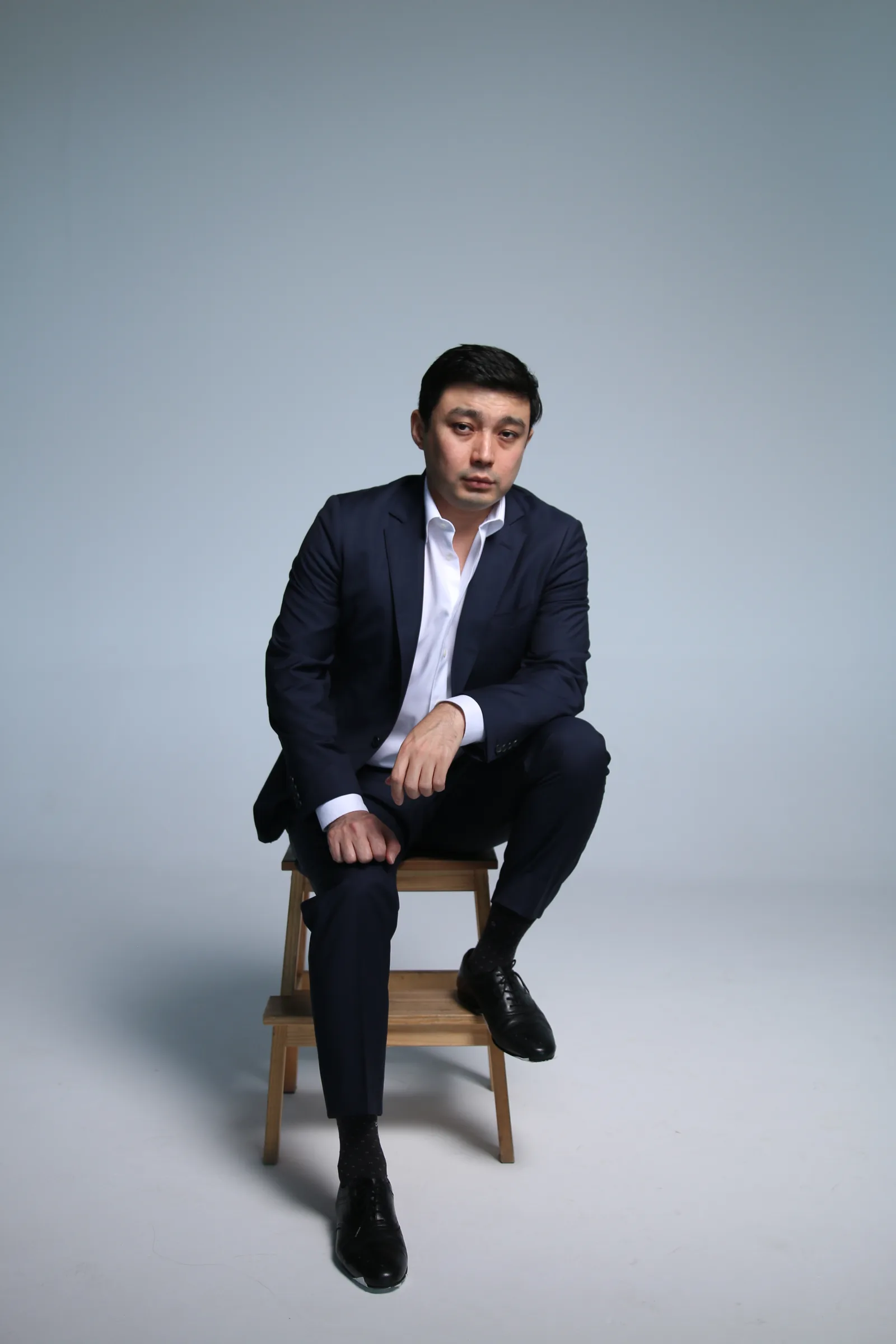
In this episode, we analyze the real journey of Investbanq in attracting investments. Co-founder and Chairman of the Board, Olzhas Zhiyenkul, discusses systematic fundraising in the complex Southeast Asian market: 400 calls, 6 months of work, and a $3,000,000 round from institutional investors.
Olzhas Zhiyenkul, Co-founder and Chairman of the Board of Investbanq
About the Startup and the Founder
I am a serial entrepreneur from Taraz. I have been living and working in Singapore for over 10 years. My motherland is Kazakhstan, but my home has long been Singapore.
Investbanq is my fourth project. Before this, I had three successful exits. I have a mathematical background; I am a mathematician-physicist. I spent most of my professional career in the world of finance and capital management. The culmination of all this led me to Investbanq. I have been working on it full-time since 2017 and part-time since 2015.
Investbanq is an AI Wealth Operating System, a platform for digitizing capital management processes. We are based in Singapore, with our main markets in Southeast Asia. The problem we solve is that wealth management processes are still not digitized and suffer from multiple levels of inefficiency. Our clients include major banking structures in Asia.
Initially, we categorized ourselves not as general FinTech, but as a subset of it—WealthTech. Today, we are an AI-native company and primarily position ourselves as a player in the field of artificial intelligence.
Speaking of FinTech, the industry has become significantly more complex over the last five years. The era of simple solutions that grew on their own has passed. The market now needs strong products with real value. Against this backdrop, WealthTech remains a bright spot—it is not about transactions, but about the deep digitalization of the investment industry.
Aside from Investbanq, I am a business angel. I enjoy investing in other founders and strive to help both founders from Central Asia and those beyond it. To date, I have invested in about 16 early-stage projects.
Investment Rounds and Key Achievements
To date, we have closed two rounds of $3,000,000 each.
The first was a Seed round, almost immediately after the company's founding.
The second was a Pre-Series A, closed last year.
Among the round leaders:
— Orwell Venture Fund, Singapore, associated with Mohan Belali, co-founder of Echelon 27
— Big Sky Capital—a well-known Central Asian fund
— Constructor Group, affiliated with Sergey Belousov, founder of Acronis.
Other institutional investors also participated in the round.
I do not view this as a major achievement—we realized what was possible under current conditions. The valuation turned out to be decent, but lower than our expectations—this is part of reality.
Strategy and Approach to Fundraising
About a month before the start of fundraising, we did not pitch or send materials—we focused on collecting market data to understand the real situation. It became clear that we needed to adjust our timing. It was already understood at that time that closing a round in less than six months was unrealistic—in the end, it took exactly six months.
It is important to consider the fundraising environment. Outside the US, capital availability and fund strength are significantly lower, even in priority industries. Essentially, only the US market has recovered, and even then with nuances. Since the company's founding in 2022, dry powder has been shrinking, and many, especially in Singapore, did not account for this reality—and paid for it. Therefore, adjustments are always needed: regarding timelines, burn rate, and valuation.
Fundraising without a strategy does not work. And it is not about the volume or detail of documents, but about the approach. In a startup, it is impossible to foresee everything in advance—the strategy forms along the way: mistakes provide lessons, successes are scaled. It all starts with basic questions: who is your target audience among investors, in which market to raise capital and why, do you need a tier-1 VC or is a niche fund with deep expertise more important, do you consider CVCs, industrial families, or financial investors. The concept of "smart money" has significantly lost its value—it is important to clearly understand why you need a specific type of investor.
I divide outreach into several blocks.
— Warm contacts. The first meeting should preferably be offline. A founder's confidence and energy are best conveyed in face-to-face communication. Chemistry either arises immediately, simplifying further follow-up, or it doesn't—and this saves time for both parties. After each meeting, notes are made in the CRM: status, next step, intensity of follow-up. Warm contacts are one of the key resources where there is already a basis for interaction.
— Cold contacts. The database is collected via Crunchbase, CB Insights, LinkedIn, Apollo. Funds are selected based on criteria, contacts are extracted, and a high-quality list is formed. Next comes automated email outreach with open rate tracking and constant message adjustment. It is important to understand whom to target within the fund, how to "warm up" emails, how often to follow up, and what to write at each stage. Much of this can be automated today.
— Related lists. These are funds that have already declined. They need to be worked with separately—rebuilding the approach and looking for points of conversion.
There is an important rule: once you start a dialogue with one investor, you should communicate with all of them in parallel. This increases chances, saves time, and creates competition for limited capital. When the message is refined, the process becomes systematic and scalable.
By the time fundraising starts, it is important to have three things: a good track record of the project, the founder's reputation in the market, and an understanding of the standard funnel. The result of our round: 400+ primary contacts—warm and cold, about 30 specific due diligence processes, and a closed round. And this was despite the project having a good track record, high innovation component, a strong team, and anchor cases.
In the early stages, a personal meeting is especially important—because much depends on the founder. Investors need to feel the founder's mental state, the team's conviction, and the founders' resolve. I did not have cases where a decision was made in one meeting—but there were clear cases where a face-to-face meeting was the anchor without which the process would simply not have happened. Such a meeting can last an hour or two, during which many issues are addressed.
There is one image that I like. One of my first trading mentors said: "Trading is like tango. And you are always in the female role, because the market is in the male role. You must listen to the market and within these realities perform the best action." This works in fundraising as well.
There are skills that helped significantly in this process. First is a deep understanding of finance: you speak the same language as the investor, and unit economics are always calculated qualitatively. Second is negotiation: having been a portfolio manager in large Asian funds, I constantly negotiated with clients, counterparties, and colleagues—this is built only through practice. Third is emotional intelligence.
I come from a simple family, and therefore I have a lot of emotional baggage that formed over the years. Over time, I have worked with this—through mentors and through experience.
About energy. There is a VQ theory—Vitality Quotient—the level of energy as an indicator of startup sustainability. In Central Asia, the logic is often "not being sick is already good," whereas, for example, in Singapore, the focus is on how to increase output. Hence—regular but balanced sports: for example, one day at the gym, one day of yoga. I especially recommend hot yoga to founders. Plus basic nutrition—stable eating without overloading the body.
I myself went through attempts to squeeze the maximum out of myself in sports—this gives the opposite effect and causes distraction. The priority is business, product, and family. Sports should support, not compete with the main things. The spiritual component is also important: for me, this is meditation—10-15 minutes in the morning before a difficult day help reduce stress and better enter the work rhythm.
I am not alone in the startup—I have co-founder Talgat Kantayev, and we lead these processes together. Pressure from VCs usually falls on the CEO—this is normal, while each co-founder has their own large block of responsibility, especially in a fast-growing company.
Mistakes and Lessons
The first and most common mistake is falling in love with the product, not the customer. You should fall in love with the customer: there is a vision and a problem that the founder wants to solve, but it is important to find the best solution for the user, not to implement the perfect picture in your own head. Otherwise, there is no product-market fit, traction, and, as a result, fundraising.
Sometimes the customer does not realize their pain. How to distinguish such a case from a founder's mistake? Usually, this is visible by the level of expertise: focused, experienced founders deeply know the industry and can notice non-obvious gaps. When you hear their argumentation, there is a feeling of "how did you even see that"—in a good sense. But when generalists with little experience claim to know better than the market, it is often a matter of ego. Information, as a rule, is there—it is just ignored.
As Tony Robbins said: "Perfectionism is the lowest standard." A startupper cannot suffer from perfectionism. You need to dive into processes, make mistakes cheaply somewhere, and learn from this.
The second mistake is the wrong investor audience. It is necessary to work out in advance who might be interested in a specific thesis. There will be calls that are completely off-target—this is normal. But the vast majority must be a high-quality audience, otherwise, conversion will be low, and time will be wasted.
The third mistake is lack of preparation. I myself, in my history as a business angel, have seen a lot of terrible, raw data rooms. I sat with founders, cleaned them up, because most previous conversations ended in failure. The project was simply not polished. This immediately causes rejection. Not everyone has the patience and time to dig in and understand the essence of the project if the founder has clearly not spent time to properly work out elementary moments.
The fourth mistake is the wrong investor. A toxic investor can quickly destroy a business, and an ideologically incompatible one can create constant professional conflicts, which, however, can still be worked with.
It is important to legally structure the deal correctly—not in anyone's favor, but with clear rules for all parties. Mechanisms must be predefined in advance: how disputes are resolved, how exit or share buyout occurs, how work with subsequent investors is structured.
In the early stages, SAFE rounds are usually appropriate, and it is logical to move to price rounds later, when the cap table is already formed.
Advice for Founders
- Understand the fundraising environment: the market outside the US is significantly harder—make realistic adjustments to timelines, valuation, and burn rate.
- Gather high-quality market data before starting the process—this forms correct expectations and saves time.
- Build a system: CRM, tracking, automated follow-up, related lists, monitoring data at each stage of the funnel. Fundraising without a system is inefficient.
- First meetings with warm contacts should be in person. A founder's energy and conviction are conveyed only face-to-face.
- Polish the project before the first conversation with an investor: a raw data room causes immediate rejection.
- Talk to everyone in parallel—this creates competition for your round and saves time.
- By the time fundraising starts, you must have three things: a good track record of the project, a reputation in the market, and an understanding of the standard funnel.
- Systematically protect your energy: sports, nutrition, meditation—this is the foundation for a long process. Fundraising is a marathon, not a sprint.
- Do not be afraid to open new horizons. We are Central Asian nomads at heart. In the best traditions of nomads—take our zeal, talent, and entrepreneurial spirit and scale it to larger regions, not forgetting where our roots are.
- We are building not noise—we are building systems. Wealth is full of noise and hype, and it leads nowhere. What truly builds wealth is systems.
The Tech on Telegram Follow The Tech on Telegram
Keep up with the latest technology and startup news.
Related reading



More from this author

Article Useful
How to protect your accounts from hacking: 8 settings you should check today
The Tech

Article Useful
500 Global: How the Accelerator Works and Who Can Receive Investments
The Tech

Article Interviews
Game Development in Central Asia: Arkady Moldavski on Developing Reverb and the Growth of the Industry
The Tech

Article Useful
Google, Tesla, BlackRock, and the IMF: Where to Apply for an Internship in Fall 2026
The Tech

News IT
Tesla unveiled the flying electric car Roadster
The Tech

News IT
Intero Biosystems startup won the Startup Battlefield at TechCrunch Disrupt 2026
The Tech