How a guy from Pavlodar became an art director in game development and is making "Sparta 2035"
An art director from Astana with 19 years of experience in game development shared how he progressed from creating mods for GTA and early 3D experiments to working on major mobile and PC projects, including the current development of "Sparta 2035," also known as Warhounds.
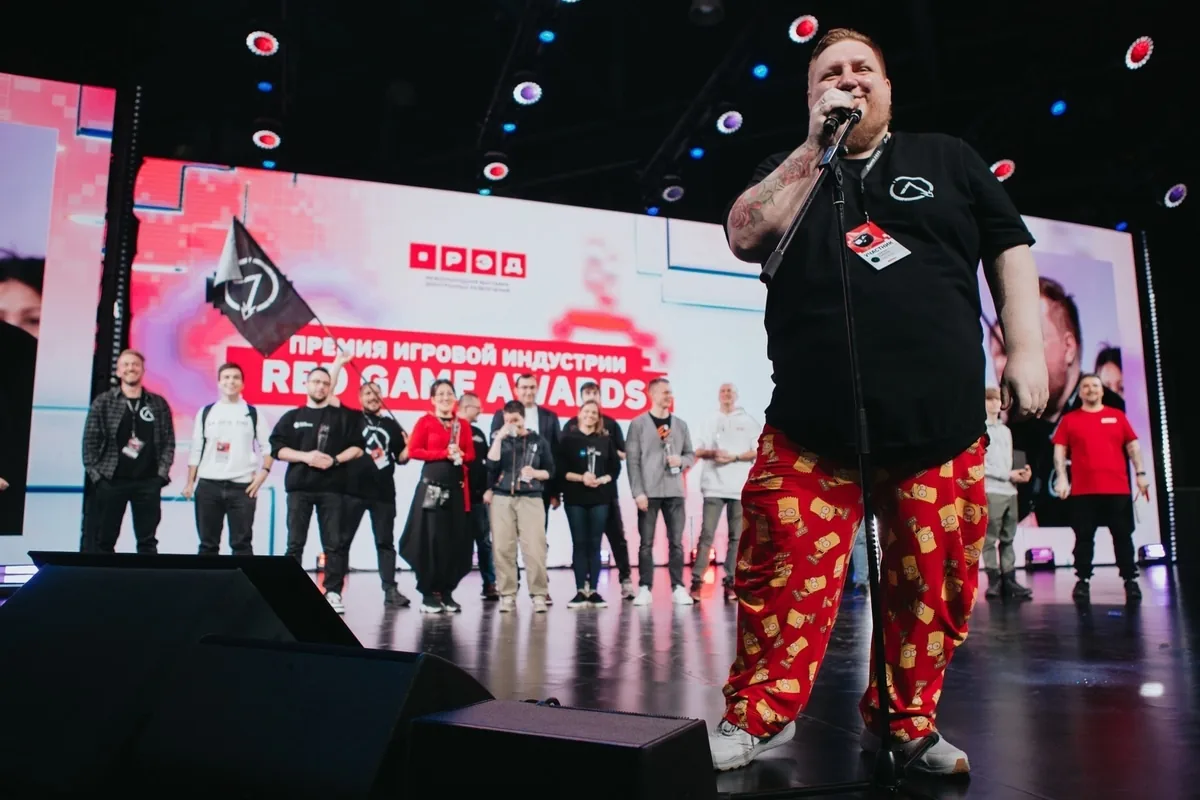
Sergey Sysskin, City — Astana, Art Director, LinkedIn
About Me
I am an Art Director with 19 years of experience in the game industry, specializing in game development. Currently, I am working on the flagship project “Sparta 2035,” Warhounds, which is a turn-based tactical game in the spirit of XCOM and Jagged Alliance, targeting the international market.
Over this time, I have worked in various areas: I started with mods for GTA when it was not yet monetized and was purely driven by enthusiasm. Later, I worked on MMORPGs, then spent a long time in mobile development—including running my own studio that made mobile games. Now, the focus has shifted toward PC projects.
In short, my journey went from modding and enthusiasm to full-scale industrial development and the position of Art Director on major projects.
Path into the Profession
I got a computer quite late; back then, it was a luxury. We bought it “for studies,” but actually also for games—my parents understood this. When it was assembled, I eagerly installed games, but none of them would launch: it turned out the system unit had no graphics card, only integrated graphics. This was a shock for me—playing was practically impossible. Then I gradually bought and upgraded components, but the hardware remained weak, and at some point, I simply played through everything available. That was when I first had the feeling that I should try something related to computers not just as a player.
That’s how I discovered 3ds Max—version 3. It became my first experience with 3D: simple scenes, cubes, basic animation, characters made from primitives. At the same time, I played a lot of GTA, especially San Andreas, and later the internet became available via a modem with per-minute billing. It was then that I encountered mods: first simple cars, then GTA: Criminal Russia, which had a post-Soviet atmosphere—Khrushchev-era apartments, courtyards, fences. This really captivated me because it showed that you could create entire worlds, not just add cars.
I started learning through forums and joining modding teams. Everything was driven by enthusiasm, without money. I made my first serious model and even tried myself in several projects, but not always successfully—sometimes I wasn’t accepted, which, conversely, pushed me to create my own. Thus, my own mod about Pavlodar appeared. At that time, I didn’t perceive game development as a profession—it seemed something unattainable.
Later, I started freelancing, and the first money appeared. At some point, I went to Barnaul and accidentally learned that there were game studios there. I simply took the address, showed up unannounced, went to the office, and said that I was a 3D artist and wanted to work. Of course, I was met with surprise, but they gave me an application form and conducted an interview—that’s how I entered studio-based game development.
After that, there was a path through various companies, my own studio, work with mobile and PC projects. Gradually, I grew into an Art Director. I joined my current company almost by accident—through a message on VK when I was solving a financial issue “for a couple of months,” but in the end, I stayed for a long time. At first, I helped with optimization and pipelines, then became a lead, and then an Art Director. We worked on mobile projects, hypercasual games, collaborated with large clients, and then moved on to a PC game, which became the main project.
And in fact, it turned out this way: I came for a couple of months—and stayed for years. About Projects The company where I currently work was initially fully remote. It appeared in 2019, even before COVID-19, as a distributed team. Back then, this looked quite unconventional: everyone around was taking offices, while we immediately decided to work remotely. There were discussions that this wouldn’t work—someone would sleep on the couch, someone wouldn’t be able to organize themselves. But we built processes and pipelines, and it worked normally.
When the pandemic started, despite all its downsides, for us in terms of work, it even became a plus. The market suddenly became ready for remote work, and what was previously difficult—especially hiring—became easier. Before that, many candidates simply didn’t want to work remotely; they needed an office. As a result, I ended up in this company. At first, we worked on mobile projects, and later we started a large PC project—Warhounds, or “Sparta 2035.” This is already the result of a long path through different studios and roles. Now it is our main project. In the RU region, it has already been released, and it is currently preparing for a global release. I work there as an Art Director. Art Director is not about who draws the best. It is a managerial role. He is responsible for processes, pipelines, and the team: task setting, hiring, people’s development, and organizing work. At the same time, an Art Director is not required to be the best artist or 3D specialist in the team. For example, I am not the best artist nor the best 3D artist in the studio. My task is not to do everything myself, but to assemble a strong team and create conditions in which people can work effectively and grow. Essentially, this is about developing the company and processes, not about individual task execution.
Skills and Profession
For working in game development, if we talk about skills, the first thing that comes to mind is stress resistance and communication skills.
Communication is critically important. Of course, there are rare narrow specialists who can afford to communicate almost not at all, but these are rather exceptions. In most cases, it is communication that determines how effective you are in a team. At the same time, even more important than specific hard skills is a person’s attitude toward their work. I would like people to truly love what they do. To do it not just as a job, but out of interest, out of inner desire.
The problem is that now there are many people in the industry who came to game development simply as a “job.” Previously, everything was held together by enthusiasm—there were no lessons, courses, YouTube. Everyone learned by trial and error, there was little information, and people came there precisely out of interest.
Now, on the contrary, everything has become accessible: courses, tutorials, educational videos. And many people have entered the industry who perceive it simply as a stable profession—“you sit at a computer and get money.” This is normal, the industry has grown, and this happens in any field. But it is more difficult to do something truly strong and non-standard with such people.
Because the best results are achieved where there are enthusiasts. People who are passionate about the task themselves, who offer ideas themselves, who do not wait for constant instructions. With them, you can create more interesting things. And, probably, the general conclusion is this: the industry has changed, become more professional and mass-market, but at the same time, the value of people with a genuine interest in their work has only increased.
How the Industry is Developing in Central Asia
The development of game development in the past and now is very different. Previously, it was perceived as something unserious. I remember when I made my first commercial order, I told my friends and acquaintances about it, and often heard in response: “What freelance, go get a normal job.” Back then, it was not considered a full-fledged profession.
Now the situation has improved—people at least understand what IT and game development are. Parents already perceive it as a profession, not just “sitting at a computer.” But the industry is still far from an ideal state, especially in our region.
If we talk about Kazakhstan, game development here is still weakly developed. For the industry to grow, there need to be funds, investments, and systematic state support. I see how this works in other countries—for example, in Uzbekistan: they actively travel to international conferences, attract investments, create funds, and develop the ecosystem.
At the same time, there is currently a strong bias toward AI—everyone is discussing only it, and this is partially displacing other directions, including game development. But it is important to understand: AI is a fast-growing hype market, while game development is already a mature industry that is larger in scale than cinema and music combined. Game development is always global competition. You compete not only with local studios or similar games, but for a person’s attention and time. Therefore, this market is tough. And development here does not happen quickly. You cannot simply decide: “Let’s make an AAA game.” For a strong industry to appear, years of practice, dozens of attempts, experience, and strong teams are needed. The best path is not to try to immediately create a perfect product, but simply to develop the industry step by step: make projects, accumulate experience, create teams. And only then, over time, can strong products at the level of global hits appear.
Advice for Beginners
Entering game development now is more difficult than before. Competition is high, and after COVID-19, the industry went through a crisis—part of the investments went into AI, and financing became more difficult. At the same time, game development is a global market: you compete not only with local teams but also with studios around the world. And the struggle is not only for sales, but for a person’s attention and time—against games, social networks, streaming services, and any digital content.
Therefore, you compete not for a “country’s market,” but for user attention. A player has limited time, and you compete with everything at once—GTA, TikTok, and other products. It is important simply to accept this as a market reality: yes, a product can become global immediately, but the pressure here is also enormous.
What would I advise—first, just get into game development. It is not so important what kind of job or project it will be. It is important to enter the industry. The key is precisely to “get a foothold” in the industry and enter it. Even if you want to make large AAA games at the level of GTA or Diablo, at the start this is not the main thing. Often, the path begins with mobile or casual projects that may not match your tastes, but it is there that there are real teams, processes, and experience. The first studio job often gives not a dream, but entry into the profession and growth.
There are also real-life examples: people entered the industry after 30, started from scratch, and took any roles—even not the ones they dreamed of. But entering a studio, even on simple projects, gave them a chance to grow into larger tasks and international companies. It is not an ideal start that matters, but entry into the industry and enthusiasm.
And the second point—do not obsess over perfectionism. Many prepare for too long instead of doing. Now it is important to be flexible, learn new tools, not be afraid of AI and technologies. And most importantly—just start with any job in a studio, you will figure it out along the way.
Plans
Currently, we are preparing Warhounds for release and continuing to develop the studio. In general—simply survive and work steadily in this difficult and constantly changing industry.
If we speak more broadly about game development, plans are usually tied to specific projects: their development, releases, participation in conferences, and other industry events. But not all of this can be publicly discussed.
Therefore, the general plan now can be described simply: bring the current project to release, support it, and move forward step by step, without unnecessary loud promises.
The Tech on Telegram Follow The Tech on Telegram
Keep up with the latest technology and startup news.
Related reading



More from this author

Article Useful
How to protect your accounts from hacking: 8 settings you should check today
The Tech

Article Useful
500 Global: How the Accelerator Works and Who Can Receive Investments
The Tech

Article Interviews
Game Development in Central Asia: Arkady Moldavski on Developing Reverb and the Growth of the Industry
The Tech

Article Useful
Google, Tesla, BlackRock, and the IMF: Where to Apply for an Internship in Fall 2026
The Tech

News IT
Tesla unveiled the flying electric car Roadster
The Tech

News IT
Intero Biosystems startup won the Startup Battlefield at TechCrunch Disrupt 2026
The Tech