How to Find an Investor. Nurzhan Kadirkey on the BGlobal Ventures Venture Fund and What Founders Need to Know
What do startups need to know to attract investments? In this interview, the CEO of BGlobal Ventures talks about how the venture fund is developing, which projects it pays attention to, and what mistakes founders most often make.
The Tech AI
Get the key points in seconds - a short summary from The Tech AI.
Nurzhan Kadirkey, CEO of BGlobal Ventures (Astana), plans to begin investment activities in 2025. The company focuses on co-investing in startups from Pre-Seed to Series A with checks ranging from $500,000. Key priorities include B2B, SaaS, FinTech, and other technology sectors in Kazakhstan and Central Asia.
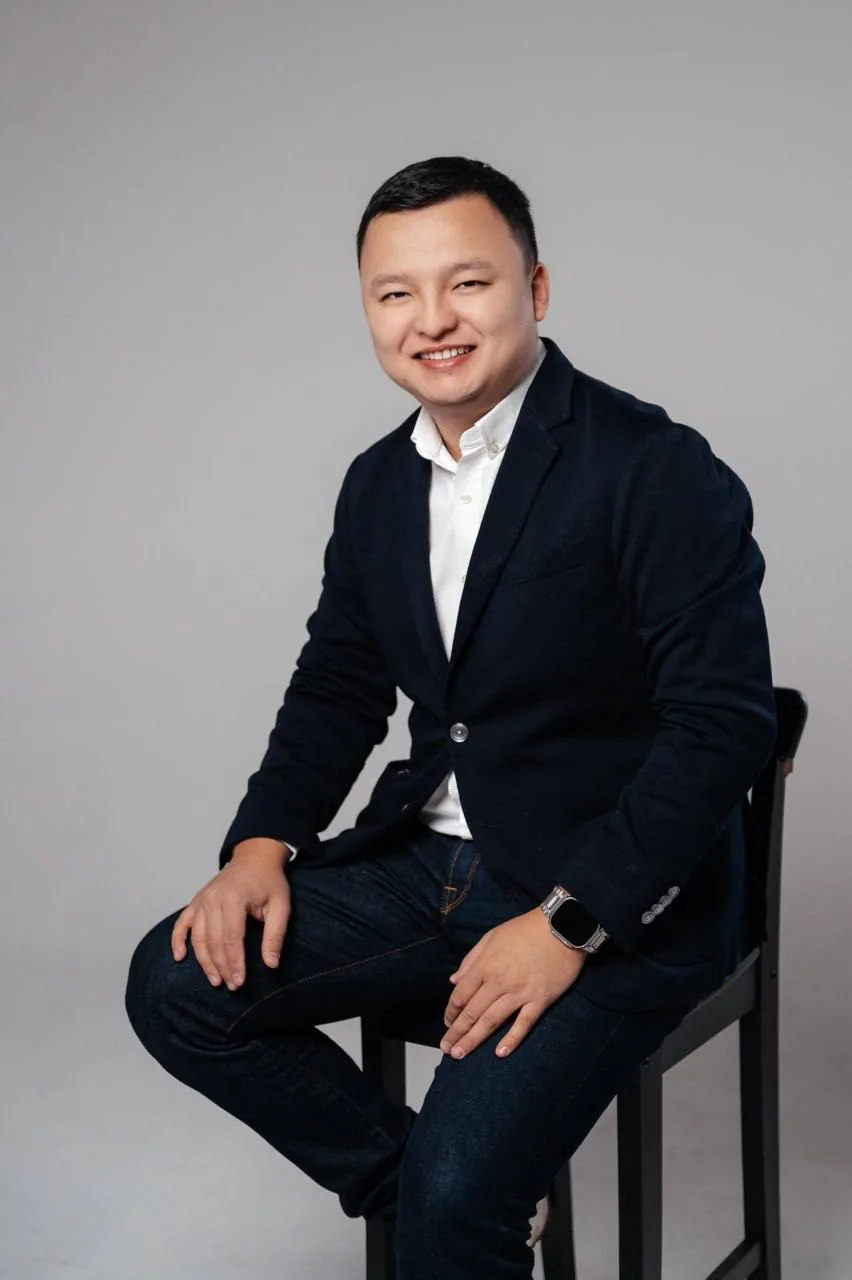
Nurzhan Kadirkey, city — Astana, CEO of BGlobal Ventures, LinkedIn, Instagram
About Me
I am the CEO of BGlobal Ventures. I have over 10 years of experience in investment, investment management, corporate finance, and asset management.
I started my career as an intern at the Dubai International Financial Centre, then worked in the front office at JSC “National Management Holding ‘Baiterek’,” overseeing several areas within the group of companies. Before joining BGlobal Ventures, I held the position of Managing Director at JSC “Qazaqstan Investment Corporation.”
My main focus is analyzing and executing investment, infrastructure, and M&A deals, as well as managing portfolio funds, direct investments, and venture capital.
About BGlobal Ventures
BGlobal Ventures is a subsidiary of JSC “Qazaqstan Investment Corporation,” registered in the Astana International Financial Centre (AIFC) and operating under common law principles. Our mission is to foster a dynamic venture ecosystem in Central Eurasia by bringing together capital, expertise, and innovation. The company has obtained a license from the Astana Financial Services Authority to manage a collective investment scheme and plans to begin investment activities in 2025.
We have built a strong pipeline of projects and are in negotiations with several regional and international partners, including potential Limited Partners—investors we plan to attract to the fund being established this year.
BGlobal Ventures was initially focused on educational and business development initiatives in the venture capital sector. Over time, the company’s focus has expanded.
Additionally, BGlobal Ventures actively explores and promotes the venture market. Together with Rise Research, we have been publishing an annual report on the Central Asian venture market for the second consecutive year. The latest VC report, covering 2023–2024, included an analysis of more than 200 startups and over 40 interviews with participants from Kazakhstan, Uzbekistan, Tajikistan, and Kyrgyzstan.
BGlobal Ventures is not just about investments but also about actively participating in shaping the venture culture and ecosystem in Central Asia.
About Investments
Our goal is to co-invest with the market, so we build a multi-level pipeline system through partnerships with accelerators, academic and corporate platforms, as well as regional and international funds. Applications come through various channels—both via partner networks and directly from startups.
In the first stage, we conduct preliminary screening—a basic check of startups against investment criteria: development stage, presence of an MVP, geography, and scaling potential. Then, the project is evaluated using our 4T scoring model:
— Team: experience, competencies, team synergy, entrepreneurial and technical experience of founders
— Tech & Product: technological depth and product refinement, architecture, competitive advantages, flexibility, and scalability
— Traction: achieved results such as revenue, MRR, user base growth, repeat sales, and conversion rates
— Timing & Market: market size and growth rate, demand level, and relevance of the solution at the current moment. Good timing is critically important: even a strong product may not “take off” if launched at the wrong time.
After scoring, we assess scalability, business model sustainability, strategic viability, and the founders’ awareness regarding growth and strategy. We target startups that not only demonstrate growth but also have a clear understanding of their long-term market position.
Next follows the classic due diligence process: legal verification, deal structuring, and strategic expertise, which help minimize risks and make informed investment decisions.
The final decision is made by the investment committee after a comprehensive analysis at all stages.
There are many mistakes we encounter in startups, but if generalized, several key ones stand out:
1. Poor documentation and project structuring.
Many teams neglect high-quality document preparation. We often see incomplete or inconsistent pitch decks among founders, unstructured product information, weak technology development, and flaws in financial models and legal documents.
2. Lack of traction and early pursuit of funding.
Founders often start seeking investment before creating an MVP. This is risky because without minimal demand confirmation and product testing, it is difficult to judge its prospects.
3. Unconvincing growth strategy.
Often, teams limit themselves to a narrow market—one client, city, or country—and do not demonstrate a clear scaling strategy.
4. Lack of understanding of unit economics.
Many early-stage teams, especially at the Pre-Seed stage, poorly understand their cost structure, customer acquisition channels, and key metrics reflecting product viability. Without this, it is difficult to build a sustainable business model.
It is important for founders not only to passionately build the product but also to convincingly structure the project, showing an understanding of both the market and the internal economics of the business. I would advise founders as follows:
1. Start with an MVP and first users.
Above all, confirm demand. Ensure the product works, is needed by the market, and solves a real problem. Without an MVP, it is difficult to prove the viability of the idea to potential investors.
2. Focus on traction.
Show early results: key metrics, growth in active users, pilots with corporate clients, preliminary orders—all of which indicate progress and confirm market interest.
3. Prepare a high-quality data room.
This is a crucial element in the fundraising process. It should include:
— a well-structured and professional pitch deck
— a financial model
— a cap table
— a plan for the use of raised funds
— legal documents.
4. Practice your presentation.
Soft skills play no less a role. It is important to be able to confidently and clearly convey your idea, have a well-rehearsed yet natural message that can be adapted to each potential investor.
About BGlobal Ventures’ Strategy
Our target fund is currently in the finalization stage, and we continue an active fundraising process, including attracting foreign sources.
The fund will be Multi-Stage—we consider projects from Pre-Seed to Series A, including intermediate rounds such as Pre-Series A and Bridge rounds. Accordingly, check sizes vary: at early stages, these are smaller amounts; at the Pre-Series A and Series A stages, from $500,000 and above.
Additionally, BGlobal Ventures adheres to a co-investment model—we invest jointly with regional and international funds, syndicates, and other partners. This approach helps strengthen investment rounds, reduce risks, and provide additional validation of projects.
In 2024, we conducted three VC Bootcamp sessions with the participation of 15+ experts from Silicon Valley and 150+ representatives of financial institutions, corporations, startups, and tech parks from Kazakhstan and Central Asian countries.
As part of supporting women’s technological entrepreneurship, we provided over 10 grants to women founders and leaders. Also, last year we organized a VC Roadshow across regions of Kazakhstan to raise awareness about venture investment principles.
At the same time, we are working on partnerships with leading universities in Kazakhstan and the region to create joint academic programs on venture investing.
Besides financial support, we launched an online course for startuppers with the participation of more than 20 practicing investors and successful founders. The course is available on our new platform, BGlobal Education. Most of the materials are open and free, and after completing the course, founders will be able to address many key issues they typically face at the beginning of their journey.
BGlobal Ventures’ geographic focus is Kazakhstan and Central Eurasia, with the mandatory presence of a legal or operational connection to Kazakhstan. The country offers favorable conditions for project placement: the AIFC provides a modern jurisdiction based on English law, comfortable tax regimes, and transparency for international investors.
Kazakhstan is the key market in the region, where more than 1,000 startups are concentrated and over 60 investors are actively working. The level of digitalization exceeds 90%, and the country holds strong positions in global rankings for digital government management and ease of doing business.
Central Eurasia is a market with a population of over 100 million people and high combined economic potential. According to our VC report, over the past year, the volume of venture deals increased by five and a half times, the number of startups nearly six times, and the number of active investors more than doubled.
We see significant synergy in the development of the region and interest from our future LPs from these countries.
Investor Advice
Now is a special time in Central Asia—a new technological era is beginning. The region is actively establishing ties with China, Southeast Asia, and MENA countries. Startups from Central Asia are already expanding beyond the local market and successfully scaling in neighboring countries.
The first piece of advice is to think big from the very beginning. Do not limit yourself to a city or country, but immediately consider the project in the context of the region, continent, and preferably—global presence.
The second is to focus on the team and culture. Technology and capital can be found, but a strong, resilient team is the hardest to find. The team is the startup’s main asset.
The third is to be prepared for a marathon. The entrepreneurial path is stressful, uncertain, and full of pivots. But it is precisely through this that resilience and leadership are formed.
As the region grows, we need not just founders seeking investment, but those who create meaning, markets, and new products. Therefore, act boldly, with the intention of building something greater—for the country, the region, and the future.
Plans
This year, we are focused on establishing ourselves as a full-fledged GP and launching the first fund, as well as fundraising.
The educational direction remains part of our activities, although the focus on it has slightly decreased—we have moved it to an accessible online format on the website.
We also continue to actively form and update the project pipeline.
We adhere to a sector-agnostic approach—we are open to technological startups from various industries if they demonstrate scalability, a sustainable business model, and a truly breakthrough technological solution.
Nevertheless, we have priority areas: B2B, SaaS, FinTech, GovTech, EdTech, MedTech, partially FoodTech, as well as the digitalization of traditional industries with high demand and potential for rapid growth.
Our goal is not just to follow trends like AI, but to find solutions that genuinely meet market needs, have clear growth drivers, and are capable of scaling.
The Tech on Telegram Follow The Tech on Telegram
Keep up with the latest technology and startup news.
Related reading



More from this author

Article Useful
How to protect your accounts from hacking: 8 settings you should check today
The Tech

Article Useful
500 Global: How the Accelerator Works and Who Can Receive Investments
The Tech

Article Interviews
Game Development in Central Asia: Arkady Moldavski on Developing Reverb and the Growth of the Industry
The Tech

Article Useful
Google, Tesla, BlackRock, and the IMF: Where to Apply for an Internship in Fall 2026
The Tech

News IT
Tesla unveiled the flying electric car Roadster
The Tech

News IT
Intero Biosystems startup won the Startup Battlefield at TechCrunch Disrupt 2026
The Tech