How to find an investor. Yelzhan Kusekbayev on venture business and successful deals
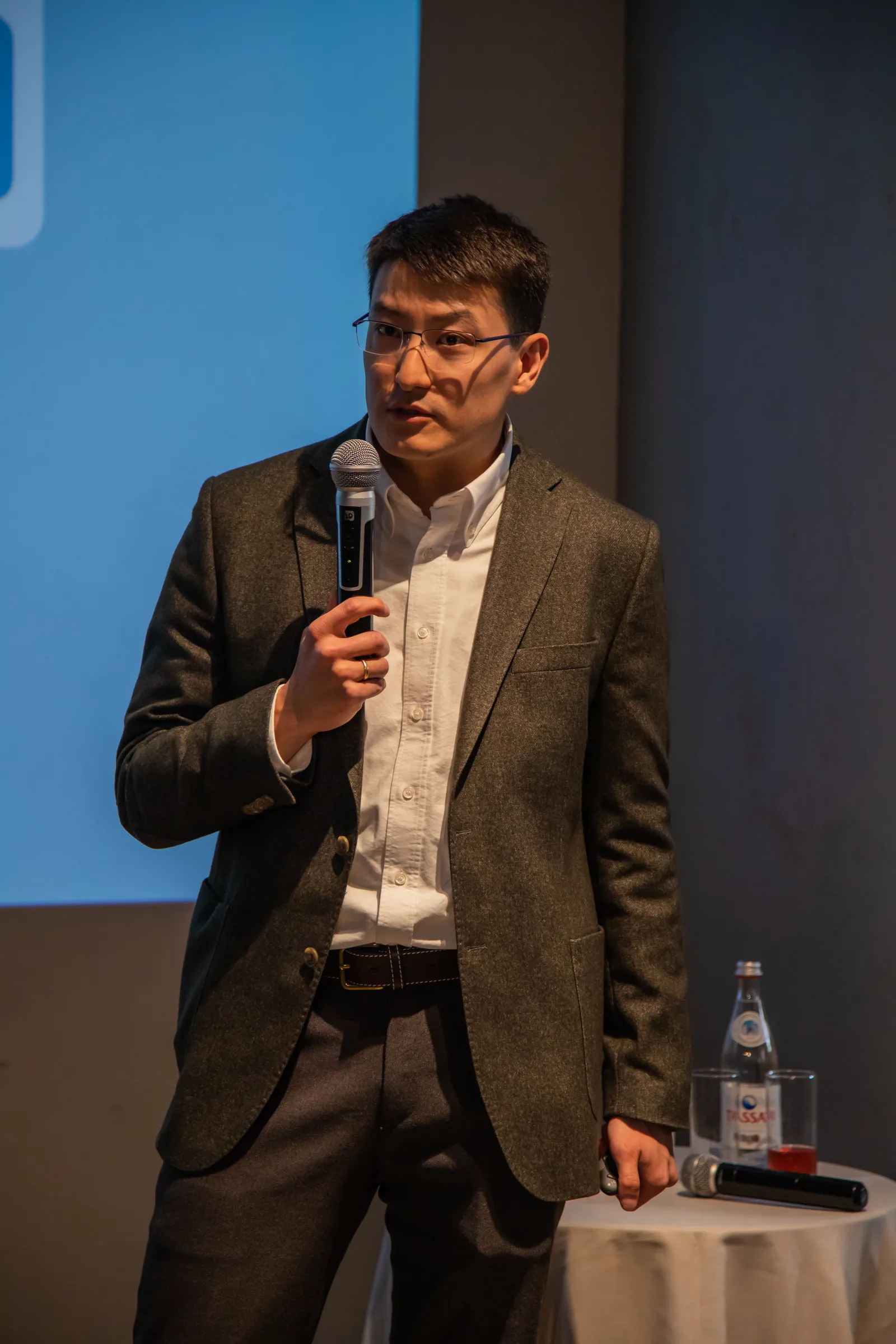
We spoke with a venture investor from Almaty and a representative of the MA7 startup club about how to find investors, build investment strategies correctly, and evaluate startups at different stages.
Yelzhan Kshekbaev, city — Almaty, VC Investor, LinkedIn
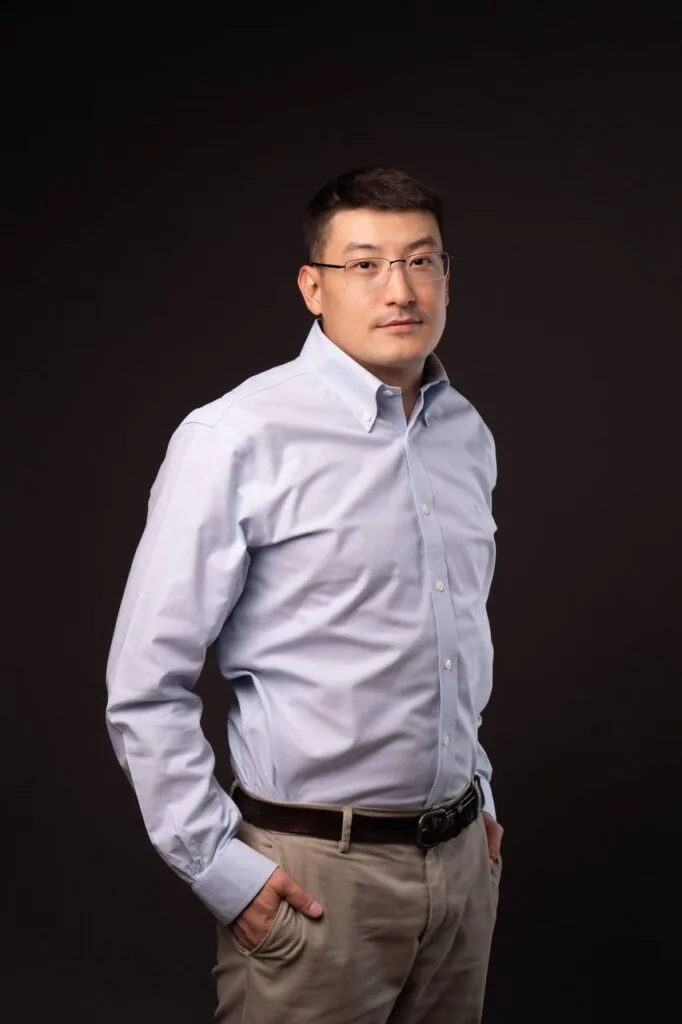
About Me
In my activities, I operate in two investor roles. The first is as a private angel investor, and the second is as a representative of the MA7 investment club. However, when it comes to personal investments, I generally act as an angel investor.
Through the club, we work more systematically: there is higher activity and greater scale, which allows us to support projects with serious potential. The club provides us with more resources and opportunities for startup mentorship.
Today, I manage a startup club through which we support entrepreneurs and early-stage projects. We have an investment pool and consider deals of $100,000 and above. Currently, we are supporting more than 20 projects within the club.
Regarding my background, I have over 10 years of experience investing in various asset classes — from government securities and bonds to real estate, the stock market, and cryptocurrencies. Since 2020, I have focused on venture investments. This asset class seemed the most interesting and promising to me.
At the same time, I remain a diversified investor: my portfolio includes real estate and other sectors. You could say I approach the business as an asset allocator, distributing capital across different infrastructures and strategies.
About Investments
Venture business, which includes venture capitalists and angel investors, is built on the ability to access the most talented entrepreneurs and invest in them with the goal of creating worthy, significant companies and products. This field is heavily reliant on reputation and networking. It is precisely through reputation and a wide network of contacts that one can secure more high-quality projects, while these projects themselves are interested in such an investor. The key qualities here are reputation and discipline, meaning the ability to stick to a chosen strategy and investment focus.
The peculiarity of this work lies in its high dynamism. Startups develop quickly, requiring prompt decision-making and timely support. Working in the venture industry is on the front lines: you interact with the most ambitious and talented entrepreneurs in your field. Every day involves engaging with new ideas, funds, and technologies, keeping track of what becomes relevant across different industries. Unlike the stock market, where the focus is on large companies with established models, venture investments are linked to innovation, the future, and high risks.
There are no so-called "problems" in this business, only characteristics. You encounter both experienced and inexperienced teams, strong and weak ideas. If a project is unconvincing, the investor simply does not invest — and that’s it. This cannot be called a problem; it is more like natural selection. The main task of an investor is to filter out weak projects and find promising ones.
My personal investment experience covers projects worldwide in collaboration with various communities, angel clubs, and syndicates. The average check is around $30,000, ranging from $10,000 to $100,000. By participating in syndicates, one can gain access to higher-quality projects, including those in developed markets such as the US. Currently, my portfolio holds about 90 investments: approximately half are at the Pre-Seed stage, about 30% at the Growth stage, and around 20% at later stages. We have already realized 13 exits, written off about 15 projects, and the rest continue to develop.
The most successful case was the investment in Volumetric Bio. This is a startup from the University of Houston that developed technology for 3D printing human organs. At an early stage, the company was acquired by a public player, 3D Systems. This deal yielded returns of tens of times the investment and served as an example of a successful exit. Another interesting project involved using AI to overlay effects on video — even before the mass popularization of artificial intelligence and the release of ChatGPT. The company successfully attracted strategic partners and investors, ensuring a decent result. There are several such examples in the portfolio, totaling 13 realized exits.
Investment criteria depend on the startup's development stage. At the Pre-Seed stage, when there is only an idea and no MVP, the team and founder play the key role. It is important that the founder possesses deep knowledge of the industry and understands the problem being solved. They should offer a solution at least five times more effective than existing ones, and ideally ten times more effective. Such founder-market fit is the primary factor at the early stage.
At the Seed stage, when an MVP already exists and initial traction appears, attention shifts to growth. Objective dynamics are important: user growth, revenue, and engagement. If this growth exists, it means the product is in demand. If it does not, it may indicate that the product is not needed by the market or that the team is struggling with its development. At the same time, a startup may be promising but may have entered the market too early or at the wrong time. Timing and many additional factors are crucial here.
Thus, venture investment is a business where reputation, discipline, the ability to quickly evaluate teams and projects, and an understanding of startup development stages and success criteria play the key roles.
Investment Strategy
First of all, an interesting entrepreneurial environment is currently forming in Kazakhstan: new funds are appearing, and traction is growing, which positively influences the ecosystem. At the same time, it is important that business models are modern. This is not about simply copying existing solutions and mechanically applying them to our market, but about creating projects that will be in demand not only in Kazakhstan and Central Asia but worldwide.
There are models that have long become obsolete. Creating aggregators or article-based platforms was already done 10–15 years ago. Repeating them at a local level has no prospects. It is more valuable to find founders capable of offering an innovative product that can be scaled globally. We are now seeing that entrepreneurs have begun to think broader: whereas their ambitions were previously limited to local projects, today they strive to enter international markets and create modern products with global potential.
Undoubtedly, there are many risks in this field. There is an entire methodology for assessing them, which covers the team, business model, customer acquisition approach, and accuracy of calculations. The product itself is also important — its relevance and competitiveness. We review dozens of startups and understand that most repeat others' ideas and make typical mistakes. In startups, there are usually more reasons for failure than for success. However, experienced investors, thanks to their industry insight, are able to identify weaknesses at an early stage and advise founders on how to avoid mistakes — from product strategy to marketing and sales.
Financial support is not the only thing an investor provides. Money is available to everyone, but startups turn to investors for expertise and mentorship. At the early stage, a project faces difficulties: the market does not believe in it, customers do not trust it, and there are no sales yet. Here, the founders' ability to correctly position and sell the product plays a key role. Investors help build strategy and development direction, and also provide access to clients, other investors, assist with hiring key employees, and establish partnerships. This creates significant added value.
It is important to adhere to a certain average check size. One cannot know in advance which project will "take off." Sometimes a startup that received the minimum amount unexpectedly shows the highest growth. Therefore, diversification and uniform checks are the foundation of a correct investment strategy.
A strategically correct approach is to invest not in individual projects, but to form a balanced portfolio. Practice shows: to achieve a stable result, it is necessary to invest in at least 40–50 startups. If you limit yourself to seven or eight projects, there is a high risk that none of them will be successful. However, with a portfolio of 40–50 investments, at least one startup can deliver a 50x return, compensating for all other investments and ensuring profit. This is why systematicity and diversification are key principles.
Within the MA7 investor community, we pool our efforts and enter projects together. At the Seed stage, our checks range from $300,000 to $500,000, and the total investment volume can reach a million. This approach allows for risk distribution and provides more significant support to projects.
Usually, the volume of necessary investment is determined by the startup itself. In the industry, there is an established practice: about 10% of the company is sold at Pre-Seed, another 10% at Seed, around 20% at Series A, and so on. It is important not to give away too large a share at early stages, otherwise, difficulties may arise in the future when attracting new investments.
At the Pre-Seed stage, the amount should provide the team with approximately one year of work: office rent, salaries, and basic expenses. For Almaty, this is around $200,000–$300,000 with a company valuation of $2–3 million. Over this year, the team must either show progress and move to the next round, or close the project. For the investor, it is important to understand: it is better to own 10% of a successful company than 50% of a failed project.
Regarding the investment horizon, this is the most risky and least liquid asset class. Here, the investor does not decide when to exit. An exit is possible only when the market is ready to buy the stake — whether it is a strategic investor, a large company, or the public market via IPO. Sometimes it is possible to sell stakes to other investors on the secondary market, but only if the company is in demand. Thus, the holding period of investments depends directly on the success of the startup itself, not on the investor's desire.
Investor Advice
First of all, a startup must meet the key criterion — demonstrating growth dynamics. It is necessary to prepare a high-quality pitch deck and clearly understand how your project will scale.
Today, about 10 venture investors operate in Kazakhstan who professionally engage in this field. In addition to them, foreign funds with scouts and representatives are present in the market, reviewing projects from the region. If a startup is aimed immediately at the international market, it is worth approaching foreign Seed funds — there are hundreds and thousands of them, and working with them requires a systematic approach.
For this, networking and participation in events are important: forums, exhibitions, startup battles, including online ones. The main goal is to obtain a direct contact with an investor and secure the first 30-minute meeting. If the introduction is successful, it will be followed by a more detailed one-hour discussion.
Seeking investment is a process where you can receive 100 rejections out of 100 negotiations. It is important to build a funnel, keep track of potential investors, and understand their roles. At early stages, for example when raising $200,000–$300,000, a lead investor can provide the key portion, while the remainder can come from several business angels.
The strategy should include choosing a fund that invests specifically in your industry, as well as understanding who acts as the lead and who joins subsequently. The investor's reputation plays a key role: participation by a respected fund increases trust in the deal and facilitates attracting other participants.
Plans
We work through our VC club — MA7 Ventures. We are interested in a wide variety of startups; we act as generalists and review projects across all industries, without concentrating on any single direction.
Today, special attention is paid to solutions using artificial intelligence. It is not the mere presence of AI as a technology that matters, but the fact that its application allows the product to become 5–10 times more effective compared to current analogs. Artificial intelligence is merely a tool that enables such improvements.
We are interested in solutions in the SaaS sector, especially B2B SaaS, where AI is used to significantly increase efficiency. At the same time, we do not consider outdated models: "Uber for something," "marketplace-aggregator for something" — these are already past trends, and such ideas hold no value.
Beginner entrepreneurs often return to business models popular 10–20 years ago, although the market has moved far ahead. New technologies allow for the quick and inexpensive creation of MVPs, testing prototypes, and verifying their demand.
It is important to find niches in which the founder has deep expertise and offer solutions capable of exponentially increasing efficiency. There are many such industries undergoing transformation today.
The Tech on Telegram Follow The Tech on Telegram
Keep up with the latest technology and startup news.
Related reading



More from this author

Article Useful
How to protect your accounts from hacking: 8 settings you should check today
The Tech

Article Useful
500 Global: How the Accelerator Works and Who Can Receive Investments
The Tech

Article Interviews
Game Development in Central Asia: Arkady Moldavski on Developing Reverb and the Growth of the Industry
The Tech

Article Useful
Google, Tesla, BlackRock, and the IMF: Where to Apply for an Internship in Fall 2026
The Tech

News IT
Tesla unveiled the flying electric car Roadster
The Tech

News IT
Intero Biosystems startup won the Startup Battlefield at TechCrunch Disrupt 2026
The Tech