How a Kyrgyz woman built an AI startup in the US and raised $2.5 million in investments
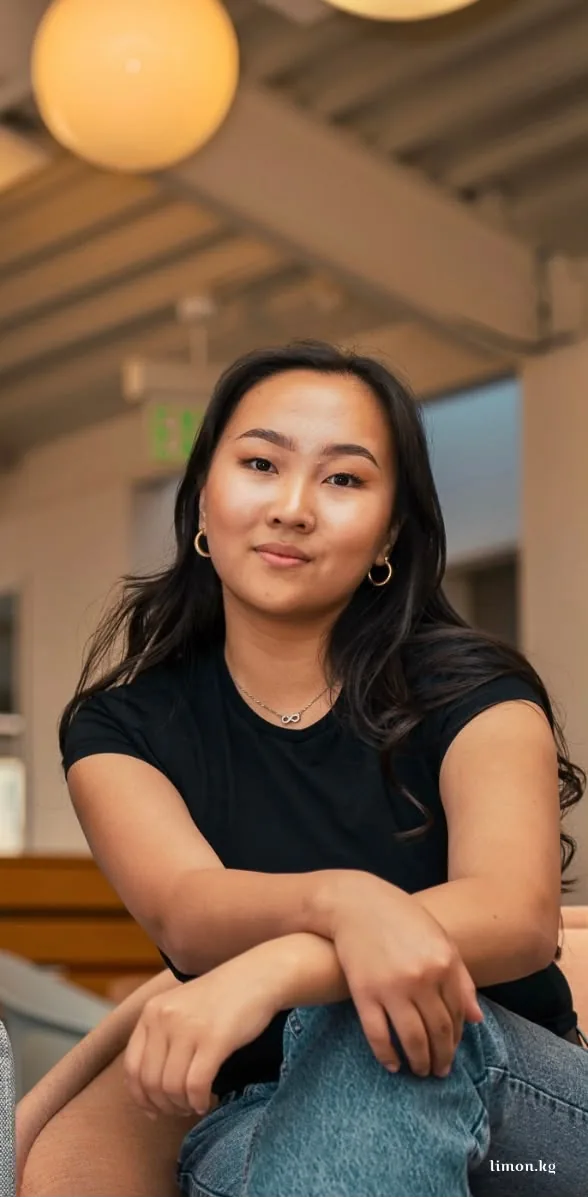
If you missed our Telegram broadcast with Sisters — Female founders Initiative, we have compiled the key takeaways in text format. The founder of Human Delta shared how she moved to Silicon Valley, raised $2.5 million in investments, secured major clients, and offered advice to startups from Central Asia.
Akylai Kasykoulouva, Founder of Human Delta
About Me
I have been living in the US since 2012. I came to study Computer Science, and during my studies, I began conducting research in the field of artificial intelligence. Later, I joined one of the university’s largest research labs and became one of the leading AI researchers on campus.
Then, I moved to Silicon Valley to build my first startup. It was an experimental project that we launched at UCLA. Although it was not successful, it was then that I met my future co-founder, who grew up in Silicon Valley and attended Stanford University.
Initially, we provided AI consulting services and worked with large corporations. One of our first clients was Disney. Later, we received our first investments from Silicon Valley funds, and a few months later, we closed a $2.5 million funding round.
Today, our team consists of nine people, most of whom are engineers and sales specialists. Our office is located in San Francisco. We continue to grow the company, work with large corporate clients, and prepare for the next investment round.
About Human Delta Startup
We initially started as an AI consulting firm, helping large corporations implement artificial intelligence. While working with clients, we noticed a common problem: companies have vast amounts of data, but it is stored in different systems—CRM, ERP, and other internal services. Because of this, AI cannot effectively utilize the information: data is fragmented, inconsistencies arise between systems, there are legal restrictions, and human errors occur.
Our product consolidates a company’s data into a single system, cleans and structures it so that it is ready for use with artificial intelligence. Then, we provide secure access to this data via API for AI agents, chatbots, and other automation tools. Additionally, the system monitors the quality of AI responses, helping models work more accurately and efficiently.
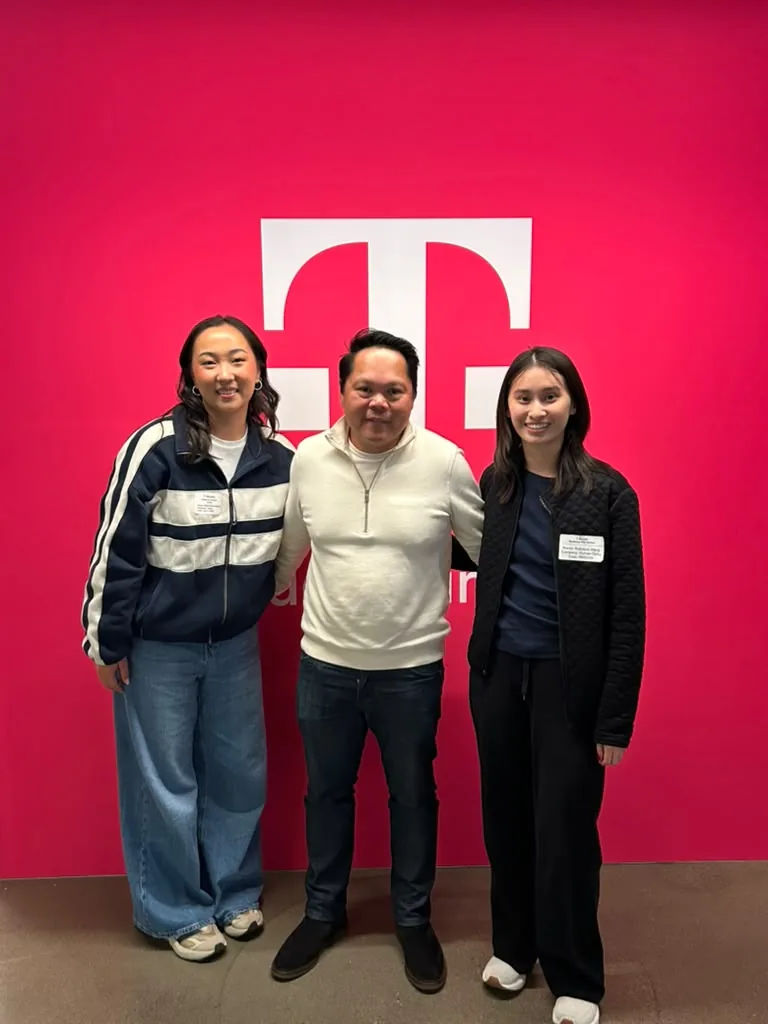
Today, our product is used by companies such as Disney, ESPN, Paramount, and T-Mobile. These are primarily large corporations in the media, entertainment, and telecom sectors, where huge volumes of data are processed daily.
Why Silicon Valley
Until I was 17 or 18, I lived in Kyrgyzstan, and then I moved to the US to attend university. Even then, I watched videos about Silicon Valley and San Francisco and dreamed of building my own startup one day.
My university was located in Illinois, far from Silicon Valley. Even within the US, the difference between regions is very noticeable: there is an ecosystem where technology, startups, and investments are concentrated, and there are places where opportunities for rapid growth are much fewer. This situation is somewhat similar to that in Kyrgyzstan and other Central Asian countries.
I always wanted to create a product for the global market rather than limiting myself to one country or city. Even while working on my first startup at the university, I realized that the local market eventually becomes a limitation for scaling.
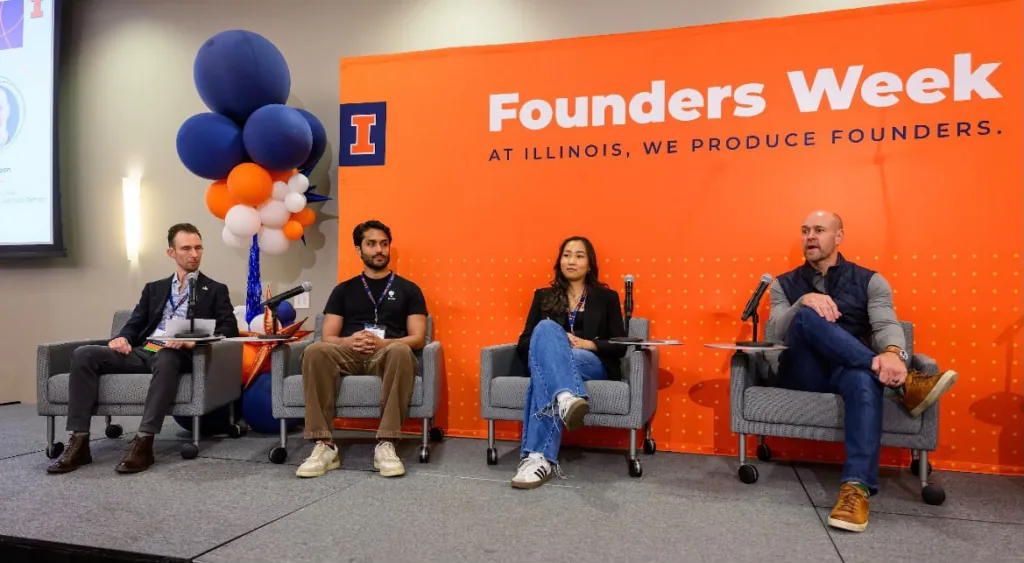
Silicon Valley has a unique atmosphere. Here, people help build products for the global market and think on a large scale. Everything develops very quickly—you can gain experience in a few months that would take years elsewhere. Even compared to New York, the pace of growth here feels completely different.
The main difference between the US market and Central Asia is the attitude toward risk. If a founder has a strong background, such as experience working at Big Tech companies or an education from a leading university, attracting investments is much easier. Sometimes, funding can be obtained even at the idea stage.
A strong ecosystem of investors, advisors, engineers, and entrepreneurs has formed here, ready to support startups at the early stage. Many talented specialists join young companies not because they are already successful, but because they believe in the founder and their idea. In my opinion, it is the willingness to take risks, trust in founders, and the drive to create global companies that make Silicon Valley unique.
First Steps in the US Market
The first step is to start with yourself. It is important to prepare for building a startup: develop your knowledge and skills and become a strong founder.
Many believe that at the start, the main thing is to seek investments or build networking. But in my opinion, you first need to find a market. The most important thing is to understand what problem you are solving and whether it is significant enough to build a global company around it.
The next step is finding a co-founder. This is one of the most important steps, as more than half of startups fail due to conflicts between co-founders. Therefore, it is important to find someone with whom you share values, vision, and approach to work.
After that, you should look for your first clients and simultaneously build a network of contacts. Today, many investors from London, Austria, and other countries are actively interested in Central Asia and are ready to invest in fast-growing markets. Therefore, it is important to become a founder worth investing in: develop expertise, create a scalable product, and build trust through professional connections.
We found our first clients through cold sales. We wrote to AI directors and heads of various departments via LinkedIn, offering a solution to a specific problem. One of our first clients was Disney—we contacted the head of customer service, received a response, and the company began working with us. If you reach out to the right people with a clear value proposition, this approach really works.
Some clients also came through our advisors. Thanks to their experience and wide network of contacts, we gained warm introductions to executives at large companies, which significantly accelerated the process of acquiring our first corporate clients.
Investments and Mistakes
I see one common problem. Our people usually build products for a fairly local market and then try to attract investments in Silicon Valley. But, as a rule, investors there want to see scale.
For example, if you create an AI agent to solve a problem in Kyrgyzstan, an investor will immediately ask: how scalable is this product? What happens if you open a similar company or launch the same service in China, Europe, or the US? How global is this problem? This is one of the main questions investors ask.
The second important aspect is the founder’s background. Investors love to see experience that confirms that this specific person is capable of building a successful company and capturing the market.
For example, if you create AI solutions for the construction industry, what experience do you have in this field? Perhaps you grew up in a family of builders or studied construction. We know someone who develops AI for agriculture. He studied at Cornell University, which is considered one of the best universities in the world for agriculture. It has the strongest professors, research, and scientific base in this field.
When raising investments, preparation plays a key role. First of all, it is important how ready the founder is for the pitch and how well-prepared the materials are. Investors love large, fast-growing markets, so it is necessary to conduct serious market research and analyze the problem the product solves, and then present the results convincingly.
Another important factor is a warm introduction, i.e., a recommendation through mutual acquaintances. Trust is of great importance to investors: they want to understand that they are dealing with a strong founder capable of building a successful company. Many try to write to investors on LinkedIn or send cold emails via email. However, this approach is rarely effective, as trust plays a key role in the venture industry.
When we raised our first investments, we started not with the largest funds but with less well-known players. After the first deal, everything changes: if one investor believes in the company, others begin to pay closer attention to it. In the venture industry, information spreads quickly, so the first investments often serve as a signal for other funds.
Advice for Founders
Today, one of the most important skills is the ability to effectively use artificial intelligence. For example, our entire team works with Claude Code from Anthropic. Such tools significantly increase productivity: tasks that previously required dozens of engineers can now be handled by a much smaller team.
Networking is no less important. A strong network of contacts helps attract investments faster, find employees and clients. If you are building a company for the US market, especially Silicon Valley, it is important to develop connections in this ecosystem as early as possible.
Participating in accelerator programs is truly worthwhile, especially if you are just entering the US market. They help you find your first clients faster, integrate into the local ecosystem, and meet investors.
I personally went through the Outset Capital program. In addition to early-stage investments, it gave us access to a strong community of entrepreneurs, mentors, and investors who helped us grow the company faster.
I am also a consultant at Andreessen Horowitz, where there is an accelerator program called Speedrun. About 50 startups are selected for each cohort, where they are helped to find their first clients, develop their product, and scale their business. The main advantage of such programs is the strong community. Founders exchange experiences, introduce each other to investors, clients, and partners, which significantly accelerates startup development.
And perhaps the most important advice I ever received is not to be afraid to be yourself and show your strengths. Do not be afraid to talk about your ideas, demonstrate expertise, and build ambitious products. Today, technical specialists from Kyrgyzstan, Kazakhstan, and other Central Asian countries can create companies for the global market, not limiting themselves to just a local audience.
The Tech on Telegram Follow The Tech on Telegram
Keep up with the latest technology and startup news.
Related reading



More from this author

Article Useful
How to protect your accounts from hacking: 8 settings you should check today
The Tech

Article Useful
500 Global: How the Accelerator Works and Who Can Receive Investments
The Tech

Article Interviews
Game Development in Central Asia: Arkady Moldavski on Developing Reverb and the Growth of the Industry
The Tech

Article Useful
Google, Tesla, BlackRock, and the IMF: Where to Apply for an Internship in Fall 2026
The Tech

News IT
Tesla unveiled the flying electric car Roadster
The Tech

News IT
Intero Biosystems startup won the Startup Battlefield at TechCrunch Disrupt 2026
The Tech