Kazakhstani Americans are developing a life-saving technology
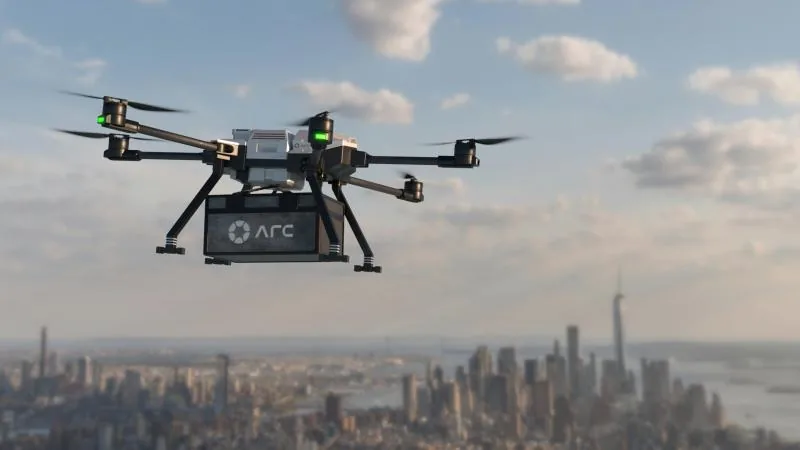
In our broadcast, we discussed how ARC builds autonomous unmanned systems for emergency services, hospitals, and critical deliveries in the US, reducing response times and enhancing safety. This is the second joint broadcast with Sisters — a female founders community — and continues the series of meetings with women founders who are building international tech companies in Silicon Valley. The full episode is available at the link.

Asel Tursun, City — Santa Clara, CEO of ARC, LinkedIn
About Me
I am the co-founder and CEO of ARC. We build autonomous unmanned systems for emergency services, hospitals, and critical deliveries in the United States. We do not simply create and manufacture drones; we develop a comprehensive system that includes unmanned aerial vehicles (UAVs), hardware, control stations, autonomous management, an operating system, and daily safe operation for government agencies.
Our primary focus is safety. Specifically, public safety and healthcare in the United States, because every minute that impacts the outcome is crucial to us.
Response speed, risk reduction, and the delivery of critical supplies using autonomous drones are what we have been doing for nearly two years alongside my co-founders.
Startup Launch
My co-founders — Alibek Yertay from Kazakhstan and Leo Zhang from the United States — and I met at Purdue University. Initially, we planned to launch a drone-based food delivery service, inspired by science fiction.
We were attracted to the concept of the low-altitude economy — the exploitation of low airspace — which has been developing in the U.S. over the last 5–10 years. When the infrastructure and regulatory framework became suitable, we began working in this direction. At first, we focused on the software aspect, but we quickly realized that this was not enough.
We identified a growing market for DFR (Drone as a First Responder), or drones as first-response services. This is particularly important in the United States, where 90% of homes are single-family houses, and the average emergency response time is 15–18 minutes. Our drones can reduce this time to 1.5–3 minutes, which is critical during heart attacks and other emergencies.
We focused on efficiency, autonomy, and reducing production costs, creating a reliable and scalable system.
The Team
When we started two years ago, the team consisted of only three people: myself and my co-founders, Alibek Yertay and Leo Zhang, the CTO, who is fully responsible for the hardware. We immediately divided roles so that each person worked within their area of expertise: I lead the business side, while both co-founders are engineers by training.
Alibek and Leo studied together at a Portuguese university and are aerospace engineers with extensive industry experience. Leo has been working with drones for over 15 years, and Alibek for about 10 years. Previously, Leo scaled a drone system at UPS, one of the largest logistics companies in the world, where he led the unmanned technology division.
Today, the team has grown to 15 people. Most are engineers: hardware specialists, developers of autonomous control systems, as well as a team handling regulatory affairs and government relations. This is an extremely complex market with a high barrier to entry, which explains the small number of players.
Target Audience
Our target audience consists of government agencies, police departments, and medical organizations that use our product for emergency deliveries.
A key use case is the U.S. police force. During critical calls, such as a heart attack or a robbery, a drone autonomously flies to coordinates integrated with the dispatch center and delivers a defibrillator, first-aid kit, or Narcan. Cameras and video analytics allow for situation assessment and risk reduction for officers. In hospitals, drones transport critical materials between buildings across areas up to 10–20 miles. To date, we operate in three U.S. states, including North Carolina, where our systems are integrated with 24 police departments, and we are beginning to expand into Europe, including Rome, as well as Kazakhstan. In Kazakhstan, we have several major commercial clients, and details of some cases are under NDA.
We have built more than 50 major cargo systems and have begun producing camera-equipped drones. Approximately 20 units were produced in the last year after finalizing the design, which underwent more than eight iterations. Production has become simpler while maintaining a high level of safety and compliance with regulatory requirements. Our first client was the Forsyth County Police Department in North Carolina, where we tested the software and autonomous logic of the system, including the speed and accuracy of delivering critical cargo.
The project required a large team of engineers: specialists with experience at Tesla, participants in SpaceX projects, and experts from Carnegie Mellon with experience in developing autonomous systems.
Incubation Programs
In the early stages, we invested our own funds, as all three of us had experience with previous exits. We also attracted investment from British investors, including top managers from Tesla and SpaceX who had participated in scaling manufacturing processes. These funds allowed us to launch development and continuously improve the system.
Once the product was ready and we began collaborating with police departments, the company quickly generated revenue. The size of contracts significantly exceeded typical benchmarks for software companies, allowing us to enter the market rapidly and validate the viability of our solution.
About the U.S. Market
This was a long and difficult journey. The United States is currently the primary market where standards for unmanned systems are being established. This is not just about drones as a hobby or military tools, but about full-scale infrastructure for autonomous systems that are regulated and verified at every stage. Solutions that work in the U.S. are then scaled globally.
The market has been actively developing over the last two years, including in Kazakhstan. Our key markets are the United States, Japan, and the United Kingdom. Drones are no longer manually controlled; we are talking about fleets with dozens or hundreds of autonomous units, stations, support services, and integration with regulators. The main challenges at the start were related to regulations, but recent measures restricting access for Chinese manufacturers like DJI have opened opportunities for local players.
We focused on the public safety segment: police, fire departments, and rescue services, where response speed, situational awareness, and risk reduction for personnel are critical. We initially considered commercial delivery, but the regulatory barrier was lower for working with government agencies. Government structures became our partners and operators, which accelerated implementation. We also work with hospitals and fire stations, but not with the military-industrial complex.
Our revenue is split roughly evenly: 50% from tenders and the public sector, and 50% from the commercial segment. We implement Drone as a First Responder, replacing helicopter programs and saving over two million dollars per year per region. We provide three main services: software, drone supply, and a full package including software, equipment, training, and support.
The market for commercial and government autonomous systems is growing actively in the United States, Japan, Europe, and Saudi Arabia. Drones deliver cargo in an average of 10 minutes, and working with government structures accelerates licensing and the collection of flight logs. We foresaw this market direction two years ago and are building a strategy for decades.
We are pioneers on a global scale. Contracts are signed after a pilot period and then renewed for one to five years. The commercial model is similar: large organizations, software subscriptions, licensing, equipment leasing, and maintenance. Safety remains our priority — we fly among people and always adhere to all standards.
Achievements
We are proud that the systems we built — by two Kazakhs, myself and Alibek, and also Leo — are now actively working, answering 911 calls, and saving lives. I believe this is our most significant achievement: seeing our technology applied in a sector where it truly matters. Where it is not just something that would be "cool" or "nice to have," but genuinely necessary infrastructure.
The second achievement is that our examples, including in the U.S. market, help people perceive autonomy as the norm. This is very important to us. We want people to stop saying, "Oh, this is something new," and start viewing the technology as a normal part of the system. We think strategically and want to play the long game.
We want to see a world where distance does not determine a person's fate. If help arrives faster than a person loses their chance, then we have done everything right. This is what motivates us to wake up in the morning and continue working.
Plans
We strive to become part of the basic infrastructure so that our product is perceived as naturally and unobtrusively as city traffic lights — not as an option, but as a necessity. Our goal is to make this solution an industry standard for the entire infrastructure sector.
This is our key objective: to create the most reliable and safe product for cities. We aim to cover every state and every city in the United States and do not view this as a one-time sale of a certain number of systems. Our task is to build a complete ecosystem.
The Tech on Telegram Follow The Tech on Telegram
Keep up with the latest technology and startup news.
Related reading




More from this author

Article Useful
How to protect your accounts from hacking: 8 settings you should check today
The Tech

Article Useful
500 Global: How the Accelerator Works and Who Can Receive Investments
The Tech

Article Interviews
Game Development in Central Asia: Arkady Moldavski on Developing Reverb and the Growth of the Industry
The Tech

Article Useful
Google, Tesla, BlackRock, and the IMF: Where to Apply for an Internship in Fall 2026
The Tech

News IT
Tesla unveiled the flying electric car Roadster
The Tech

News IT
Intero Biosystems startup won the Startup Battlefield at TechCrunch Disrupt 2026
The Tech