How a girl from Kyrgyzstan opens the path to global investments for startups in Central Asia
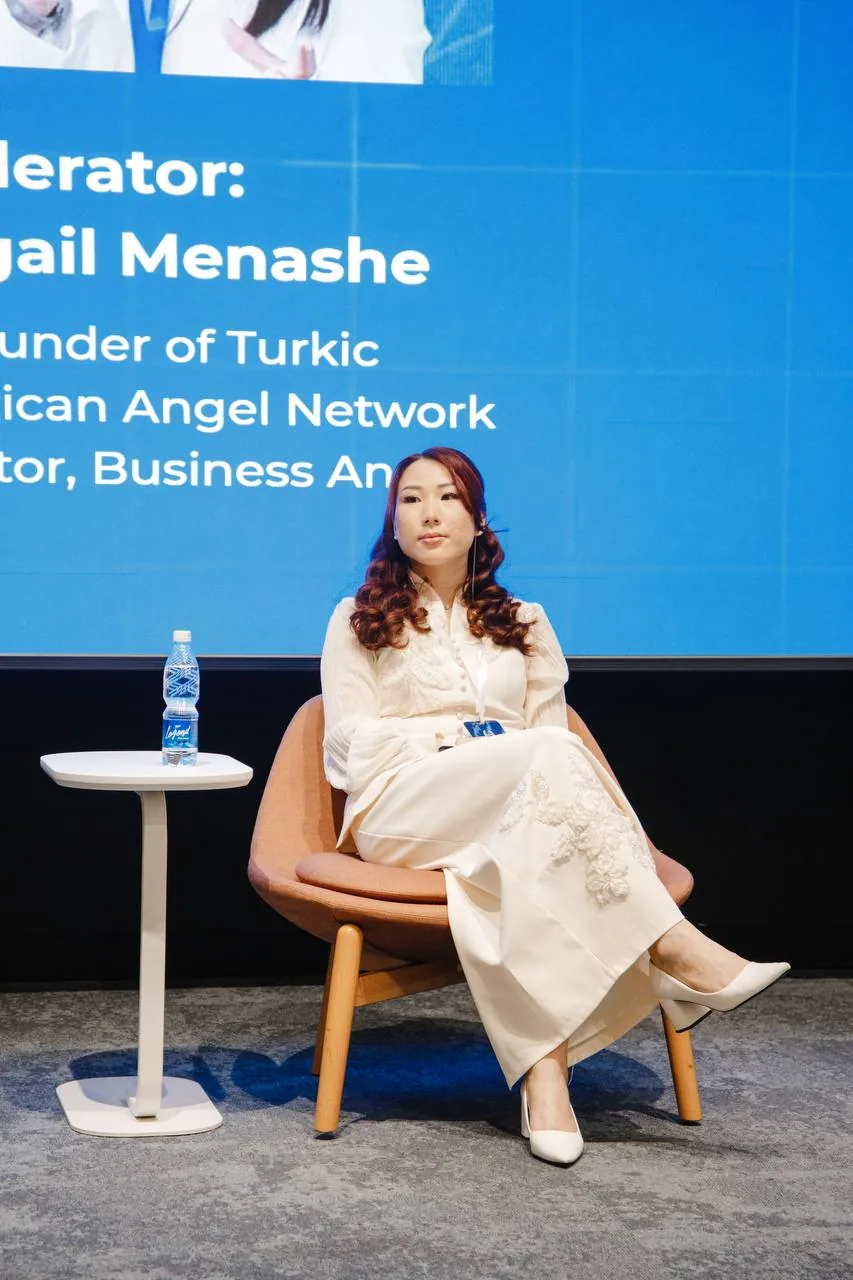
How to transition from developing Kyrgyzstan’s startup ecosystem to international venture capital, why women find it harder to believe in their own expertise, and why Central Asia needs more business angels. The Tech spoke with Avigail Menashe, co-founder of the Turkic American Angel Network.
Avigail Menashe, City — San Francisco, Co-Founder at Turkic American Angel Network, LinkedIn
How It All Started
Previously, I led the Association of IT Companies of Kyrgyzstan, where we focused on developing the startup ecosystem. The Association was one of the authors of the idea to create the High Technologies Park, which today plays a key role in the development of the country’s technology sector.
We launched accelerator programs with partners from Silicon Valley, organized business tours to the US and Southeast Asian countries, helped startups participate in international exhibitions, developed IT education, worked on legislation regarding venture investments, and supported companies in entering foreign markets.
After that, I engaged in consulting and organizing business tours to the US. More than 100 entrepreneurs participated in experience-sharing programs, and I advised companies on finding clients and partners, as well as organized meetings between startups and international investors.
Gradually, I shifted from the startup side to venture investments. I completed several accelerator programs, began learning from experienced investors, and studied the operations of funds and angel syndicates in the US and the UK. I had the opportunity to observe experienced investors at work and see firsthand how they select startups and make investment decisions.
Kyrgyzstan and the entire region lack capital. It is precisely the deficit of early-stage financing that often prevents companies from growing or even emerging. Capital at the start is like fuel for a business.
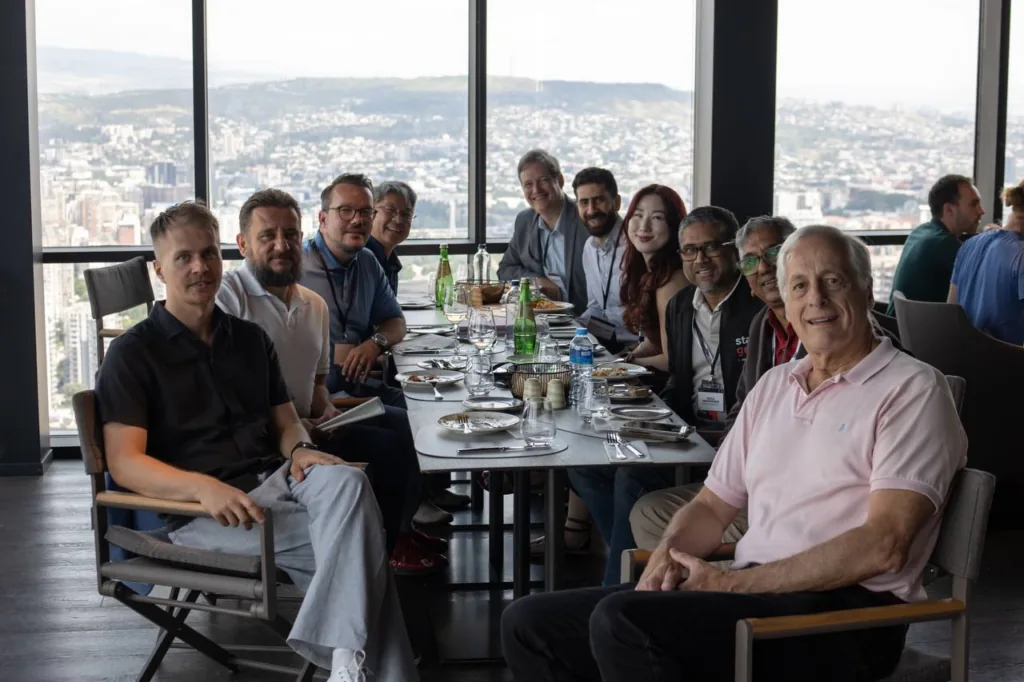
Later, we launched the Turkic American Angel Network, and we invest exclusively alongside experienced investors. Before that, I also organized events for investors so that entrepreneurs with capital could interact with experienced international investors. For example, we invited Bill Reichert, whose portfolio includes more than nine unicorn companies, and participants had the opportunity to spend two days with him and other investors from the US and Europe.
During my time working in the US, I became one of the subjects of a Bloomberg article on the development of Kyrgyzstan’s IT industry. After its publication, investors began reaching out to me, which helped build a strong international network and open up new opportunities.
The most difficult aspect for me was the internal process. Am I ready for such great responsibility? I am a co-founder and leader of the syndicate. When we select deals, we invest our own capital, and our network of investors also participates in these deals because they trust us. This is a huge responsibility.
We do not manage other people’s capital, but people invest because we are investing. And this is a heavy burden, especially in venture capital, where the risk of losing money is high.
Furthermore, in the industry, there are people who are very particular about what the path to venture investment should look like. For example, it is believed that only people with experience in investment banking should enter this field. There are certain dogmas and perceptions.
I have a non-traditional path. I did not come from investment banking, but I have a good understanding of startups and the startup ecosystem as a whole. Much of this understanding comes from my mentor, who helped the Bush administration regulate the internet and participated in the early development of the Silicon Valley ecosystem. It was this understanding that helped me implement several successful projects in Kyrgyzstan.
I also had strong mentors in the field of venture investments—people with excellent reputations and access to high-quality deals. They became my advisors and partners.
One of the most important lessons I learned early in my career is to do what you know. When you start doing what you know, you gradually learn what you don’t know yet.
Many women doubt whether they are ready for great responsibility. Sometimes these doubts are only reinforced by those around them, who believe that one must first gain more experience or a “correct” background.
In my case, mentors played a decisive role. When many did not believe in my ideas and considered them unsuitable for the local market, it was a mentor from the US who supported me and helped me move forward.
Therefore, the main lesson for me is to take the first step and not fall into endless overthinking. We often convince ourselves in advance that the product is not good enough or that nothing will work out. But the only way to check this is to launch the project, get feedback, and let the market evaluate it.
Even after many launches, each new project was difficult for me. The more experience and responsibility I gained, the stronger the fear of making a mistake became. But precisely for this reason, the principle of ship fast, fail fast works for me: the faster you get feedback, the less time remains for doubts that might prevent you from starting at all.
About Investments
We invest at the Seed stage, so having a proof of concept is mandatory for us. Currently, we work only in the format of co-investing with other angel syndicates.
Right now, we operate under the model of “local capital — global deals.” Our main investment areas are FinTech, energy, and AgroTech, but we consider other sectors if we or the members of the angel syndicate have the necessary expertise.
If a project interests us but we lack sufficient industry expertise, we bring in international partners. For example, when evaluating an Irish manufacturing startup, we turned to a German CVC fund to obtain an independent expert assessment.
Thanks to our international network, we can participate in deals jointly with partners from Europe, North and South America, Asia, and the Middle East.
We launched last November. To date, we have made two investments in one startup and are currently reviewing two more projects. The average size of our check ranges from $50,000 to $200,000.
Women in the VC World
Sometimes people are surprised that I am the one making investment decisions. Some expect to see someone else and do not always envision a venture investor in this way. But this feeling passes quickly: as soon as the conversation begins and people see my experience and expertise, no questions remain.
I know one woman with immense expertise who wrote on social media that she could not allow herself to call herself a venture investor. At the same time, she has excellent relationships with startups, well-developed pattern recognition, is respected by investors worldwide, and would handle this role excellently.
I think women doubt themselves more often. Therefore, it is important for both women and men to support women precisely during moments of such doubt. Moreover, strong mentors play a big role. If it were not for the support of my mentors, my path into venture investments would have been much longer. I would still have entered this field, but perhaps much later.
In our syndicate, we do not say, “We are new to investments, but we will teach you everything now.” We see ourselves as a bridge and an integrator. We create opportunities for learning and attract the best of the best. For example, recently we invited investors who have collectively invested in more than 470 startups.
Our task is to create a platform where entrepreneurs with capital can learn together, attend international investor meetings, and communicate with people who possess vast practical experience. We want these meetings to trigger a real mindset shift and change attitudes toward investments.
How to Start a Path in Investments
Venture investor Marvin Liao told us that his first 60 investments were unsuccessful. This shows how high the risks are in venture capital, especially if investing independently.
Therefore, beginner investors are better off entering the market through angel syndicates. These are communities where participants combine expertise, jointly analyze startups, and often invest together with large funds or other syndicates.
For example, in our syndicate, we study not only the product itself but also the reputation of the founders: we speak with former employers and partners, conduct market research, and verify information from various sources. This approach does not eliminate risks but helps reduce them significantly.
The entry threshold for syndicates depends on the community: in some places, the minimum check is $3,000–$10,000, in others, it is $10,000–$50,000. On average, investors enter one deal with a check of about $10,000.
At the same time, one should not enter venture investments at all if there is no intention to form a portfolio. It is not recommended to invest in only one startup. You must definitely build a portfolio—ideally in different sectors and countries, i.e., do not put all your eggs in one basket.
It is important to have the intention to invest in at least 10 startups, because this is a high-risk asset class, and many of these companies will fail. When this happens, it is important to have an environment and community to support each other and go through moments of losses and victories together. Overall, venture capital is about finding one deal that has the potential to change your life.
First of all, we always pay attention to the founder. Domain expertise is important to us, so that these are not people who jump from one sphere to another, but those who have a deep understanding of the industry and niche they are entering.
We also value value alignment—shared values. Additionally, a person must be open to feedback. This does not mean that you need to do everything the investor says, but it is important to be able to listen and accept feedback.
We do not interfere in the affairs of startups in our syndicate, but we help if the team itself asks for support. Sometimes a startup needs help with fundraising for the next round, sometimes with introductions to potential clients or other investors.
We often ask: “Tell us about a situation when you faced objective criticism directed at you and how you reacted to it.” It is a specific case that shows how a person perceives feedback.
If a founder knows how to accept objective criticism, it means they are ready to grow, not to fall in love with their product just because it is their idea, but to look at market reactions and, if necessary, change the idea, product, or development direction.
We also pay attention to the team composition and how long people have been working together. If they have just met or recently started collaborating, this is a red flag for us. One of the most common reasons for startup failure is conflicts within the team.
For me, the most important thing is the environment and mentors. In Silicon Valley, many successful CEOs have coaches who help them make decisions faster and not get stuck in their own thoughts. I am talking specifically about neurocoaches who work based on a scientific approach and understand how the brain functions.
And a mentor is a real cheat code. They help avoid many mistakes, share experience, and allow you to reach your goal much faster.
For those who want to delve deeper into venture investments or launch their own fund, I recommend the VC Lab, Emerging Fund Managers, and Venture Institute programs. They help understand the industry, meet investors, and gain practical experience.
The more investors there are in the region, the more opportunities will appear for startups. This means that the chances will increase that more unicorn companies capable of significantly influencing the regional economy will emerge in Kyrgyzstan and all of Central Asia.
I would like to see more women in investments. I think women particularly well understand that this is not only about personal success but also about creating opportunities for others. Therefore, sometimes our fears and willingness to submit to them can be quite selfish.
Venture investments help keep a finger on the pulse. This is one of the most underestimated opportunities to stay up to date with what is happening in the world of technology and business. Communicating with startups and other investors allows for deep immersion in various industries, seeing new trends, and asking the right questions.
Each startup is a kind of mini-MBA. In practice, you observe how companies grow, what decisions they make, and how the market changes. This is an invaluable source of knowledge.
Moreover, business angel investing allows you to constantly meet new business models and technologies that can be applied not only in investments but also in your own business. This is access to knowledge and information that is difficult to obtain elsewhere.
Now, in the era of artificial intelligence, there is a massive redistribution of capital. I would like more women to take advantage of these opportunities and be able to create capital that can be passed down from generation to generation. In Central Asia, the culture of forming and transferring family capital is still much less developed than in many other countries.
The world is changing and will continue to change even faster. Therefore, it is important to follow startups and new technologies. In my opinion, one of the best ways to do this is to be part of an angel investor community.
This is how our brain works: when we invest money and time, what happens becomes truly important to us. We begin to pay closer attention to companies, the market, and technologies. Therefore, being part of a community of like-minded people, learning from experienced investors, communicating with strong founders, and seeing the best global practices is one of the most valuable opportunities for personal and professional growth.
The Tech on Telegram Follow The Tech on Telegram
Keep up with the latest technology and startup news.
Related reading



More from this author

Article Useful
How to protect your accounts from hacking: 8 settings you should check today
The Tech

Article Useful
500 Global: How the Accelerator Works and Who Can Receive Investments
The Tech

Article Interviews
Game Development in Central Asia: Arkady Moldavski on Developing Reverb and the Growth of the Industry
The Tech

Article Useful
Google, Tesla, BlackRock, and the IMF: Where to Apply for an Internship in Fall 2026
The Tech

News IT
Tesla unveiled the flying electric car Roadster
The Tech

News IT
Intero Biosystems startup won the Startup Battlefield at TechCrunch Disrupt 2026
The Tech