AI will not bring money to developers — and here's why
Co-founder of Goodwater Capital Chi-Hua Chien believes that the biggest money in the era of artificial intelligence will go not to developers of models and infrastructure, but to companies that build products for end users based on them.
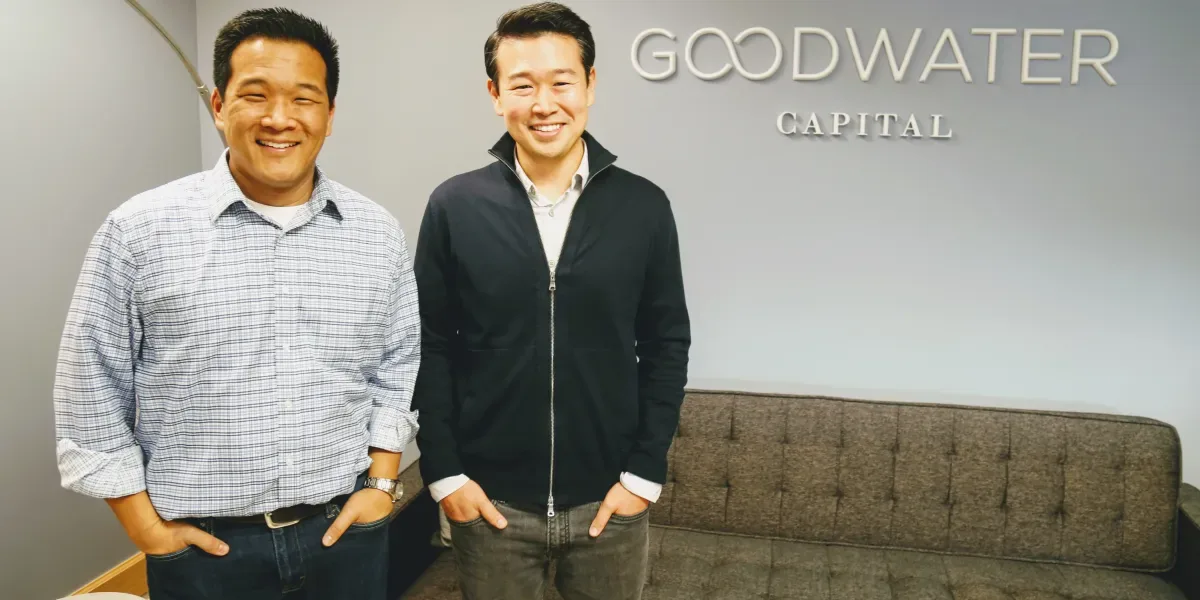
From a Stanford basement startup to Goodwater Capital
Chien’s career in venture capital began in the mid-2000s when he worked as a young associate at the Accel fund. It was he who discovered a small six-person company called The Facebook, operating out of a Stanford Business School basement, and helped the fund close one of the most successful venture deals in history. He later became a partner at Kleiner Perkins and then founded Goodwater Capital, a fund that invests exclusively in consumer technology.
Why apps beat infrastructure
The history of technology cycles repeats itself. In the eras of personal computers, the web, and mobile technology, infrastructure companies were the first to gain market capitalization, but it was application services that created the bulk of new value.
In the web era, new infrastructure companies created $400 billion in new capitalization, while application companies created $3.1 trillion, accounting for 88% of all new value. A similar pattern occurred during the mobile era. Meanwhile, the nominal capitalization of infrastructure companies has still not surpassed its 2000 peak.
An example of the decreasing cost of infrastructure products is Google’s decision to lower the subscription price for its AI product from $7.99 to $4.99 per month while simultaneously increasing storage volume, which dealt a direct competitive blow to ChatGPT.
Two types of AI companies
Today, there are two fundamentally different types of companies in the market. The first type sells artificial intelligence itself as the value—essentially reselling computing power wrapped in a specific application. Such companies require massive capital investments and have weak margin structures.
The second type does not call itself an AI company; instead, it solves specific problems in trading, finance, or healthcare, using artificial intelligence as a tool to deliver that value. Goodwater observes margin rates of 85-95% for such companies.
Hyper-personalization as the new Uber
What is happening now with artificial intelligence resembles the moment when Uber, DoorDash, and WhatsApp emerged—services inconceivable without mobile internet.
Ritten, a Goodwater portfolio company from Korea, is an entertainment service with a virtual world where each user’s experience is completely unique and tailored to their interests. A similar principle of personalization underlies other portfolio companies like Triumph and Flow GPT, which users perceive simply as entertainment apps rather than AI products.
Big players are copying startups faster than before
Large technology companies today are copying startup innovations much faster than in the past. While this practice was previously characteristic mainly of China, Amazon, Apple, Meta, and Google are now acting just as aggressively. At the same time, market opportunities are so vast that there is room for both large players and new companies.
FinTech is flourishing outside the US
FinTech development in the US has largely stalled, while active growth is underway in Asia and Europe. The South Korean company Toss, with revenue exceeding $2 billion and a private valuation of $10 billion, is building a major financial app common in Asia but uncommon in Western markets.
In Europe, a similar example is the British digital bank Monzo, with revenue of over $2 billion, used by a quarter of the adult population in the UK, with its audience growing by 7-8% annually.
Why a super-app never emerged in America
Facebook never realized its ambition to become a single app combining social networking and finance. The reason lies in a fundamental trust gap: financial operations require maximum reliability and security, whereas social networks thrive on light, non-essential content and time spent in the app. Financial services are structured exactly the opposite way—high monetization with minimal user interaction time.
The pendulum swings back to live interaction
Technology and consumer behavior move like a pendulum—an idea from Bill Joy, former partner of Chien’s at Kleiner Perkins and founder of Sun Microsystems, which the investor still considers valid today. After years of shifting toward purely digital consumption, epitomized by Facebook, Snap, Instagram, and TikTok, the pendulum is now swinging back.
The Bump app, created by the founders of Zenly, helps young people find friends in the real world, such as on ski slopes where standard maps are useless. The London and Madrid-based company Fever, often called the European equivalent of Live Nation, organizes live events ranging from candlelight concerts to themed shows based on popular TV series.
The more artificial intelligence creates an endless stream of digital content, the more valuable the scarcest resource becomes—live human contact.
The Tech on Telegram Follow The Tech on Telegram
Keep up with the latest technology and startup news.
Related reading




More from this author

Article Useful
How to protect your accounts from hacking: 8 settings you should check today
The Tech

Article Useful
500 Global: How the Accelerator Works and Who Can Receive Investments
The Tech

Article Interviews
Game Development in Central Asia: Arkady Moldavski on Developing Reverb and the Growth of the Industry
The Tech

Article Useful
Google, Tesla, BlackRock, and the IMF: Where to Apply for an Internship in Fall 2026
The Tech

News IT
Tesla unveiled the flying electric car Roadster
The Tech

News IT
Intero Biosystems startup won the Startup Battlefield at TechCrunch Disrupt 2026
The Tech