GPT-5.6 Sol vs Kimi K3: A Comparison of AI Flagships in 2026
OpenAI has released a new flagship and is promoting it through its own agentic product, while Moonshot AI has open-sourced the largest model in history. Let's examine how these two flagships differ and what to consider when choosing.
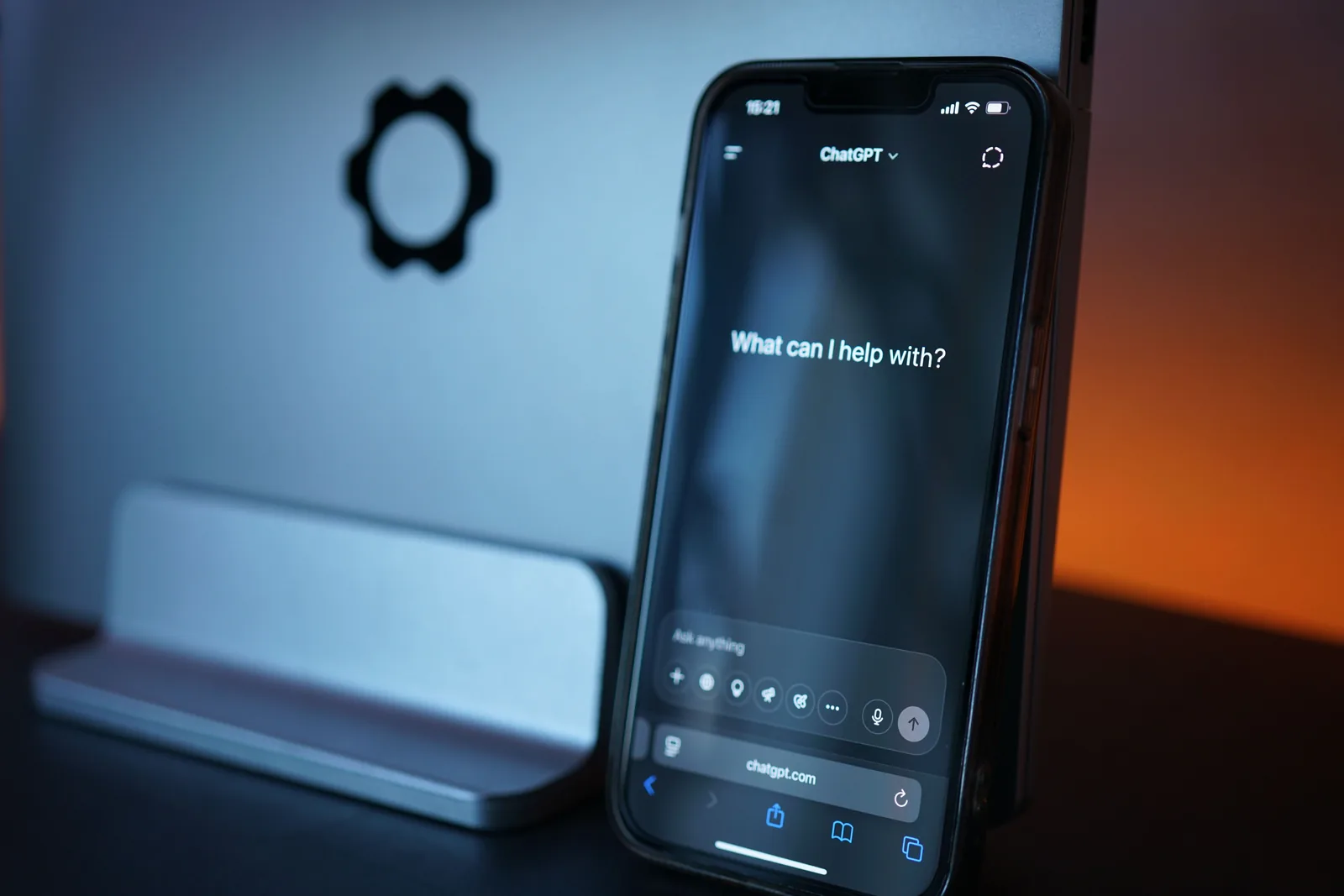
GPT-5.6 Sol
OpenAI released Sol on July 9, 2026, as the flagship of the GPT-5.6 family, which also includes the lighter Terra and Luna models. Sol is designed for complex agentic tasks, coding, and scientific work: it supports images, tool calling, advanced reasoning, structured output, and web search.
The context window is approximately 1.05 million tokens, with a maximum output of 128,000. The API price is $5 per million input tokens and $30 per million output tokens.
According to OpenAI's own data, Sol scored 80 points on the Artificial Analysis coding index—2.8 points higher than Claude Fable 5—and achieved 53.6 points on the Agents' Last Exam benchmark, also outperforming Fable 5. Sam Altman stated that Sol is 54% more token-efficient in agentic coding than the company's previous models.
Alongside the release, OpenAI introduced ChatGPT Work, an agentic service for professional tasks where Sol serves as the base model. In its safety report, OpenAI explicitly identifies Sol as its most powerful model for cybersecurity tasks. Due to this, the model underwent a limited preview starting June 26 before its broad release, as the White House required major labs to conduct a 30-day review of their most powerful models for risks in this area.
Kimi K3
China's Moonshot AI unveiled Kimi K3 on July 16–17 at the WAIC conference in Shanghai, and released its full open weights on Hugging Face on July 26—one day ahead of its announced schedule.
The model comprises 2.8 trillion parameters—according to Moonshot, this is the largest open model to date. Its architecture is a Mixture-of-Experts design called Stable LatentMoE: from a pool of 896 experts, only 16 plus two shared experts are activated per token, resulting in approximately 104 billion active parameters. It also employs Kimi Delta Attention and Attention Residuals—mechanisms for more efficient processing of long sequences and deep networks. Together, according to Moonshot, they deliver roughly a 2.5x improvement in scaling efficiency compared to the previous Kimi K2.
The context window is 1,048,576 tokens, and the model has native support for images and video. The API price is $3 per million input tokens and $15 per million output tokens, significantly cheaper than GPT-5.6 Sol. The weights are distributed under the proprietary Kimi K3 License, and day-0 hosting has already been provided by Together AI and Modal—although for full deployment of a model of this size, Moonshot recommends configurations with at least 64 accelerators.
According to Moonshot itself, K3 delivers results comparable to Claude Fable 5, although in its own technical report, the company acknowledges that it still generally trails both Fable 5 and GPT-5.6 Sol—for example, on the Humanity's Last Exam with tools, K3 scores 56%, compared to 63% for Fable 5 and 58% for Sol. However, the model ranked first on the nextjs.org/evals leaderboard and scored 1679 Elo in Arena Frontend Code, surpassing Fable 5 specifically on this benchmark.
It is worth noting the reputational context: in February 2026, Anthropic publicly accused several Chinese labs, including Moonshot AI, of distillation campaigns—extracting reasoning chains and agentic work data from Claude via fraudulent accounts. There is no official confirmation or denial regarding K3 specifically, leaving it a subject of speculation within the community. Additionally, according to The Information, Microsoft is considering using K3 for Copilot features and availability through Azure, but no decision has been announced yet.
How to choose between them
If maximum reasoning and coding quality are paramount and price is not a critical factor, GPT-5.6 Sol is currently one of the strongest options on the market, especially for agentic scenarios via ChatGPT Work. If you need an open model that can be deployed on your own infrastructure and does not depend on a third-party API, Kimi K3 offers nearly comparable performance at a significantly lower cost, albeit with caveats regarding infrastructure requirements and reputational concerns surrounding Moonshot.
The Tech on Telegram Follow The Tech on Telegram
Keep up with the latest technology and startup news.
Related reading



More from this author

Article Useful
How to protect your accounts from hacking: 8 settings you should check today
The Tech

Article Useful
500 Global: How the Accelerator Works and Who Can Receive Investments
The Tech

Article Interviews
Game Development in Central Asia: Arkady Moldavski on Developing Reverb and the Growth of the Industry
The Tech

Article Useful
Google, Tesla, BlackRock, and the IMF: Where to Apply for an Internship in Fall 2026
The Tech

News IT
Tesla unveiled the flying electric car Roadster
The Tech

News IT
Intero Biosystems startup won the Startup Battlefield at TechCrunch Disrupt 2026
The Tech