Google has introduced Gemini Omni: a new model that transforms photos, text, and audio into editable video.
At Google I/O 2026, the company announced Gemini Omni — a next-generation multimodal system. It combines video generation, voice understanding, and step-by-step editing through a natural conversation.
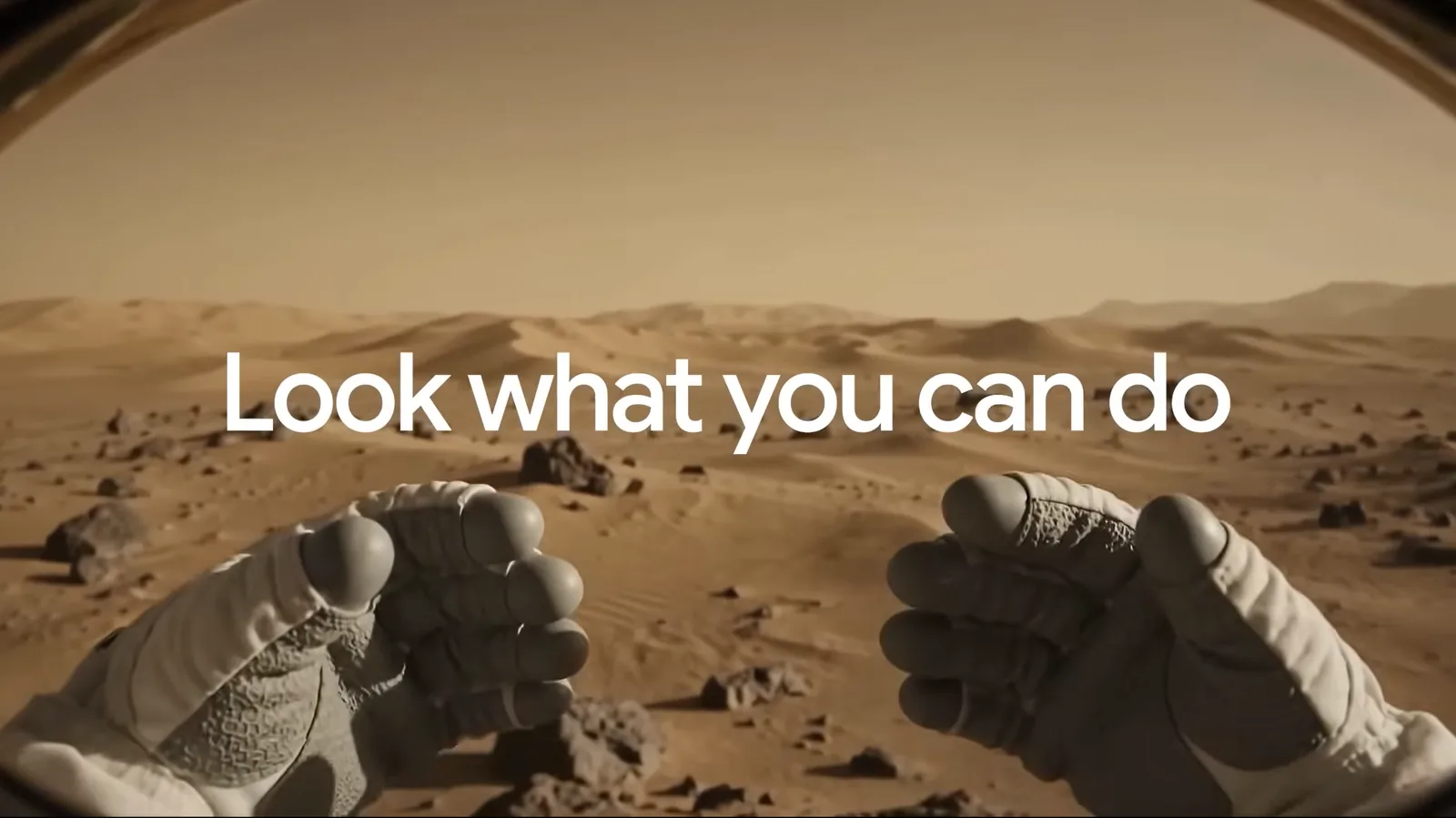
Let’s figure out exactly what the model can do, how it differs from Veo, and how Google is tackling the deepfake problem.
What is Gemini Omni
Its core concept: a single model accepts any type of input data—text, image, audio, or video—and outputs video that can be further edited within the same conversation.
The first public model in the lineup is Gemini Omni Flash. It is available starting May 19 to Google AI Plus, Pro, and Ultra subscribers via the Gemini app and Google Flow platform. YouTube Shorts and YouTube Create App users can try it for free starting this week.
How it works
Gemini Omni Flash generates video clips with synchronized audio from a single multimodal prompt. You can combine different types of input data: upload a photo, add a voice comment, specify the mood of the scene in text—and the model will assemble this into a coherent video.
The key feature is conversational editing. Each command builds on the previous one, without the need to start over.
Examples from Google’s demonstration:
— “make the violin invisible”
— “change the camera angle to a view from behind the violinist’s shoulder”
— “dim the light in the room”
— “change the camera angle and add snow.”
Characters and objects maintain consistency from frame to frame—one of the main technical challenges in AI video generation, which earlier models handled inconsistently.
Understanding physics and the real world
Google specifically emphasizes that Omni is trained on understanding real-world physics: motion, gravity, fluid behavior, lighting, and anatomy.
In tests, the model generated physically plausible scenes—for example, a catapult in slow motion with a realistic projectile trajectory and shadow calculation.
Beyond physics, the model uses knowledge of history, science, and narrative logic to ensure the generated content is contextually coherent, not just visually appealing.
Digital avatars
Gemini Omni supports preserving character identity across scenes—appearance and voice remain consistent throughout the entire video.
Google calls this character consistency. This is important for those creating content with recurring characters: the model does not “forget” the character from frame to frame.
How Omni differs from Veo
Google clearly distinguishes between the two products. Veo is a specialized model for generating video from text. Omni is a multimodal environment for creating and editing content within the entire Google ecosystem.
Veo creates video from scratch based on a text description. Omni works with a combination of input data and allows iterating on the result through dialogue, without having to rebuild the prompt from scratch. Google describes Omni as combining Veo, Nano Banana, and Gemini into a single system.
What hasn’t been launched yet
The first version of Gemini Omni Flash supports only voice references as audio input. Other types of audio input, as well as image and text generation as separate output formats, will be added later—Google outlined this in its official announcement as the next stage of the model’s development.
How Google protects against deepfakes
Every video created through Gemini Omni automatically receives a digital watermark, SynthID—imperceptible to the eye but machine-readable. It cannot be disabled: there is no setting that allows removing the watermark.
Google also announced the expansion of support for C2PA Content Credentials—an open standard for verifying the origin of media files—as part of its broader content openness policy.
You can check whether a video was created using Gemini Omni via the Gemini app, Gemini in Chrome, and Google Search—simply upload the clip.
The Tech on Telegram Follow The Tech on Telegram
Keep up with the latest technology and startup news.
Related reading




More from this author

Article Useful
How to protect your accounts from hacking: 8 settings you should check today
The Tech

Article Useful
500 Global: How the Accelerator Works and Who Can Receive Investments
The Tech

Article Interviews
Game Development in Central Asia: Arkady Moldavski on Developing Reverb and the Growth of the Industry
The Tech

Article Useful
Google, Tesla, BlackRock, and the IMF: Where to Apply for an Internship in Fall 2026
The Tech

News IT
Tesla unveiled the flying electric car Roadster
The Tech

News IT
Intero Biosystems startup won the Startup Battlefield at TechCrunch Disrupt 2026
The Tech