Godot, Unity, or Unreal: Which game engine to choose in 2026
Over the past two years, the game engine market has changed more significantly than it did over the previous ten years. Unity revised its monetization policy, Godot evolved from a niche tool into a full-fledged professional platform, and Unreal Engine 5 expanded beyond large studios. Let's examine how the three leading engines differ and which one is best suited for different needs in 2026.
The Tech AI
Get the key points in seconds - a short summary from The Tech AI.
The game engine market is divided among Godot, Unity, and Unreal Engine. Godot is free and open-source, excels in 2D development, and is well-suited for small teams. Unity dominates on mobile platforms (iOS, Android), supports over 20 platforms, and uses C#. Unreal Engine 5 delivers photorealistic graphics through Nanite and Lumen technologies but charges a 5% royalty after $1 million in revenue. The choice depends on the task: Godot for speed and cost savings, Unity for cross-platform development, and Unreal for high visual quality.
What is a game engine
A game engine is the software foundation on which a game is built. It handles physics, graphics, sound, animation, and logic—all of which would otherwise have to be written from scratch. The choice of engine affects development speed, project cost, and the list of platforms on which the game will be released.
Today, the market is dominated by three engines: Godot, Unity, and Unreal Engine. Let’s look at each of them.
Godot: open source and fast start
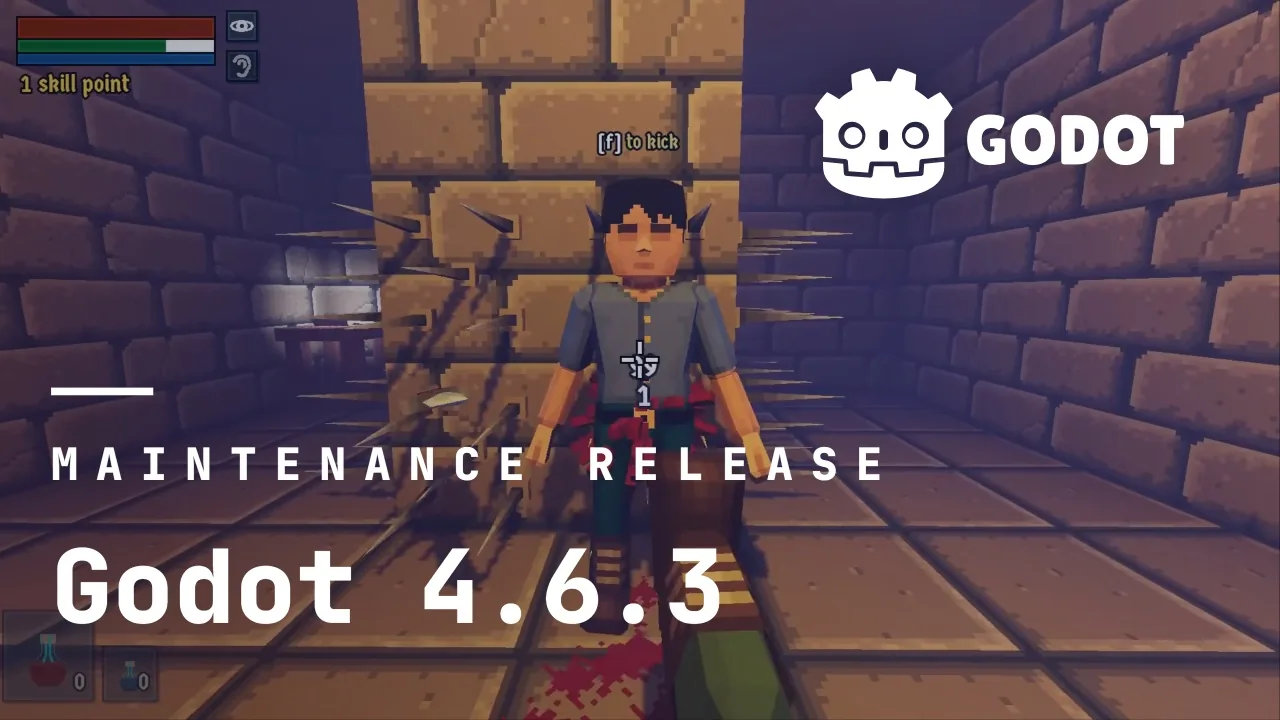
Godot is the only one of the three engines that is distributed completely free of charge and with open source code. There are no royalties, licensing fees, or risk of changes to the terms of use.
In 2D development, Godot currently looks stronger than its competitors. It features a full-fledged built-in 2D engine with its own coordinate system—not a 3D environment with an add-on on top. The editor launches quickly, the built-in GDScript language is easy to learn, and the scene architecture allows you to assemble game systems without unnecessary code.
There are limitations as well. Large 3D projects with realistic graphics are not the engine's strong suit: in terms of rendering quality for open worlds, Godot falls short of Unreal. Official console support exists, but it is implemented through third-party solutions, which adds complexity and cost.
Godot is suitable for 2D games of any scale, stylized 3D projects, and small teams that value independence from the licensing policies of large companies.
Unity: mobile and wide platform coverage
In 2023, Unity introduced a fee per game installation, which caused widespread dissatisfaction among developers. The company subsequently canceled this decision, switched to an open monetization model, and released Unity 6 with improved rendering and performance gains.
Where Unity remains unmatched is on mobile platforms. The engine dominates on iOS and Android: advertising SDKs, monetization tools, and optimization for mobile rendering work better here than with competitors. Other advantages include the largest market for ready-made assets and plugins, support for over 20 platforms, and a developed ecosystem of tools for the C# language.
Unity's graphical ceiling is lower than Unreal's—the rendering gap persists despite improvements in Unity 6. Some architectural decisions were inherited from earlier versions of the engine.
Unity is a suitable choice when focusing on mobile, needing to support multiple platforms simultaneously, or when the team already works with C#.
Unreal Engine 5: graphics and scale
Unreal Engine 5 remains the industry standard for large studios and is increasingly being used by small teams. Nanite and Lumen technologies ensure photorealistic graphics quality with almost no manual tuning: Nanite automatically manages geometry detail, and Lumen calculates dynamic lighting in real time.
For those who do not work with C++, the engine offers Blueprint—a visual programming system. In version 5.7, its capabilities have expanded, and the performance gap between Blueprint and C++ has narrowed. The engine also integrates with AI tools, allowing part of the work in the editor to be automated.
Challenges include long C++ compilation times, a high entry barrier for beginners, and a 5% royalty on revenue after the first million dollars. For most indie projects, this threshold remains out of reach, but with commercial success, it becomes significant.
Unreal Engine 5 should be chosen when graphical quality is the project's key advantage, the game is built around an open world or large-scale 3D locations, and the target platforms are PC and consoles.
Which engine to choose
All three engines are functional, regularly updated, and form the basis of successful projects—the question is what a specific team and a specific game need.
Godot is chosen when speed of start is important, there is no budget for licenses, and the project does not require AAA graphics. Unity is chosen when the goal is mobile or when it is necessary to cover multiple platforms at once. Unreal is chosen when visual quality is the top priority and the team is ready for a more complex tool.
The Tech on Telegram Follow The Tech on Telegram
Keep up with the latest technology and startup news.
Related reading




More from this author

Article Useful
How to protect your accounts from hacking: 8 settings you should check today
The Tech

Article Useful
500 Global: How the Accelerator Works and Who Can Receive Investments
The Tech

Article Interviews
Game Development in Central Asia: Arkady Moldavski on Developing Reverb and the Growth of the Industry
The Tech

Article Useful
Google, Tesla, BlackRock, and the IMF: Where to Apply for an Internship in Fall 2026
The Tech

News IT
Tesla unveiled the flying electric car Roadster
The Tech

News IT
Intero Biosystems startup won the Startup Battlefield at TechCrunch Disrupt 2026
The Tech