Key insights from AI industry leaders at the World Economic Forum in Davos 2026
At the World Economic Forum in Davos 2026, leaders in the artificial intelligence industry discussed the impact of AI on jobs, the economy, security, and global standards, highlighting both the opportunities and risks of new technologies.
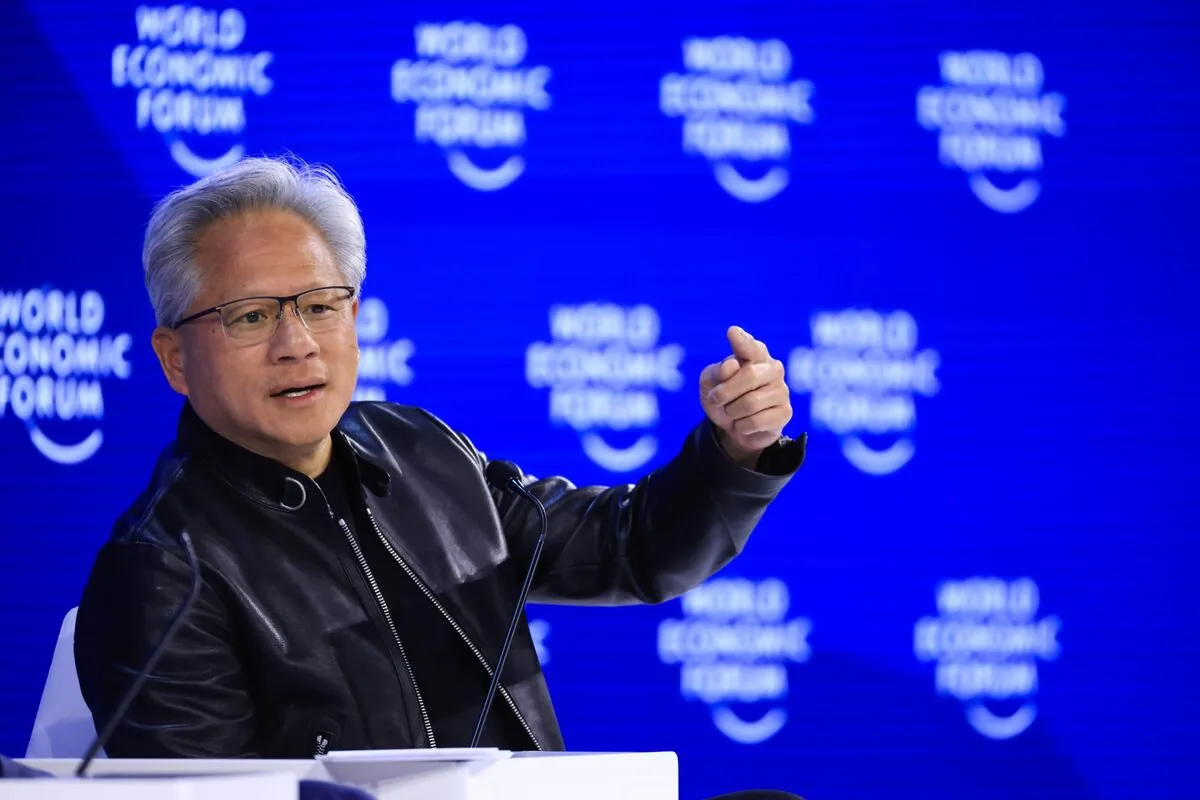
Jensen Huang, Nvidia
The founder and CEO of Nvidia stated that AI “concerns Europe” due to its strong manufacturing base for building AI infrastructure. Huang emphasized that Europe can now “leapfrog” the software era and advised leveraging its capabilities to build AI infrastructure.
— “Robotics is a once-in-a-lifetime opportunity for European countries”
— AI requires more energy, land, and skilled workers, and Europe has a strong labor force
— he believes that AI will create more jobs in skilled trades, such as plumbers and electricians, with salaries nearly doubling, without the need for doctoral degrees.
Satya Nadella, Microsoft
Microsoft CEO Satya Nadella emphasized that AI usage should be beneficial.
“As a global community, we must reach a point where we use AI to do something useful that changes outcomes for people, communities, countries, and industries.”
Nadella warned that AI adoption will be unevenly distributed across the world, primarily due to limited access to capital and infrastructure.
Realizing AI’s potential requires “enablers” — primarily attracting investment and building supportive infrastructure, he said. Although major tech companies “are investing everywhere, including the Global South,” success depends on policies that attract both public and private capital.
Critical infrastructure, such as power grids, is “mostly run by governments,” he said, and private companies can operate effectively only after basic systems like energy and telecommunications networks are in place.
Dario Amodei, Anthropic
The CEO and co-founder of Anthropic said that AI development is exciting, stating that we are “knocking on the door of incredible opportunities,” but the next few years will be critical for how we regulate and govern this technology.
— scenarios post-AGI were discussed, where AI could surpass human cognitive abilities
— Amodei stated that “not selling chips to China” is an important measure to prepare for the potential loss of control over AI
— it was noted that AI could impact the labor market, especially in programming, but there are currently no mass changes.
Yuval Noah Harari, philosopher
The popular writer and philosopher warned about superintelligent AI.
— humanity has no experience building a hybrid human-AI society
— he called for humility and correction mechanisms in case of unforeseen problems
— “AI will never be like humans, just as airplanes are not birds.”
Demis Hassabis, Google DeepMind
DeepMind’s CEO expressed a more optimistic view.
— he expects the creation of new, more meaningful jobs, despite a possible slowdown in hiring interns
— he advised students to use the time to master AI tools, which “jumps themselves five years ahead”
— after the advent of AGI, the labor market will enter “uncharted territory,” with a potential shortage of work for humans, raising questions about the meaning and purpose of work
— he called for international understanding and minimum safety standards for AI to ensure the proper integration of technology into society.
Source: Euronews
The Tech on Telegram Follow The Tech on Telegram
Keep up with the latest technology and startup news.
Related reading



More from this author

Article Useful
How to protect your accounts from hacking: 8 settings you should check today
The Tech

Article Useful
500 Global: How the Accelerator Works and Who Can Receive Investments
The Tech

Article Interviews
Game Development in Central Asia: Arkady Moldavski on Developing Reverb and the Growth of the Industry
The Tech

Article Useful
Google, Tesla, BlackRock, and the IMF: Where to Apply for an Internship in Fall 2026
The Tech

News IT
Tesla unveiled the flying electric car Roadster
The Tech

News IT
Intero Biosystems startup won the Startup Battlefield at TechCrunch Disrupt 2026
The Tech