The head of Brex explained why CEOs can no longer delegate AI issues.
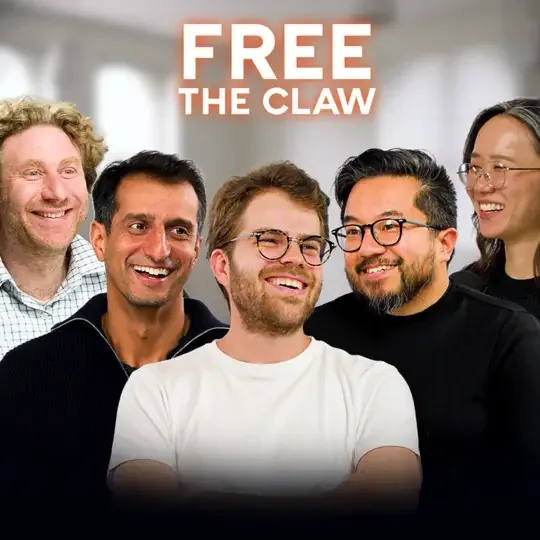
Pedro Franceschi, co-founder and CEO of the FinTech company Brex, discussed in the Y Combinator Lightcone podcast how the company restructured its internal processes around AI agents, why a proprietary network proxy was needed for "free" agents, and why the company's leader must personally master the boundaries of the technology's capabilities.
Why it’s harder for a top manager to change processes than for a CEO
It is 10 times easier for a company leader to break established processes than for a top manager. And it is 10 times easier for a top manager than for an ordinary employee, who finds it easier to leave processes as they are than to initiate changes and argue with colleagues. Therefore, the process of approving decisions on AI usage should be accelerated as much as possible. If the risks and boundaries of the technology are clear, a decision can be made in 10 seconds rather than after 10 hours of meetings.
How Brex solved the security issue for agents
Before the company could boldly experiment with AI, it was necessary to address security concerns. Franceschi granted the agent read-only access to almost all of his personal services via OAuth tokens and was surprised by how far this approach could be taken.
The next step proved more difficult. It was necessary to allow agents not only to read but also to write data to company systems, which the security team initially opposed.
A solution was found within four weeks. The focus should be on controlling the network level rather than the actions of the model. Thus, Brex developed the Crab Trap tool, which the company released to the open source community. All agent traffic passes through a proxy and becomes available for auditing. Another agent analyzes this traffic and forms a policy for allowing requests. For an internal recruiter agent named Jim, 98% of requests are processed automatically, and only 2% require separate verification.
Three speeds of AI adoption within a single company
Franceschi divides employees into three groups. “Token maximizers” are engineers who live within agent-based development environments. Ordinary engineers also use AI, but their productivity is roughly ten times lower. The rest of the company currently uses AI like a regular search engine with a few connected services.
Brex’s task was to provide non-technical teams with a tool as powerful as the one developers use. Essentially, this is a virtual employee with access to email and Slack, capable of participating in meetings and taking notes.
The moment after which Franceschi changed his approach
For Franceschi himself, December was a turning point when a new AI model was released. He compares this moment to the invention of electricity. According to him, the world is currently at roughly the same point as five to six months after the advent of electricity, and is just beginning to understand what can be done with this new technology.
Before that, Franceschi was an ordinary web developer and wrote about half a million lines of code in Rails.
Why a successful product fits on a napkin
Franceschi is convinced that successful companies share one trait: an extremely narrow entry point for the customer. Stripe started with only an API. Brex started with only a terminal and no web interface. Airbnb started with a simple form on its website. If an idea cannot fit on a napkin, it means the problem chosen is incorrect.
The main danger of AI, in his opinion, lies in the fact that the technology creates a temptation to scatter efforts across many directions instead of disciplinedly solving one specific task.
The main question for founders
Franceschi suggests keeping one simple question in mind: whatever problem in life you encounter, why can’t it be solved using AI?
Where a ready-made chatbot fails, it is worth figuring out why and building a solution independently. The role of the founder ultimately comes down to two things: determining which problems are worth tackling and personally filling the gaps that language models cannot yet handle.
The Tech on Telegram Follow The Tech on Telegram
Keep up with the latest technology and startup news.
Related reading




More from this author

Article Useful
How to protect your accounts from hacking: 8 settings you should check today
The Tech

Article Useful
500 Global: How the Accelerator Works and Who Can Receive Investments
The Tech

Article Interviews
Game Development in Central Asia: Arkady Moldavski on Developing Reverb and the Growth of the Industry
The Tech

Article Useful
Google, Tesla, BlackRock, and the IMF: Where to Apply for an Internship in Fall 2026
The Tech

News IT
Tesla unveiled the flying electric car Roadster
The Tech

News IT
Intero Biosystems startup won the Startup Battlefield at TechCrunch Disrupt 2026
The Tech