Freedom Holding plans to buy a bank and a marketplace in Kazakhstan — what Timur Turlov told Bloomberg in an interview
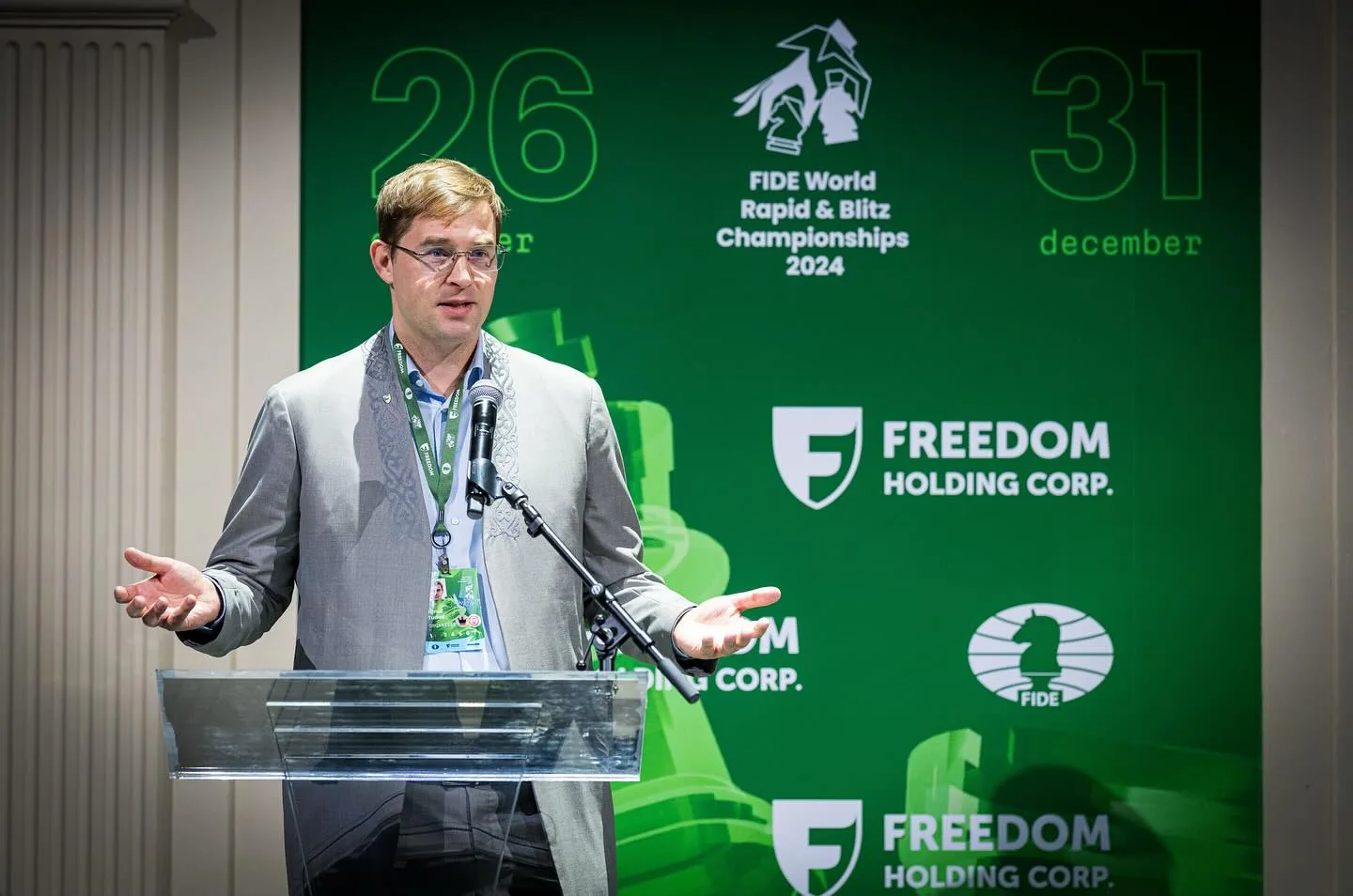
Kazakh billionaire and head of Freedom Holding Corp. Timur Turlov told Bloomberg about the company's plans for international growth. These include issuing dollar and yuan-denominated bonds, expanding its ecosystem through the acquisition of a marketplace, developing telecom infrastructure and data centers, and entering foreign markets. Read the key points from the interview below.
Ecosystem and company strategy
Having built one of Kazakhstan's leading retail brokers, Timur Turlov created a large-scale financial ecosystem that includes Freedom Bank, insurance services, ticketing, an online cinema, grocery delivery, and mobile financial applications.
The main element of this ecosystem is the SuperApp, which unites all of the company's key services. By the end of March 2025, the platform was actively used by approximately 1 million people, while the total number of clients exceeded 5 million.
In the Bloomberg interview, Turlov emphasized that traditional borrowing at a 9% yield is not interesting for the company because it is too expensive. Instead, the company is considering raising $300–500 million by issuing bonds on the U.S. market through a Nasdaq-listed holding. “We will have to build our reputation there, and we understand that this will take a long time,” the billionaire noted, adding that the company is willing to pay a premium to gain access to foreign investors.
Market and competition
The Kazakh retail finance market is estimated at approximately $300 billion and faces intense competition. The main players remain Kaspi.kz and Halyk Bank; however, Freedom Bank is actively competing for retail customers by offering cashback, online mortgages, and unique products, including digital coins linked to company stocks via an ETN registered in Astana. Meanwhile, as the business expanded, the holding increased its double leverage to 167% from 135% in the previous period, while simultaneously reducing investments in government securities, which led to a loss in the banking segment for the fiscal year. The company’s shares on the U.S. market fell by approximately 35% from their August peaks amid increased regulation and higher minimum reserve requirements.
Plans for expansion in Kazakhstan
According to Turlov, there are several banks in Kazakhstan “theoretically” up for sale, and the group may acquire one of them at a price slightly below book value to subsequently merge it with its business and gain access to its client base, primarily corporate clients. At the same time, the bank must be at least as large as Freedom Bank, which has assets of 2.5 trillion tenge (approximately $5 billion) and capital of around $500 million.
Turlov also announced plans for expansion and the acquisition of local assets. “We may soon announce the purchase of a local marketplace,” the CEO stated, clarifying that the holding is considering developing e-commerce but declined to disclose the specific acquisition target.
International ambitions
On the international stage, Freedom Holding plans to enter the markets of the United States, the UAE, and Turkey. Turlov explained that the company is considering options for FinTech licenses or partnerships with local banks, as obtaining a banking license directly or through the acquisition of a lender is complicated by regulatory requirements. In particular, after obtaining a brokerage license in Turkey, the company is looking for an opportunity to acquire a bank with capital of around $300 million, noting that “there is a huge number of banks that do not meet these requirements.”
Beyond financial services, the holding is investing in telecom infrastructure and data centers. Following the signing of an agreement to create a hub valued at $2 billion based on Nvidia Corp. infrastructure, the company is prepared to initially invest up to $100 million in chips for its launch. The goal is to create data centers providing cloud services to both large corporate clients, including Amazon and Microsoft, and private users, who will be able to purchase computing power through the exchange. To achieve this, Turlov plans to develop communication infrastructure between Europe and China, strengthening Kazakhstan’s economic ties with Beijing.
The group also conducted a roadshow in Hong Kong and is considering the issuance of Dim Sum bonds denominated in Chinese yuan. “There may be some opportunities, as this is the most attractive currency for borrowing,” Turlov noted, emphasizing the company’s strategic flexibility in raising capital.
The Tech on Telegram Follow The Tech on Telegram
Keep up with the latest technology and startup news.
Related reading



More from this author

Article Useful
How to protect your accounts from hacking: 8 settings you should check today
The Tech

Article Useful
500 Global: How the Accelerator Works and Who Can Receive Investments
The Tech

Article Interviews
Game Development in Central Asia: Arkady Moldavski on Developing Reverb and the Growth of the Industry
The Tech

Article Useful
Google, Tesla, BlackRock, and the IMF: Where to Apply for an Internship in Fall 2026
The Tech

News IT
Tesla unveiled the flying electric car Roadster
The Tech

News IT
Intero Biosystems startup won the Startup Battlefield at TechCrunch Disrupt 2026
The Tech