The financial system of the future is already being built: what is happening in Kazakhstan
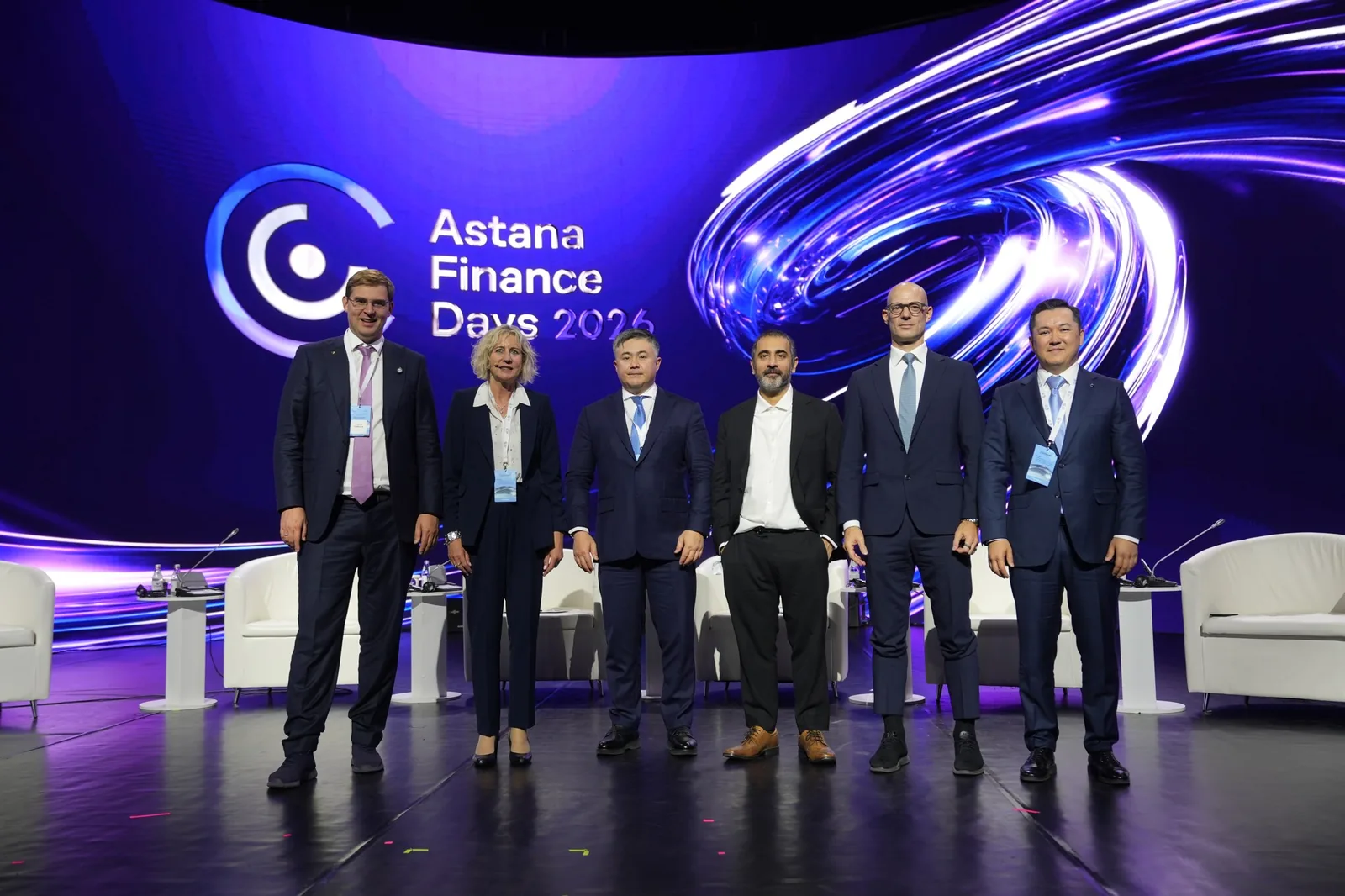
At Astana Finance Days, participants in the session "Transformation of Financial Architecture" discussed how digital technologies are changing the financial system. Key topics included the development of the digital tenge and stablecoins, the use of artificial intelligence in financial services, regulation of new technologies, and Kazakhstan's role in the development of digital finance.
The Tech AI
Get the key points in seconds - a short summary from The Tech AI.
The discussion featured Timur Suleimenov (NBC), Renat Bekturev (IFZA), Balaji Srinivasan (Network School), Sergio Mello (Anchorage Digital), and Timur Turlov (Freedom Holding Corp.). Experts highlighted Kazakhstan's competitive advantages, including innovative talent and regulation through IFZA. The discussion covered the prospects of stablecoins, asset tokenization, the role of the "cloud" as a new jurisdiction, and the use of AI agents to simplify interaction with technologies.
Sallianne Taylor, Head of Government Affairs for Bloomberg in the EMEA region, Timur Suleimenov, Chairman of the National Bank of the Republic of Kazakhstan, Renat Bekturev, Managing Director of the Astana International Financial Centre (AIFC), Timur Turlov, Chief Executive Officer of Freedom Holding Corp., Balaji Srinivasan, Founder of Network School, and Sergio Mello, Global Head of Stablecoin Solutions at Anchorage Digital, participated in the discussion.
Renat Bekturev, Managing Director of the AIFC
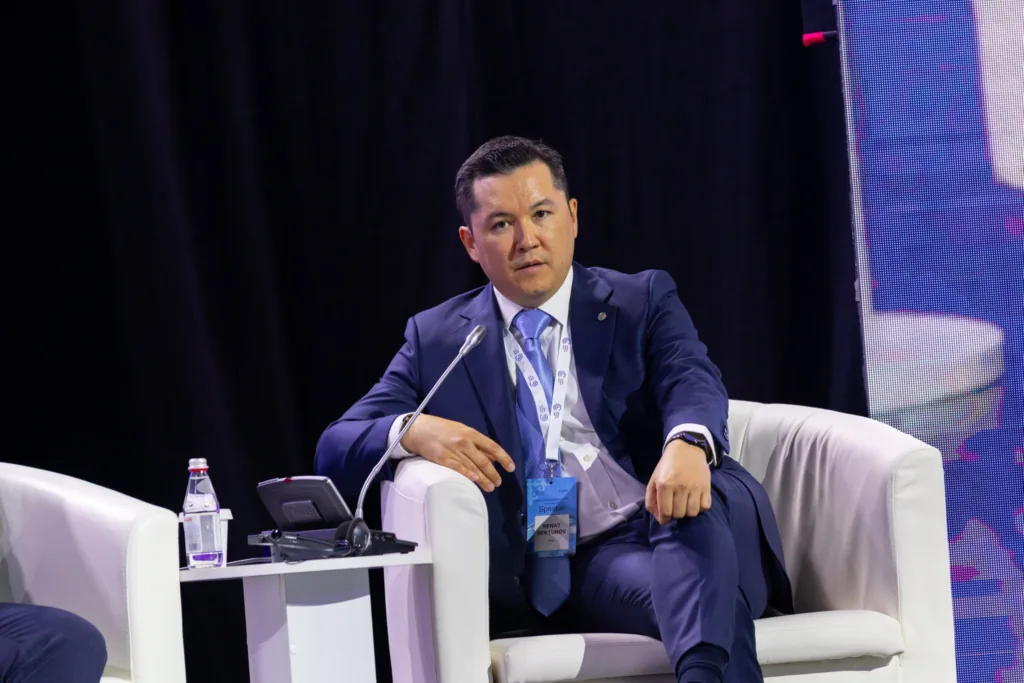
Kazakhstan’s main competitive advantage is its people, who are open to innovation and new ideas. These ideas may be risky, but it all depends on how you look at them. You can try to simply ban something and say that it doesn’t exist and is illegal. Or you can acknowledge that change is inevitable. Our task is to embrace these changes. This depends on internal understanding and readiness for the new. Kazakhstan has many bright individuals who are creating new technologies and attempting to develop new financial instruments, especially among the younger generation. Therefore, Kazakhstan’s first competitive advantage is its people.
The second advantage is the ability to create a separate jurisdiction within the country and continue to support it, despite the challenges such a structure may present. There is always an established system, and then a new participant appears with a different regulatory logic. At the beginning, it is impossible to foresee everything. We can choose what to adapt to and which areas to regulate more or less.
Thanks to the Astana International Financial Centre, we have hopefully become one of the regional leaders in the adoption of digital assets, the digital tenge, stablecoins in tenge, and the broader application of tokenization of real-world assets. This approach is becoming increasingly popular in various countries attempting to replicate a similar model. Therefore, the value of the Astana International Financial Centre lies in its ability to provide choice and allow testing of what is not yet ready to be tested within the entire financial system.
Timur Suleimenov, Chairman of the National Bank of the Republic of Kazakhstan
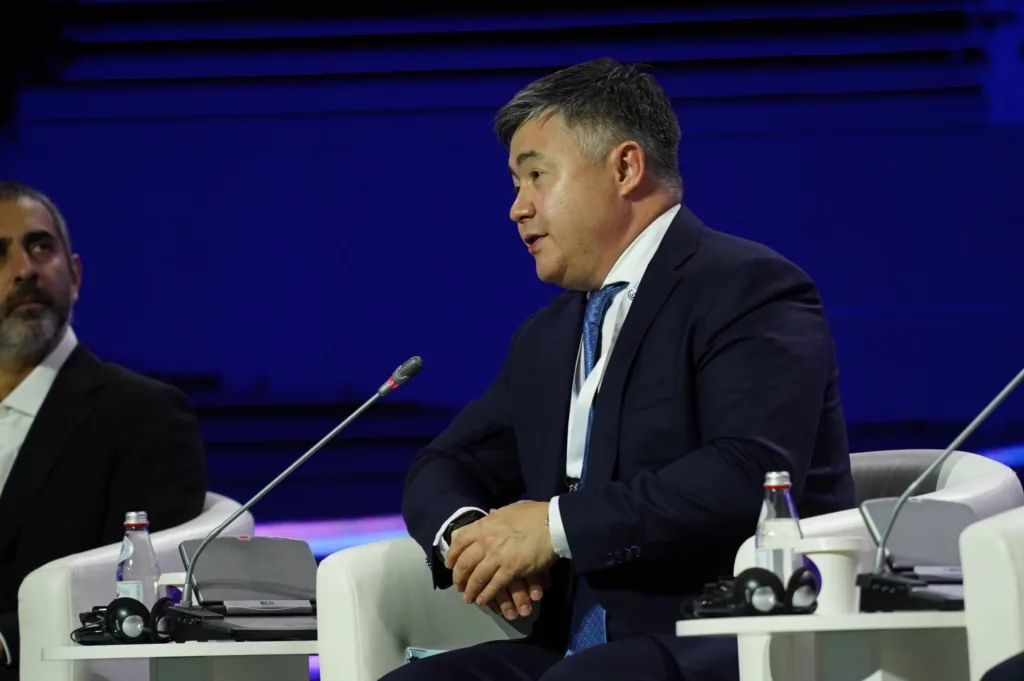
I am glad that our regulator is sufficiently modern and allows us to remain competitive, as we face international competition. Even in our domestic market, we compete with European, American, and other Central Asian companies, as well as with major global cryptocurrency exchanges that sometimes exist everywhere and nowhere simultaneously. We must be globally competitive to continue developing business in Kazakhstan. If you are already competitive in your home market and face global competition, it is quite logical to expand into other markets.
Kazakhstan is an excellent jurisdiction. We have a sufficiently developed market. It is not huge, but it is innovative. Our regulators and users are quite advanced. People in Kazakhstan are relatively young and have a positive attitude toward technology. Therefore, when we introduce new products, we do not encounter significant resistance.
We have a dialogue with regulators. We have sandboxes and certain procedures; we move gradually, but innovation is possible here. At the same time, we have rules, trust, and money in the market. Sometimes innovation can be implemented easily, but without sufficient trust, rules, and capital, doing business is still difficult. Today, Kazakhstan has a good balance of various factors. Therefore, Kazakhstan is becoming an excellent laboratory for global FinTech companies. If you can succeed here, you may be able to scale to other markets.
Balaji Srinivasan, Founder of Network School
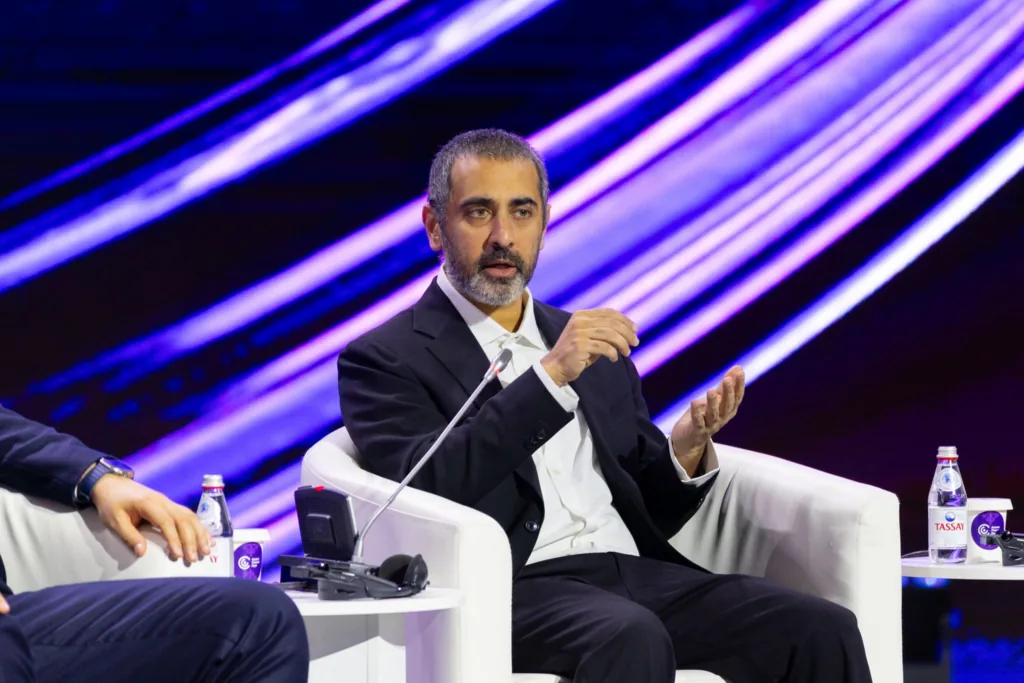
I previously served as Chief Technology Officer at Coinbase, participated in the launch of USDC, and witnessed the development of this market from the inside. Currently, the volume of USDC is approximately $70 billion.
If we talk about geopolitics, it is useful to view events through the lens of technopolitics. One can imagine the cloud as a new continent that has emerged above us, to which billions of people connect every day. All the time we spend online can be viewed as being on this new continent. One can store digital gold in a cloud-based bank account—in Bitcoin, Solana, Ethereum, and other digital assets. This is a new space that is not yet perceived as a full participant alongside land. However, this opens up significant opportunities for Kazakhstan.
Kazakhstan is landlocked, but it is not limited by the cloud. Through the cloud, one can access any country in the world, trade with any market, and interact with any person globally. Therefore, the potential market is no longer just 21 million people, but 8 billion. Every person in the world can have a crypto wallet backed by trust in a specific person, company, or institution. Moreover, trust itself can also be represented on-chain—for example, in the form of signed reviews and recommendations. This can be envisioned as a trust network where people verify each other’s reputation.
All of this fundamentally changes the approach to asset registries. Previously, fiat money and other assets effectively existed offline. Information was stored in a database, and ultimately, there was a paper document that confirmed ownership. Now, this can be a smart contract, i.e., code that exists in the cloud. A useful model for understanding this new world is “cloud first, then land, but not without land.” This primarily means that ownership becomes cryptographic.
This applies to digital and financial assets, but the next step is to represent not only payments but also accounting on the blockchain. If you have payments, you have accounting and financial reporting. Based on financial reporting and smart contracts, fully digital companies can be created, followed by a fully digital stock market. Companies will increasingly seek stable jurisdictions, moving away from traditional centers like Delaware, New York, and California. Ultimately, such a stable jurisdiction could be the cloud, with Kazakhstan serving as an important port for this cloud.
Just as the Silk Road connected China, Russia, India, and the West, now through the cloud, one can trade and interact with people and companies worldwide. And when I say that all ownership becomes cryptographic, I am referring not only to digital and financial assets. Every smart lock can be represented digitally. For example, a key to a door, a key to a Tesla, a train, or private keys that activate a robot, drone, or autonomous vehicle. It turns out that almost any capital equipment, real estate, doors, drones, and other objects can be represented by a cryptographic key just like financial assets.
Kazakhstan can become a registry where such objects are registered and through which they can move from the cloud to the physical world and back.
The country can transition to an internet-first model and use its young and technologically advanced audience for this purpose. There are smart young people here, as well as experienced specialists. I believe that this transition can be the change that opens up new opportunities for Kazakhstan in the next three to five years. The internet-first world begins here. A good new positioning for Kazakhstan could be the name “country of the cloud.”
Sergio Mello, Global Head of Stablecoin Solutions at Anchorage Digital
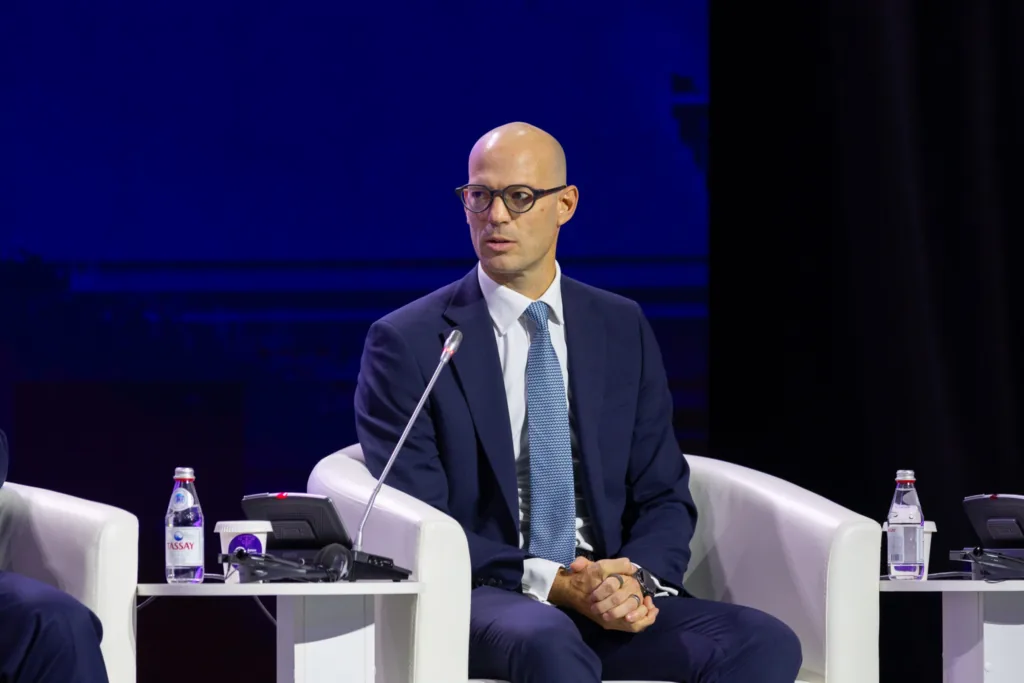
Digital assets are already actively used by the largest financial institutions worldwide, including in the United States and Kazakhstan. Stablecoins are one of the most obvious examples. After the passage of the GENIUS Act in the United States, other countries have also begun developing their own stablecoin regulations. Kazakhstan is also forming such a regulatory framework.
Stablecoins are no longer an experiment. Over the last 10 years, since the concept of tokenizing dollars and placing them on the blockchain emerged, the industry has come a long way. Currently, accounting standards, securities regulators, and financial markets as a whole increasingly recognize stablecoins as equivalent to cash.
Stepping back, when a country considers its position in the world, it is important to consider not only internal competition. States also compete with each other to be an attractive place for doing business, investing, and living.
Infrastructure is becoming the next stage of development. The last ten years were a period of experimentation, and the next ten years may be the time when crypto technologies become the standard upon which financial systems are built. Infrastructure can be easily compared to airports, railways, or highways. The state needs to invest capital and regulatory resources to envision what the country will look like in 10, 20, or 50 years, and to create infrastructure today that can support future growth without bottlenecks.
We are currently seeing significant acceleration in the development of digital assets in the United States following the change in administration. In Kazakhstan, there has also been notable progress over the last 12–24 months. This is the moment when it is necessary to build the airports and highways of the future financial system.
It is important to make the right decisions now. If inappropriate materials are used when building an airport or a road, the consequences may only manifest years later and prove to be serious. The same applies to digital financial infrastructure. Moreover, there is a cost of inaction. When other countries move quickly and innovation accelerates not only in financial infrastructure but also in other areas, every moment of inaction in regulation and state policy today can be equivalent to a decade of inaction in the last century.
Timur Turlov, Chief Executive Officer of Freedom Holding Corp.
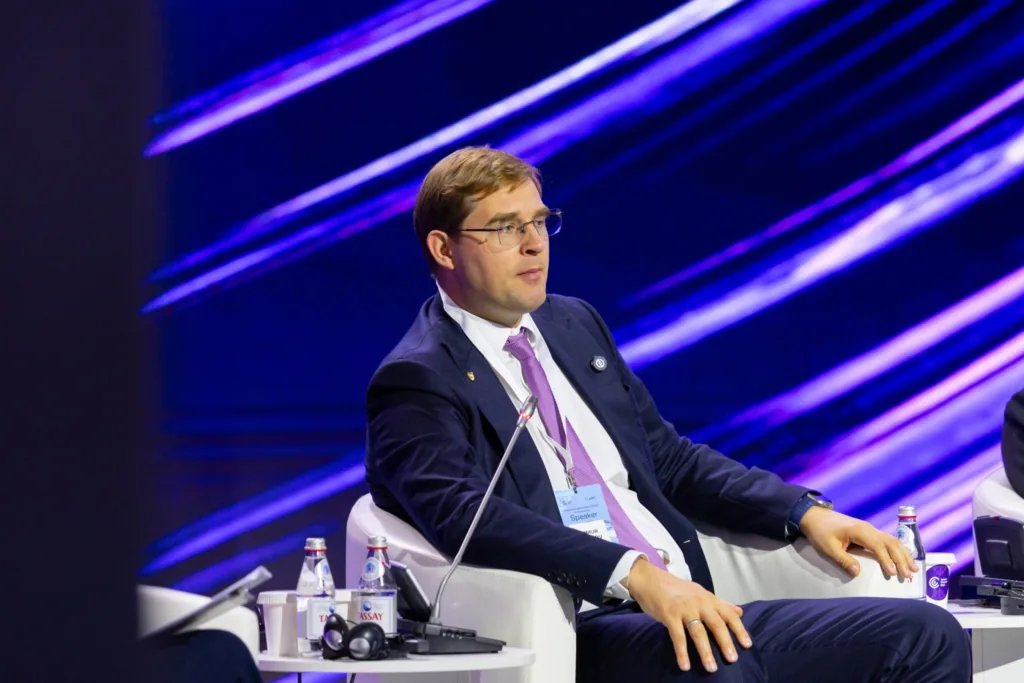
Technology should significantly simplify meeting customer needs. Due to the overall development of technology, we have more complex products, and people need a lot of information to understand how to use them.
Currently, in the Freedom SuperApp, one can use banking and insurance services, brokerage services, e-commerce, travel, and dozens of other services in a single application. But if a person, for example, needs to cancel their flight and book a new one, they do not always understand how to do it. To navigate such technologies, certain experience is required, and these technologies are developing much faster than people can adapt to them. Therefore, mastering technology sometimes becomes a much bigger problem than creating it. I believe that one of the main roles of AI agents is precisely to help people use all these technologies correctly.
We are working on Freedom AI systems so that a client can simply explain in plain language what they need. After that, the AI agent will find a way to complete the task: change or book a flight, find a suitable option, help achieve certain financial goals, or form an investment portfolio with the desired level of yield, liquidity, or risk. That is, a person only needs to explain their need in ordinary words, and the AI assistant will solve the problem using available technologies. Even with good interfaces, some users simply want to solve a specific problem and should not have to think about how engineers made it possible.
I do not think it is about technology inventing customer needs. Sometimes people understand perfectly well what they need but do not know how to implement it. Even I, when trying to figure out new technology, sometimes encounter difficulties. One needs to study a new application, bank, or service, and this creates a certain cognitive load. I believe we will have a good assistant that can explain what tools are already available in the product and how to use them to solve a specific task. It is less about creating new needs and more about showing the client how existing tools can meet their needs.
At the same time, AI will be able to use existing APIs and combine tools to create new product logic or even a new tool for a specific client. As a result, services can become maximally personalized and useful. Ultimately, every application will be able to adapt to the habits, needs, and tasks of a specific person.
The Tech on Telegram Follow The Tech on Telegram
Keep up with the latest technology and startup news.
Related reading




More from this author

Article Useful
How to protect your accounts from hacking: 8 settings you should check today
The Tech

Article Useful
500 Global: How the Accelerator Works and Who Can Receive Investments
The Tech

Article Interviews
Game Development in Central Asia: Arkady Moldavski on Developing Reverb and the Growth of the Industry
The Tech

Article Useful
Google, Tesla, BlackRock, and the IMF: Where to Apply for an Internship in Fall 2026
The Tech

News IT
Tesla unveiled the flying electric car Roadster
The Tech

News IT
Intero Biosystems startup won the Startup Battlefield at TechCrunch Disrupt 2026
The Tech