The Era of "Invisible Unicorns": A Chance for Central Asia
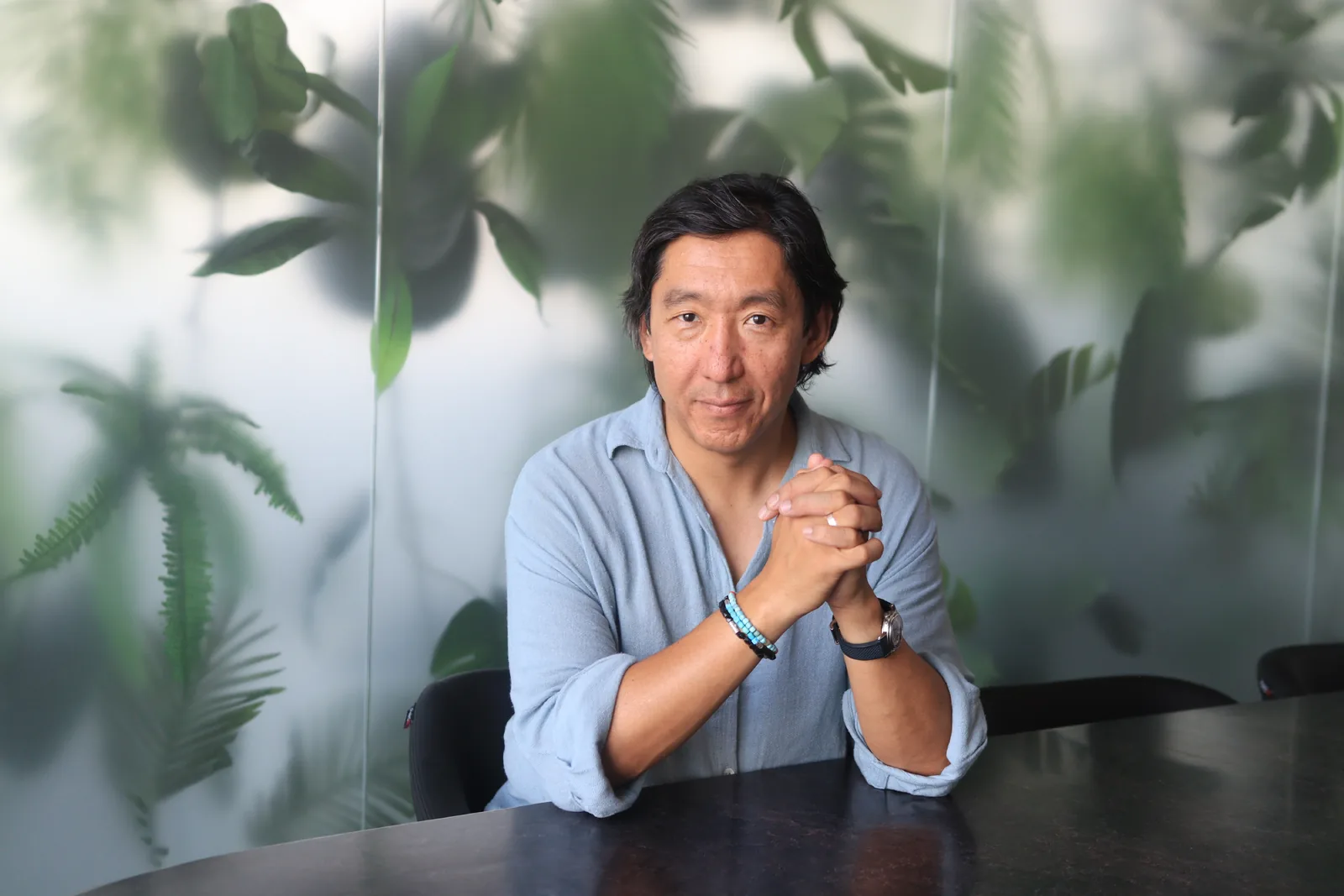
In this article, author The Tech Bakht Niyazov explains how AI is changing the rules of the game in venture capital, why founders no longer need investors, and what historical opportunity is opening up for Central Asia.
The link to the previous article is about how Central Asia is becoming a new arena for venture investments and why Kazakhstan and Uzbekistan could become the backbone of a new cycle in the venture market.
Bakht Niyazov, city — Almaty, founder of Justart VC Studio
The Paradox of a Million Dollars
When my partner Armen Atayan and I started the Gen2B project in Kazakhstan, we thought that sooner or later we would have to approach venture funds and raise investments. But we did not systematically engage in this.
We simply saw a specific, tangible inefficiency in how businesses interact with their customers. It is a market worth a trillion US dollars. We saw thousands of people performing monotonous and, essentially, meaningless work in frontline support, and we understood: this is our task—there is a lot of money and opportunity there.
The team worked intuitively, focusing on the product rather than pitch decks. And now I see that we have reached a point where revenue has come close to $1,000,000, without taking a single dollar from investors. Our complex, technology-intensive product has become in demand not only by private businesses but also at the government level.
This personal case was like a cold shower for me. If we were able to build a system of such scale "on our own," using only the power of technology and market understanding, do startups of the new generation really need venture capital?
I realized that we are part of a huge shift, not yet fully understood, which in 2026 is changing the very nature of venture capitalism.
1. The Philosophy of the "Lone Architect": Why 1 is Sometimes Greater Than 100
For decades, the venture industry lived in the grip of the dogma: "a startup is a team sport." A solo founder was considered an anomaly, a risk, a sign that the person "doesn't know how to negotiate." In YC, a solo founder is still a red flag.
Today, Margulan Seyssembay publicly stated on his channel that he created an AI company with absolutely no employees. This is a full-cycle company: it finds the problem itself, works on the product itself, promotes it, and sells it.
In 2026, many of our dogmas are dying. AI has become the great equalizer. Previously, to create a product, you needed a hierarchy: CTO, development department, designers, marketers, HR.
Today, the founder of the new type is not just a "director," but an architect of an autonomous system. With analytical thinking and the help of AI agents, he can write code, handle legal issues, generate content, and analyze markets faster than a department of 50 people could.
This creates a fascinating phenomenon: the productivity of one intelligence enhanced by AI now exceeds that of an average corporate structure. When you don't need to spend 60% of your time on internal communications, meetings, and approvals, the speed of startup development becomes fatal for competitors.
We are seeing the emergence of potential "unicorns" with millions in revenue, where only two or three people are on the payroll.
For old-school investors, this looks like an existential crisis. They are used to investing in scaling—especially teams. But how do you invest in a company that doesn't need new people? How do you value a business that grows through code efficiency rather than pouring money into marketing?
2. The Great Leveling: Why Almaty and Tashkent Are No Worse Than Texas or Bali?
One of the most inspiring conclusions from my reflections concerns our region.
For a long time, it was believed that to create a global startup, you needed to be in an "ecosystem"—where there is a high concentration of capital, experts, and other founders. Kazakhstan and Uzbekistan were always considered "catching up."
But in a world where capital is no longer scarce, geography loses its magic. If you don't need $5 million right at the start, you don't need to fly to San Francisco to raise it. If your market is the whole world, accessible via the internet, it doesn't matter where you open your laptop and build your product. It doesn't matter if it's Bali or Bukhara. What matters is who manages the process.
Why do Kazakhstan and Uzbekistan have a historical opportunity now?
- Culture of survival. Our entrepreneurs are not used to building businesses "in spite of," rather than "thanks to." We don't have the habit of squandering investors' money because there was never an excess of it. This discipline is our main advantage today.
- Hunger for results. While in the West a startup often turns into a "lifestyle," young people here fight for real revenue here and now.
- Absence of old rails. We don't need to reform old institutions—we can immediately build new infrastructure.
Today, a founder from Tashkent or Shymkent can see the problem of a global logistics operator in Rotterdam better than their own manager. And they can solve this problem with their AI solution, sitting in a local co-working space.
Barriers have fallen. Only one thing remains—the scale of thinking.
3. Investor Out of the Game: Negative Selection and Crisis of Trust
Perhaps part of traditional venture capital is already in a "blind spot" today—just it is not yet obvious.
The strongest founders—those who make real money—often no longer come to funds. They simply don't have time. They are busy scaling profits.
As a result, what ends up in the investor funnel is hard to call positive selection. These are either startups that cannot survive without external financing, or those who build a business for the sake of the investment-raising process itself.
This creates an interesting picture: funds continue to invest in "beautiful stories," while the real economy of the future is being created by "invisible champions"—quietly, in co-working spaces and cafes.
Has capital lost its value? Not entirely. But the trend is clear: money is a commodity that has ceased to be unique. It is important, but it is no longer the key factor.
4. The 3.0 Acceleration Hypothesis:
If money is no longer the main trump card, what can an investor offer then?
My partners and I are testing a hypothesis that could become the standard in a few years. We are changing the very DNA of acceleration.
The idea is to stop being a "school" for startups and turn into a "high-tech service station."
The founder of the new generation is a pilot of a high-speed race car. They don't need to be taught how to drive. They need to have their tires changed and tank filled in five seconds at a pit stop.
What becomes key?
- Tools instead of lectures. Not advice, but resources: access to closed APIs, powerful computing servers, legal solutions that allow quick legalization of revenue from any point in the world.
- Media capital. In a world of product oversupply, the winner is the one who has attention. This includes content studios, access to global influencers, and attention-grabbing algorithms.
- Frictionless investments. A new model—micro-entries through infrastructure. The investor becomes an "invisible partner" who removes obstacles in exchange for a small stake in future growth.
Conclusion: The Time for the Unconventional
The world no longer belongs entirely to "systemic players." It belongs to those who know how to think unconventionally, who see opportunities in the old economy and close them with elegant technological solutions with minimal resources.
I believe that in the coming years we will see several "invisible unicorns" born in Central Asia.
My task as an investor is not to try to "buy" them, but to create the best environment for their rapid growth. It is not guaranteed to work out. But it is definitely worth trying. Perhaps it is even more logical to do this in Uzbekistan, where entrepreneurial skills are deeply rooted in the culture.
We are entering an era where the intelligence of one person, enhanced by AI and the right infrastructure, can move mountains. Capital no longer rules alone.
What rules is the courage to see the problem and the will to solve it.
And in this sense, we are all on the same starting line today. And this, in my opinion, is really cool.
The Tech on Telegram Follow The Tech on Telegram
Keep up with the latest technology and startup news.
Related reading




More from this author

Article Useful
How to protect your accounts from hacking: 8 settings you should check today
The Tech

Article Useful
500 Global: How the Accelerator Works and Who Can Receive Investments
The Tech

Article Interviews
Game Development in Central Asia: Arkady Moldavski on Developing Reverb and the Growth of the Industry
The Tech

Article Useful
Google, Tesla, BlackRock, and the IMF: Where to Apply for an Internship in Fall 2026
The Tech

News IT
Tesla unveiled the flying electric car Roadster
The Tech

News IT
Intero Biosystems startup won the Startup Battlefield at TechCrunch Disrupt 2026
The Tech