The Digital Silk Road and the Venture Capital Market: What the Ecosystem Is Missing
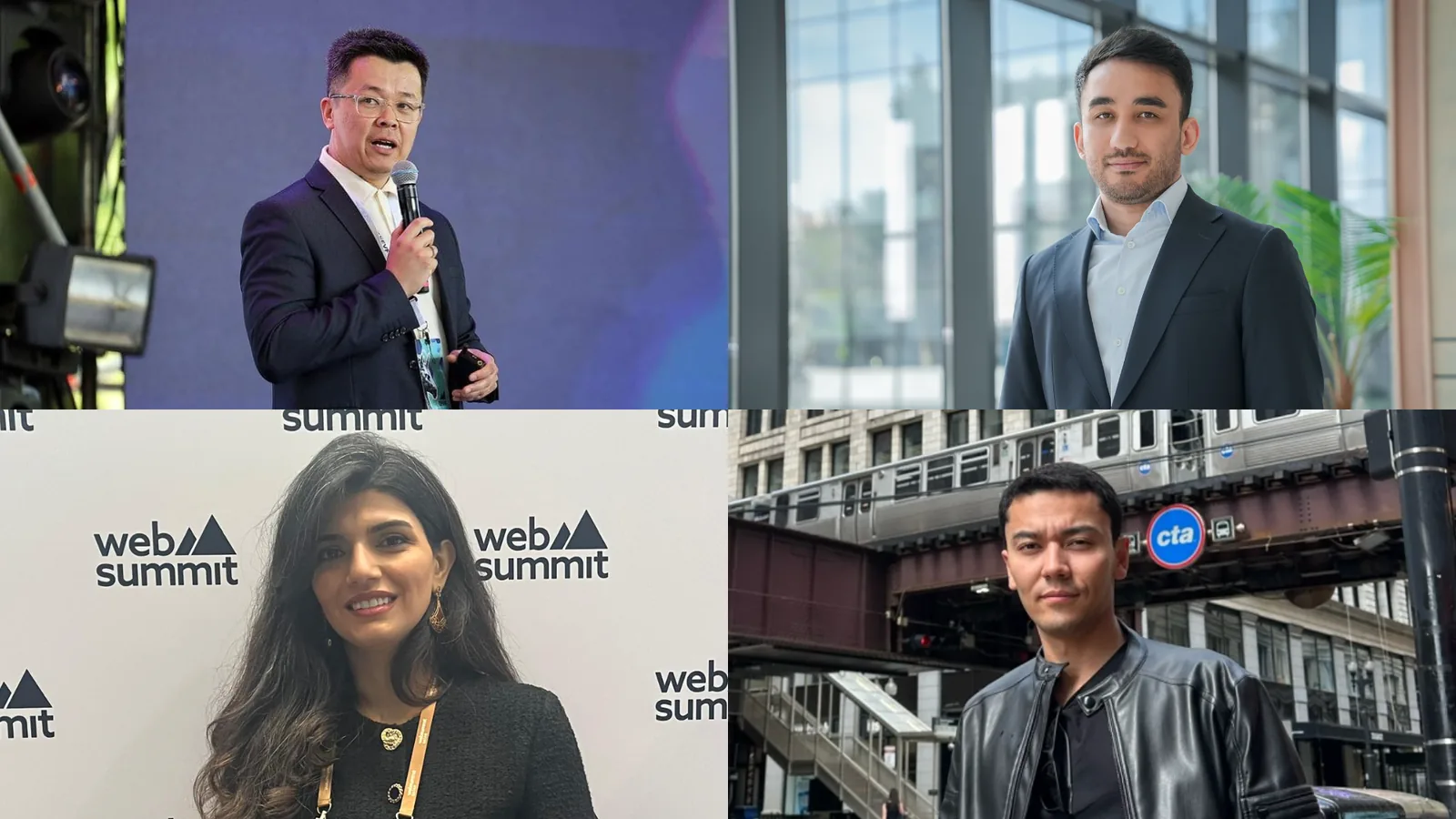
At INMerge Tashkent 2026, as part of the panel discussion “Can capital alone build the Digital Silk Road, or are we missing something important?”, participants discussed whether financial resources alone can launch a sustainable technological ecosystem in the region. They agreed that without institutions, regulation, and a mature market, capital does not produce a systemic effect.
Alim Khamitov, CEO and Managing Partner, Co-founder of MOST Holding and MOST Investors’ Club, MOST Ventures
When talking about the venture ecosystem and M&A, it is important to understand that the investment cycle always involves an exit: a strategic acquisition, a management buyout, the entry of a new investor, or an IPO. However, in our region, the M&A market remains underdeveloped and is represented more by isolated cases than by systematic practice. In international experience, corporations actively grow through acquiring technologies, but in our region, many companies are only forming their technological strategies, including AI and digital transformation, so a significant portion of solutions is created in-house. Additionally, the internal focus of CTOs on developing their own teams reduces readiness for deals. Nevertheless, the market is gradually developing, and we are already seeing the first sustainable partnerships between startups and corporations.
The key task for the ecosystem is to create a predictable and stable business environment, develop IT exports, and transition from being technology consumers to producers with global competitiveness. To achieve this, it is necessary to support startups from the earliest stages, develop “smart capital,” strengthen GP teams and institutional infrastructure, and encourage more active participation from banks and corporations as regulatory restrictions are lifted. Ultimately, synchronization between the state, funds, and corporations is crucial for forming a sustainable ecosystem and giving rise to global companies from the region.
Dalerkhon Nodirov, CEO of IT Park Ventures, LinkedIn
Attracting international funds to Uzbekistan largely depends on a clear and transparent legal framework. Investors prefer to operate within a familiar legal system rather than being limited solely to local regulations. Therefore, new infrastructural and legal regimes are currently being formed, including special centers and initiatives aimed at enhancing the country’s investment attractiveness and trust in the market.
When discussing the role of the state and venture capital, it is not a matter of opposition but rather different functions of a single system. The state ensures stability, infrastructure, and the rules of the game, while venture capital acts quickly, flexibly, and is focused on efficiency. The key question, however, is how to combine stability with innovation.
We are also actively studying international experience and adapting best practices to the specifics of our region. The task is to bring local markets up to world standards so that startups think globally from the start and can compete in large markets, including the US, without losing focus on the rapidly growing local market.
Overall, the role of the state is to create conditions for growth: infrastructure, support for initiatives, and building trust in the market. Ultimately, the goal is to build a system in which local startups can compete globally, and the region becomes part of the international technological market.
Mustafa Kopuk, Managing Partner of DOMiNO Ventures, LinkedIn
Three years ago, we decided to actively enter the Central Asian market. Before that, we had been investing in various ecosystems for over eight years. Today, we see that the region is in the early stages of venture market development but demonstrates rapid growth. We went through a similar phase in Turkey, where we began investing in 2018 and already made several deals and the first exits in the first year.
We see Central Asia as the next growth point, just as Eastern Europe and Turkey were before. Our task is not only to invest money but also to develop the ecosystem: attract international funds, strengthen local teams, and help companies enter the global market.
Startups from the region must think globally from the outset. If a product is aimed only at the local market, it is limited in access to international capital. Investors from the US and Europe usually expect international clients and revenue, so it is important to build a business with the global market in mind from the very beginning.
We also pay attention to metrics. On average, every $1 invested in our companies attracts an additional $6.2 in investments. At the same time, about 88% of revenue comes from the US and Europe, which confirms that the strategy is working.
Our goal is not only to invest but also to set a standard for the region: startups must be ready for the global market, and funds must measure efficiency through international metrics.
Tugra Musayeva, Head of Innovation, PASHA Financial Holding, LinkedIn
Currently, all companies in our portfolio are actively interacting with startups. Moreover, from the corporate center, we stimulate such interaction and partially reduce financial risks. If one of our companies wants to work with a startup and launch an innovative product, we support this collaboration and share part of the risks.
We see that this approach yields results: when startups begin working with corporations, their products develop faster, their business models become more mature, and they become significantly more attractive to venture investors. We are also actively promoting this approach among other corporations in the country.
At the same time, the ecosystem in Azerbaijan is still in its early stages of development. The transition from the role of a passive sponsor to an active corporate client for startups is already having a noticeable effect, and we are closely monitoring how this influences the market.
In a broader context, it can be said that venture funds and the state perform different functions. We conducted an experiment: simply increasing the volume of small investments in the hope that this would automatically improve the quality of startups does not work. Funding alone does not solve systemic problems.
Today, Azerbaijan already has stock market infrastructure, including state venture mechanisms, so one cannot speak of a capital deficit. The main challenge lies in the lack of a systemic approach. On one hand, there is the educational environment and entrepreneur training, where a deficit remains, partially addressed by accelerators and incubators. On the other hand, there is the legislative and regulatory environment, which should allow venture funds to effectively take on risk and invest in early-stage companies.
It is also important to develop research and scientific infrastructure. If we want startups to work with more complex and technologically deep ideas, it is necessary to strengthen the role of universities, research centers, and scientific institutes. This creates an additional layer of knowledge and stimulates new investments and directions.
Thus, the key task is the alignment of three levels: educational, investment, and regulatory. Only through their synchronization can we expect sustainable ecosystem development and better results in the future.
Abdulazal Toshkhudjaev, Managing Partner of UZVC, LinkedIn
State policy here is important not so much in terms of the volume of regulation but in terms of its simplicity and alignment with international venture practices. We support a light-touch regulatory approach, including the 1+1 model and the development of local and diaspora funds. This allows for an increase in the number of GP teams and institutional players.
Capital is fuel, but the result depends on the entire system. Even with capital present, without infrastructure and a mature ecosystem, it does not produce an effect.
Therefore, our task is not simply to attract capital but to build interaction between international investors, local funds, and startups so that companies can scale beyond the country. In this sense, capital alone does not create a sustainable ecosystem—it only works in conjunction with infrastructure and a high-quality investment environment.
The Tech on Telegram Follow The Tech on Telegram
Keep up with the latest technology and startup news.
Related reading




More from this author

Article Useful
How to protect your accounts from hacking: 8 settings you should check today
The Tech

Article Useful
500 Global: How the Accelerator Works and Who Can Receive Investments
The Tech

Article Interviews
Game Development in Central Asia: Arkady Moldavski on Developing Reverb and the Growth of the Industry
The Tech

Article Useful
Google, Tesla, BlackRock, and the IMF: Where to Apply for an Internship in Fall 2026
The Tech

News IT
Tesla unveiled the flying electric car Roadster
The Tech

News IT
Intero Biosystems startup won the Startup Battlefield at TechCrunch Disrupt 2026
The Tech